Full arch implants typically run $14,000 to $36,000 per arch, with full-mouth treatment (both upper and lower) landing between roughly $28,000 and $72,000 depending on materials and case complexity. The catch: “full mouth” doesn’t always mean two arches; a quote for one arch doesn’t automatically double into an accurate full-mouth number. Before comparing prices, confirm exactly what unit each quote covers. Some dental practices offer consultations and itemized written estimates for readers who want a number specific to their own mouth.
TL;DR:
- Full arch implant costs vary widely from $14,000 to $36,000 per arch, influenced primarily by implant configuration, prosthesis material, and preparatory procedures.
- Choosing between All-on-4, All-on-6, or individual implant restorations significantly impacts surgical complexity, with grafting and material upgrades further affecting total price.
- Itemized quotes that specify implant count, material tier, and included follow-up care make accurate comparison and informed decision-making possible.
- Grafting, extractions, and bone conditioning are often add-on costs not included in initial estimates, so clarify these details upfront.
- Insurance typically covers only a small portion of full-arch implant costs, making financing, staged treatment, and material choices key to affordability.
questions about this? we're happy to help.
Every patient's situation is a little different. If you want to talk through what this means for you, our Greenville team is one call away.
schedule a free consultationTable of Contents
- What Do Full Arch Implants Cost Per Arch and Full Mouth?
- What Actually Drives the Price of Full Arch Implants?
- What Line Items Should Appear on a Full Arch Implant Quote?
- How Do You Compare Full Arch Implant Quotes Side by Side?
- Does Insurance or Financing Cover Full Arch Implants?
- How Long Does Treatment Take and How Long Do Implants Last?
- Are Full Arch Implants Worth the Cost?
- Why Does Full Arch Implant Pricing Vary So Much by Region?
- What Additional Costs Come Up After Treatment?
- Complete Dental Care’s Perspective on Comparing Full Arch Quotes
- Get an Itemized Full Arch Implant Estimate
- Sources
What Do Full Arch Implants Cost Per Arch and Full Mouth?
The price you’re quoted depends almost entirely on which clinical design you’re pricing. A two-implant removable overdenture sits at the low end because it uses fewer implants and a simpler prosthesis. A fixed All-on-4 or All-on-6 bridge costs more upfront but skips the daily removal and adhesive routine that comes with dentures. Zirconia sits above acrylic and porcelain-fused-to-metal on nearly every price list, because the material itself costs more to mill and it tends to hold up longer.
Here’s roughly how the options stack up per arch:
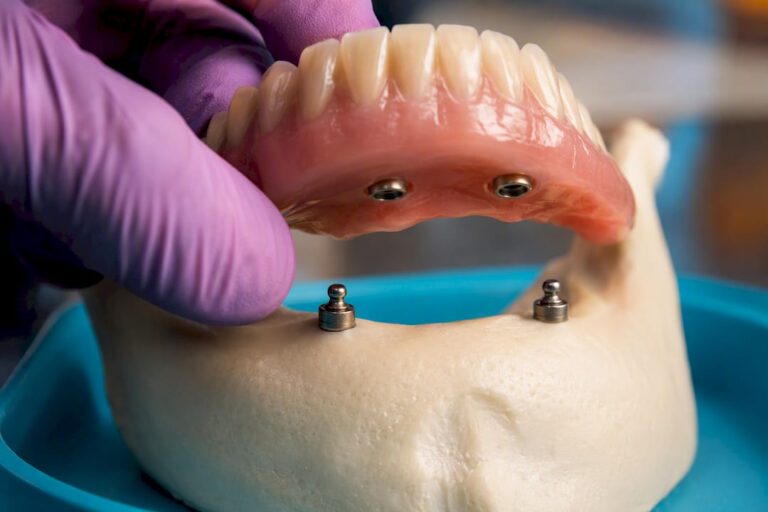
- Two-implant removable overdenture: generally the least expensive fixed-implant option, often well under $20,000 per arch.
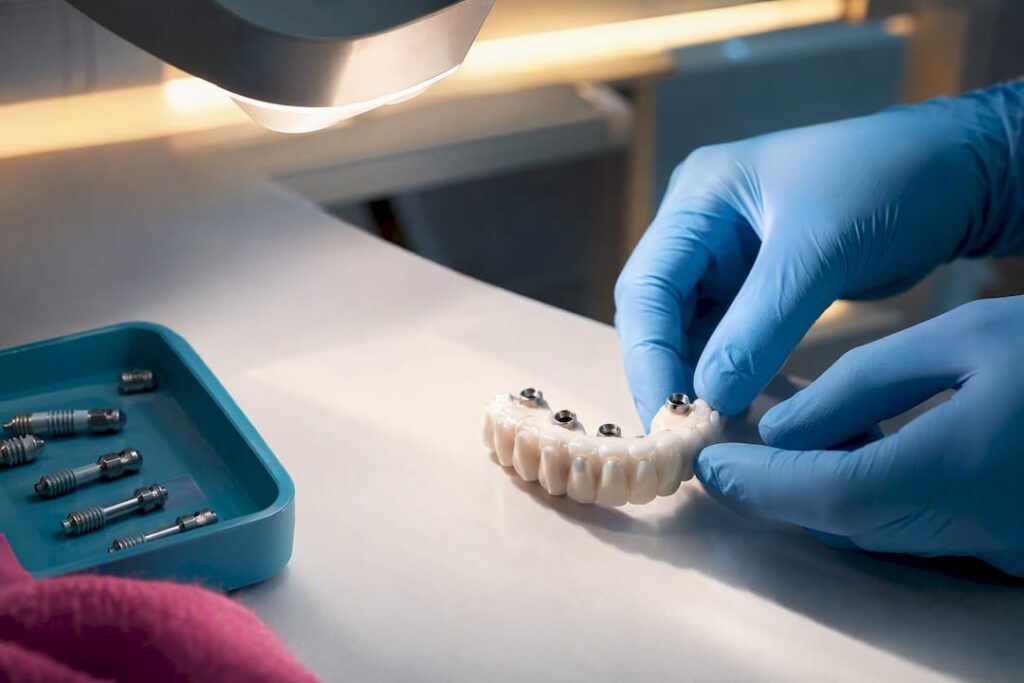
- All-on-4 or All-on-6 with acrylic prosthesis: commonly falls in the $14,000 to $24,000 range per arch.
- All-on-4/6 upgraded to a porcelain-fused-to-metal (PFM) prosthesis: typically mid-range, above acrylic but below full zirconia.
- Zirconia fixed full-arch bridge: the premium tier, often reaching $24,000 to $36,000 or more per arch.
Statistic Callout: Independent pricing aggregators put full-mouth totals commonly between about $28,000 and $72,000, a spread wide enough that the same clinic could hand two patients wildly different numbers depending on materials alone. That range gap is bigger than most people expect walking into a first consultation, and it’s the main reason “starting at” pricing on a website tells you almost nothing.
One detail trips up a lot of patients: some providers price the acrylic provisional as the headline number, then treat the final zirconia prosthesis as a separately billed upgrade later. If a quote looks unusually low compared to others you’ve collected, that’s often why.
What Actually Drives the Price of Full Arch Implants?
Three variables account for most of the swing between a $15,000 quote and a $35,000 quote for what sounds like the same procedure: implant count, prosthesis material, and how much preparatory work your jaw needs before implants can even go in.
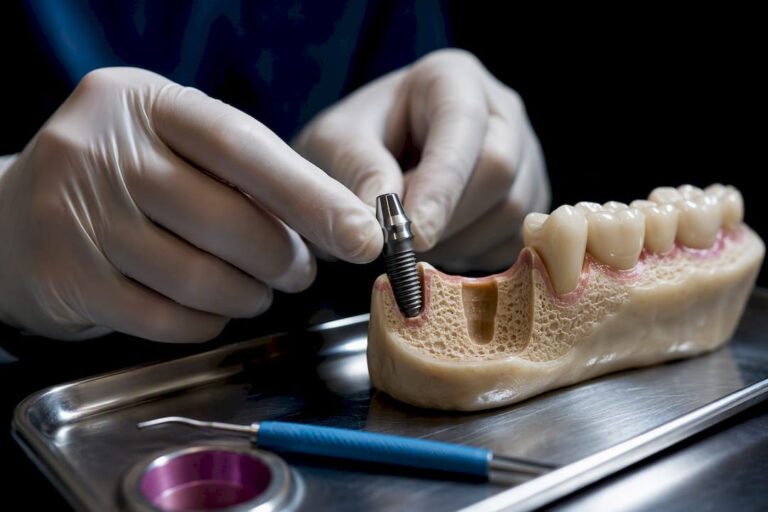
Implant configuration changes surgical scope directly. All-on-4 uses four strategically angled implants per arch to support a full bridge, which reduces surgical time and often skips grafting for suitable candidates. All-on-6 adds two more implants for extra support, useful when bone density is borderline or the patient wants added stability under a full bridge. Individual implant-by-implant restoration (replacing each tooth with its own implant) costs the most because you’re multiplying per-implant fees across the whole arch instead of anchoring a full bridge on four to six posts.
Material tier affects both cost and how long the prosthesis lasts:
- Acrylic provisional bridges are the least expensive and are often used as a temporary appliance during healing.
- PFM options sit in the middle, offering a more natural look than acrylic at a moderate cost increase.
- Zirconia costs more but resists staining and wear better over years of use, which is part of why it dominates the premium tier.
Preparatory work is where quotes diverge the most unpredictably. Extractions, bone grafting, and sinus lifts aren’t always included in an advertised starting price, and industry analyses note that grafting is a frequent add-on in full-arch cases rather than an occasional exception.
Pro Tip: Ask whether your quote assumes you’ll need grafting or not. If the office hasn’t looked at your imaging yet, that number is a placeholder, not a real estimate.
Provider expertise and anesthesia choice add smaller but real differences. A specialist performing full-arch surgery may charge more than a general dentist, and IV sedation costs more than local anesthesia alone.
What Line Items Should Appear on a Full Arch Implant Quote?
An itemized quote breaks treatment into distinct fees rather than one lump number. Line-by-line breakdowns like this are what let you actually compare two offices instead of comparing two marketing headlines. Expect to see something like this sequence:
- Consultation and imaging (3D scans, X-rays): often bundled into the total or charged as a smaller upfront fee.
- Extractions: simple extractions cost less than surgical extractions of impacted or broken teeth.
- Bone grafting: priced per site, and can add a meaningful sum if multiple areas need building up.
- Sinus lift (upper arch only, when needed): typically billed per side and priced separately from grafting elsewhere in the mouth.
- Implant posts: usually billed per implant, which is why All-on-4 and All-on-6 quotes differ even before materials enter the picture.
- Abutments: the connector pieces between implant and prosthesis, sometimes bundled with the implant fee and sometimes itemized separately.
- Provisional prosthesis: the temporary bridge worn during healing, often acrylic.
- Final prosthesis: priced by material tier, acrylic through zirconia, and usually the single largest line item.
- Lab fees: cover the fabrication of the prosthesis and vary depending on whether the lab work is done in-house or outsourced.
- Sedation: local anesthesia is often included; IV sedation or general anesthesia is typically an added fee.
- Follow-up visits: some practices bundle a set number of adjustment visits into the total; others bill them separately.
Billing units matter as much as the numbers themselves. Implants are almost always priced per implant. Grafting is priced per site. Sinus lifts are priced per side. A quote that lumps everything into one number without breaking out these units is harder to compare against a competing office, and that’s often the point of pricing it that way.
How Do You Compare Full Arch Implant Quotes Side by Side?
Get every estimate in writing, and make sure it specifies four things: the arch unit (one arch, both arches, or “full mouth” meaning something else entirely), the implant count, the prosthesis material, and what’s included in follow-up care. Without those four data points, a number on a page is close to meaningless.
Ask each office directly:
- Who places the implants, and is that person a specialist or general dentist?
- Is the lab work done in-house or sent to an outside lab, and does that affect turnaround time?
- What happens if I need grafting that wasn’t accounted for in the original quote?
- How many follow-up adjustment visits are included before additional visits are billed separately?
- What’s the warranty or replacement policy if the prosthesis fails early?
Pro Tip: Email each office the same three questions and save the replies. A practice that answers precisely, with specific numbers and named materials, is telling you something different than one that reverts to “it depends” every time.
Watch for red flags: a “starting at” price with no mention of grafting or extractions, a refusal to specify prosthesis material in writing, or vague answers about who actually performs the surgery. Reviewing a detailed cost breakdown before your consultation gives you a framework to hold every quote against, and bringing prior imaging to your first visit speeds up getting an accurate number.
Does Insurance or Financing Cover Full Arch Implants?
Dental insurance rarely covers the full cost of implant treatment. Most plans classify implants as a major procedure, apply annual coverage caps far below the total treatment cost, and sometimes impose waiting periods before major work is covered at all. MetLife’s own cost summary confirms that full coverage is the exception, not the rule, which is why financing carries more weight in most patients’ decisions than insurance does.
Practical ways patients spread out the cost:
- Third-party financing such as CareCredit, which offers payment plans separate from insurance.
- In-office payment plans, which some practices offer directly and which may include savings-plan discounts for uninsured patients.
- Staged treatment, addressing one arch before the other to spread cost over a longer window.
- Choosing acrylic or PFM instead of zirconia for the final prosthesis to lower the upfront number.
- Implant-supported overdentures instead of a fixed bridge, which cost less while still eliminating the instability of traditional dentures.
If you’re considering treatment outside your regular provider network for a lower price, factor in continuity of care. Complications after the fact are harder to manage when your surgeon is far away or unreachable for follow-up.
How Long Does Treatment Take and How Long Do Implants Last?
Timeline depends heavily on whether you need preparatory work. A straightforward case without grafting can move from consultation to a fixed prosthesis in a few months. Add a sinus lift or bone graft, and you’re often waiting several additional months for the graft site to heal and integrate before implants can be placed.
Typical stages:
- Consultation and imaging (same day to one week)
- Extractions and grafting, if needed, followed by a healing period of three to six months
- Implant placement, then a healing period before the final prosthesis is attached
- Provisional prosthesis worn during healing, final prosthesis placed once integration is confirmed
Implants themselves can last decades with proper care, but the prosthesis on top has its own lifespan, with zirconia generally outlasting acrylic. Spending more upfront on grafting when it’s genuinely needed tends to reduce the odds of implant failure later, which is a cost most patients would rather avoid entirely.
Are Full Arch Implants Worth the Cost?
For patients dealing with loose dentures, ongoing bone loss, or multiple failing teeth across an arch, fixed full-arch implants often deliver a quality-of-life jump that removable dentures can’t match: no slipping, no adhesive, and a bite force much closer to natural teeth. Patients who chew comfortably again and stop worrying about their dentures shifting during a meal report that alone as worth the investment.
That said, full-arch implants aren’t the automatic right answer for everyone. Patients with significant bone loss who aren’t candidates for grafting, or those on a tighter budget, may find implant-supported overdentures deliver most of the functional benefit at a meaningfully lower price. Staged treatment, tackling one arch first, can also make sense financially without sacrificing the eventual outcome.
Why Does Full Arch Implant Pricing Vary So Much by Region?
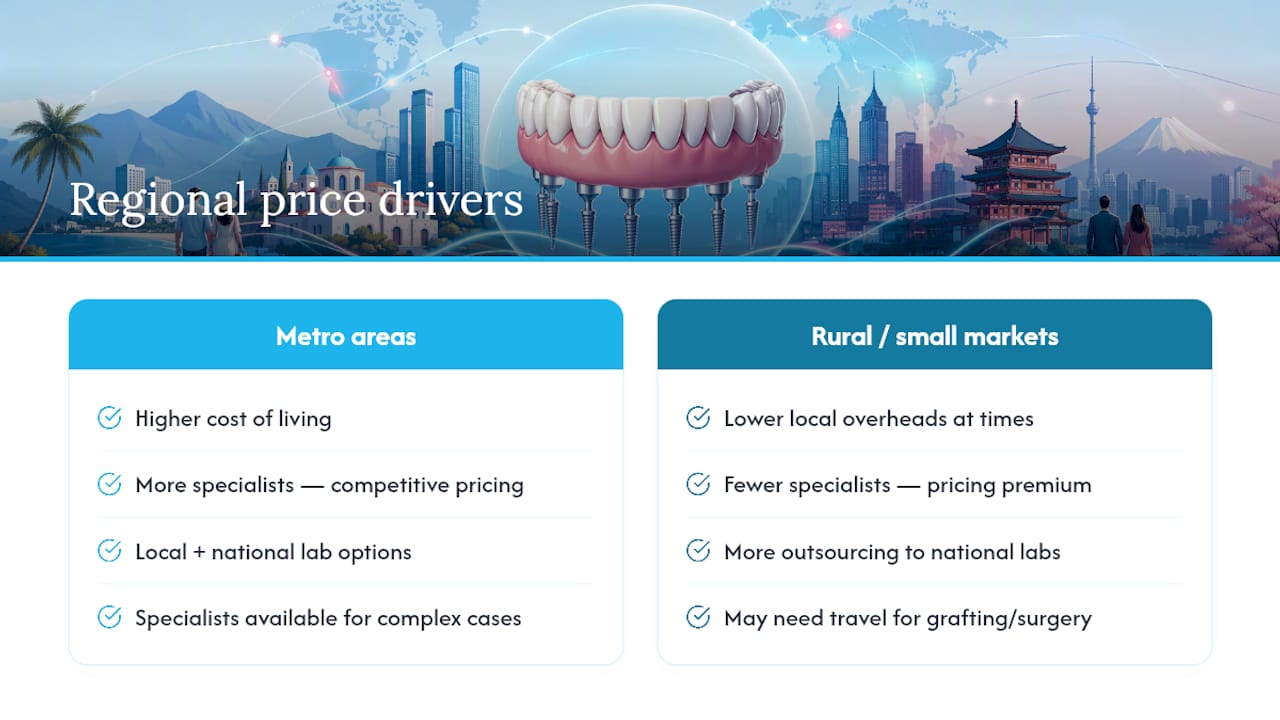
Where you live affects the number almost as much as which materials you choose. Metro areas with a higher cost of living generally carry higher lab and facility fees than smaller markets, and state-level pricing surveys show meaningful spread even within the same country for what’s technically the same procedure.
Provider density plays a role too. Areas with more specialists competing for patients sometimes see more competitive pricing, while regions with few implant specialists can carry a premium simply because patients have fewer options nearby. Lab costs vary regionally as well: a practice using a local lab for zirconia milling pays differently than one outsourcing to a large national lab, and that difference sometimes gets passed to the patient.
Specialist availability matters most for complex cases. If your case needs significant grafting or sinus lift work, traveling to a market with more oral surgery specialists might mean a higher line-item fee but potentially fewer complications down the line. Rural patients sometimes travel to metro areas specifically for full-arch work, accepting travel cost in exchange for access to a wider range of providers and, often, more competitive per-arch pricing from increased local competition.
None of this means you should chase the cheapest region blindly. A lower quote from an unfamiliar clinic far from home carries its own cost if follow-up visits require repeated travel.
What Additional Costs Come Up After Treatment?
The number on your original quote rarely represents everything you’ll spend over the life of the implants. Follow-up visits for adjustments, sometimes included in the initial fee and sometimes billed separately, are the most common added cost in the first year. Ask specifically how many follow-ups are bundled before you sign anything.
Maintenance carries its own ongoing cost. Implant-supported prostheses need periodic professional cleaning, and a consistent home care routine reduces the risk of peri-implant issues that would otherwise require intervention later. Night guards, if your dentist recommends one to protect the prosthesis from grinding, are typically an added fee.
Complications, while not universal, do happen. Implant failure requiring replacement, prosthesis fractures, or gum recession around an implant site can all require additional treatment beyond the original plan. These costs are harder to predict upfront, which is exactly why asking about warranty and replacement policy before treatment starts matters as much as asking about the initial price. A practice with a clear policy on implant failure is telling you something useful about how they handle the unexpected, versus one that has no answer ready when you ask.
Complete Dental Care’s Perspective on Comparing Full Arch Quotes
Patients rarely fail to understand that full-arch implants cost real money. They fail because two quotes for “the same thing” use different implant counts, different materials, and different assumptions about grafting, and nobody points that out before treatment starts. Some practices build estimates around 3D imaging and itemized billing specifically so patients see implant count, material, and included follow-ups before committing to anything. Bring prior X-rays or scans to your consultation. Ask for the estimate in writing, and ask what happens if grafting turns out to be necessary once imaging is complete.
— Complete Dental Care
Get an Itemized Full Arch Implant Estimate
Some dental providers offer full-arch implant treatment, sometimes completed in a single day through Teeth in a Day, backed by in-house 3D imaging and sedation options for patients who feel anxious about oral surgery. Unlike piecing together quotes from multiple offices with different assumptions baked into each number, a patient can request one detailed estimate that spells out implant count, material tier, and what’s included in follow-up care before committing to anything.
If you’re ready to see what full-arch treatment would actually cost for your specific case, schedule a consultation through Complete Dental Care’s surgical implant services page and request a written, itemized estimate before making a decision. You can also explore Teeth in a Day options or start at the main practice page to find a scheduling path that fits your timeline. If bone grafting comes up during your consult, PEMF therapy’s role in bone health is worth asking your provider about as an adjunct option.
Sources
- Full Mouth Dental Implants Cost: 2026 Planning Guide — Tooth Compass
- Full Mouth Dental Implants Cost 2026: Per Arch & Both — RealDentalCosts
- All-on-4® Dental Implant Cost and Procedure Guide — CareCredit
- How Much Do Dental Implants Cost? — MetLife
This article is general information, not a substitute for advice from a qualified doctor. Consult a qualified healthcare professional about your own circumstances before acting on anything here.