
Most soft-tissue discomfort from dental implant surgery fades within days to two weeks, but the bone actually fusing to the implant, called osseointegration, takes 3 to 6 months. Your three jobs in that window: protect the surgical site so the clot stays put, manage swelling and pain on schedule, and stick to your hygiene and follow-up appointments.
TL;DR:
- Swelling peaks on days 2 to 3 and can be worse than on day one, with most discomfort diminishing significantly after day three.
- The osseointegration process takes three to six months, during which the implant fuses with the jawbone without visible external signs.
- Proper care in the first 72 hours, including gauze bite pressure, cold compresses, soft foods, and gentle rinses, is crucial for smooth recovery.
- Factors like smoking, bone grafting, and uncontrolled health conditions can extend healing times and increase failure risks.
- Pain typically peaks around day two or three and can usually be managed effectively with over-the-counter medications.
questions about this? we're happy to help.
Every patient's situation is a little different. If you want to talk through what this means for you, our Greenville team is one call away.
schedule a free consultationTable of Contents
- Dental Implant Recovery Timeline: What Happens Week by Week
- Post-Surgery Care: Your First 72 Hours and Beyond
- How to Manage Pain After Implant Surgery
- What Slows Down Dental Implant Healing
- Warning Signs During Dental Implant Recovery
- When Is a Dental Implant Fully Healed?
- A Clinic’s View on Healing Expectations
- Ready to Talk About Dental Implants?
- Sources
Dental Implant Recovery Timeline: What Happens Week by Week
Recovery isn’t one long haul. It moves through distinct phases, and knowing which phase you’re in helps you tell normal discomfort from something worth a phone call.
The first 24 hours are about clot protection. Expect light bleeding, lingering numbness from the anesthesia, and instructions to rest with your head elevated. This is the foundation everything else builds on. Bite down gently on gauze and resist the urge to check the site with your tongue every ten minutes.
Days 2 to 3 are when swelling typically peaks, not day one as most people assume. This surprises a lot of patients who panic when their cheek looks worse on day two than day one. It’s the expected inflammatory response, and cold compresses help keep it manageable. Pain generally tracks with swelling: it climbs slightly, then starts dropping by day three.
Days 4 through 14 bring visible progress. Soft tissue closes over the site, any dissolvable stitches disappear on their own, and most patients feel comfortable returning to work, errands, and most normal routines. Peer-reviewed patient-reported outcomes confirm that many people feel substantially recovered within this window, even though the bone underneath is still quietly healing.
Weeks 2 through 6 are about soft-tissue maturation. You’ll likely reintroduce firmer foods gradually, but the site still needs protection from hard chewing or accidental bumps.
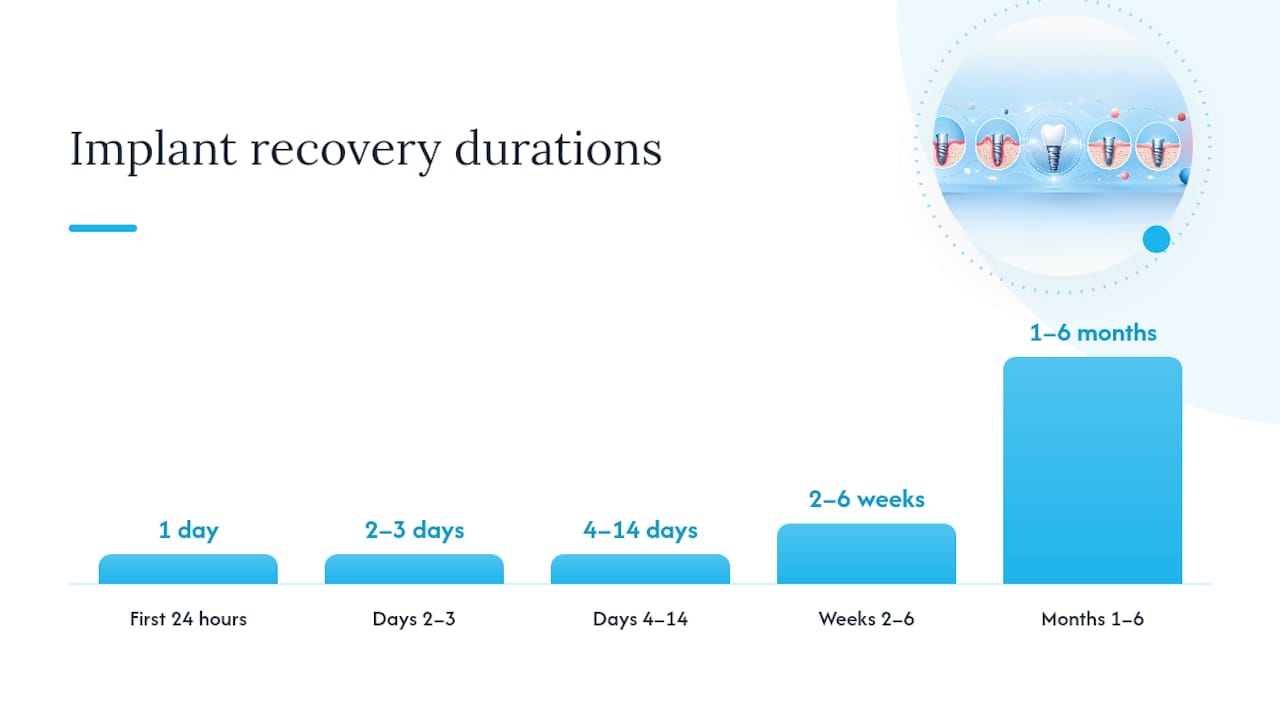
Months 1 through 6 are the invisible phase: osseointegration. Nothing looks dramatic on the outside, but the implant is fusing with your jawbone at a cellular level. Your dentist confirms this process before placing the final crown, bridge, or denture.
Here’s the fast version of what to expect at each stage:
- First 24 hours: clot protection, light bleeding, rest
- Days 2 to 3: swelling and pain peak, then begin declining
- Days 4 to 14: tissue closure, return to normal routines
- Weeks 2 to 6: firmer diet, continued site protection
- Months 1 to 6: osseointegration, followed by final restoration
Post-Surgery Care: Your First 72 Hours and Beyond
The first three days set the tone for everything that follows. Common clinical protocols center on protecting the clot and controlling swelling before shifting into gentle maintenance.
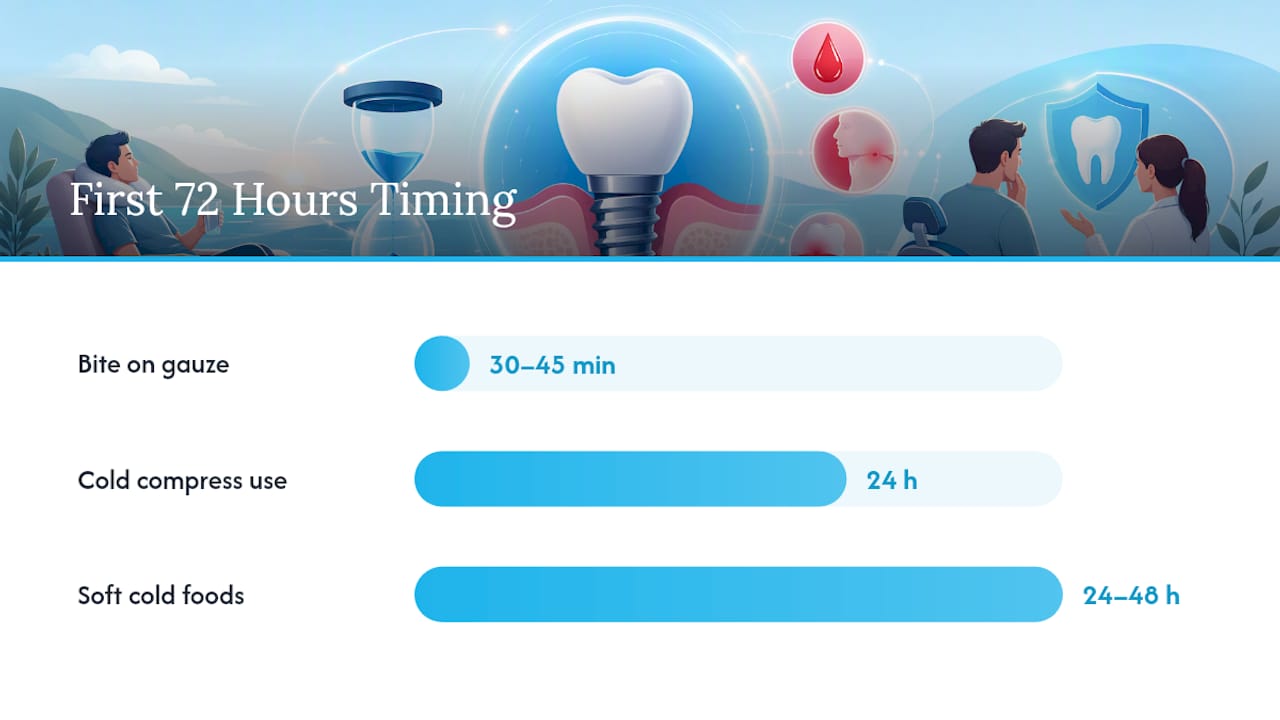
- Control bleeding with gauze. Bite firmly for 30 to 45 minutes at a time, replacing the pad as needed. Light pink-tinged saliva is normal for a day or two; steady, bright red bleeding that soaks through gauze repeatedly is not.
- Ice for the first 24 hours. Apply cold compresses in 15 to 20 minute intervals to limit swelling before it peaks. After the first day, switch to warm compresses if soreness lingers.
- Eat cold, soft foods for 24 to 48 hours. Think yogurt, smoothies, mashed potatoes, and lukewarm soup. Skip straws entirely. The suction can dislodge the clot you’re working so hard to protect.
- Start gentle saltwater rinses after 24 hours. Avoid vigorous swishing or spitting, which also risks disturbing the clot. Your dentist may add an antiseptic rinse to the routine.
- Rest and skip strenuous activity. No heavy lifting, running, or intense workouts for at least a few days. Elevated heart rate raises blood pressure at the surgical site, which can trigger unnecessary bleeding.
Pro Tip: Stock your fridge with soft, nutrient-dense foods before surgery, not after. Trying to grocery shop with a swollen face and a mouth full of gauze on day one is a mistake almost everyone makes once.
Similar first-week principles apply to any oral surgery. If you’ve had teeth pulled before, the aftercare overlaps more than you’d expect.
How to Manage Pain After Implant Surgery
Pain typically peaks alongside swelling around day two or three, then drops steadily. Most patients manage it well with over-the-counter medication once the first 48 to 72 hours pass.
A common approach: alternate 600mg ibuprofen and 500mg to 1,000mg acetaminophen every three to four hours, staggered so you’re never taking both at once. This combination often outperforms prescription opioids for dental pain without the grogginess. Your dentist may prescribe something stronger for the first day or two if grafting or multiple implants were involved.
Check every medication label for hidden acetaminophen if you’re prescribed a combination painkiller. Doubling up accidentally is one of the most common medication errors after oral surgery. Skip driving or operating machinery if you’re taking anything sedating.
What Slows Down Dental Implant Healing
Not everyone heals at the same pace, and some factors are within your control.
- Smoking measurably raises the risk of delayed healing and implant failure. Quitting even a few weeks before surgery, and staying smoke-free during healing, meaningfully improves your odds.
- Bone grafting, sinus lifts, or multiple implants placed at once extend the timeline. When grafting happens alongside implant placement, clinicians often schedule longer imaging follow-up and may delay loading the final crown.
- Uncontrolled diabetes and certain medications, including some bisphosphonates used for osteoporosis, can interfere with bone healing. Flag these with your dental team before surgery so they can plan accordingly.
Warning Signs During Dental Implant Recovery
Most discomfort peaks early and fades. Pain or swelling that gets worse after day three is the pattern that deserves attention, not the pattern that’s simply loud on day one.
Call your dental team promptly if you notice:
- Pain that intensifies rather than improves after 72 hours
- Fever, pus, or a persistent foul taste in your mouth
- Heavy bleeding that soaks through gauze repeatedly and won’t slow
- Numbness that lingers well past the expected anesthesia window
- An implant that feels loose or shifts when you bite
Patient education about the expected swelling curve has been shown to reduce unnecessary emergency calls, because most patients who understand the normal timeline can distinguish it from a real problem. For uncontrolled bleeding or signs of a severe allergic reaction, go to the emergency room rather than waiting for a callback. For everything else on this list, same-day contact with your dental office is the right move. Early evaluation almost always means a simpler fix.
When Is a Dental Implant Fully Healed?
Your dentist confirms osseointegration through a combination of clinical stability checks and imaging, typically a periapical X-ray or CBCT scan, at scheduled follow-up visits. Outward appearance can be deceiving during those middle months; imaging is the only reliable way to know what’s happening beneath the gum line.
Once stability is confirmed, usually within that 3 to 6 month window, your dentist places the final crown, bridge, or denture. Expect brief bite adjustments and mild sensitivity for a few days afterward. From there, long-term success depends on the same habits that protect natural teeth: daily brushing and flossing, plus regular professional cleanings to catch early signs of peri-implant disease before it progresses.
A Clinic’s View on Healing Expectations
Staged healing is normal, not a sign something’s wrong. With clear instructions and imaging to confirm each step, most patients move through recovery without surprises. Some clinics rely on 3D imaging and digital planning to set realistic expectations from day one, and they prefer to field follow-up questions early rather than have patients guess. Keep your scheduled visits and call us when something feels off.
— Complete Dental Care
Ready to Talk About Dental Implants?
If you’re weighing your options for missing or failing teeth, Complete Dental Care gives you a clearer starting point than piecing together advice from forums and generic timelines. An approach using 3D imaging and digital scanning can map each case before surgery, so patients know what their specific recovery is likely to look like instead of a generic average.
We offer everything from single-implant placement to full-arch solutions like Teeth in a Day for patients who want to avoid a long staged timeline altogether. Consultations typically include a review of medical history, imaging to assess bone volume, and discussions about financing and savings plan options for patients without dental insurance. Bring a list of current medications and any past dental records you have.
Ready to see what your own surgical implant dentistry plan could look like? Schedule a consultation with Complete Dental Care and get a timeline built around your case, not a generic one.
This article is general information, not a substitute for advice from a qualified doctor. Consult a qualified healthcare professional about your own circumstances before acting on anything here.
Sources
- Dental Implant Procedures – American Academy of Periodontology
- Dental implant surgery – Mayo Clinic
- Patients’ perception of recovery after dental implant placement – PMC