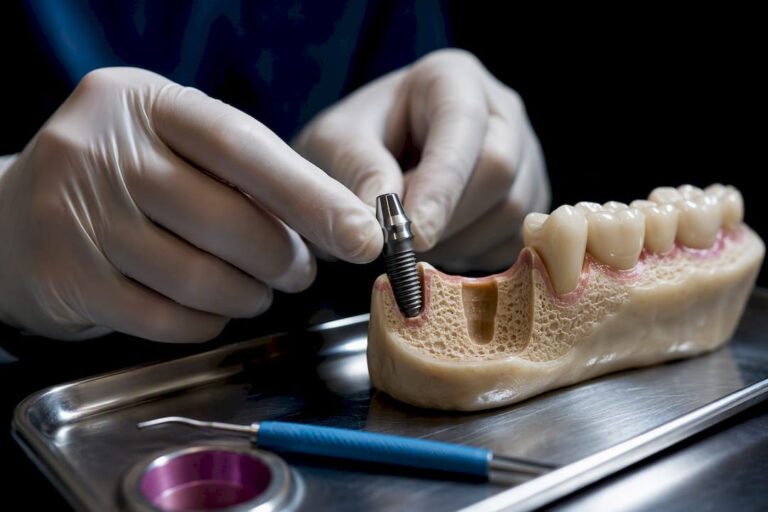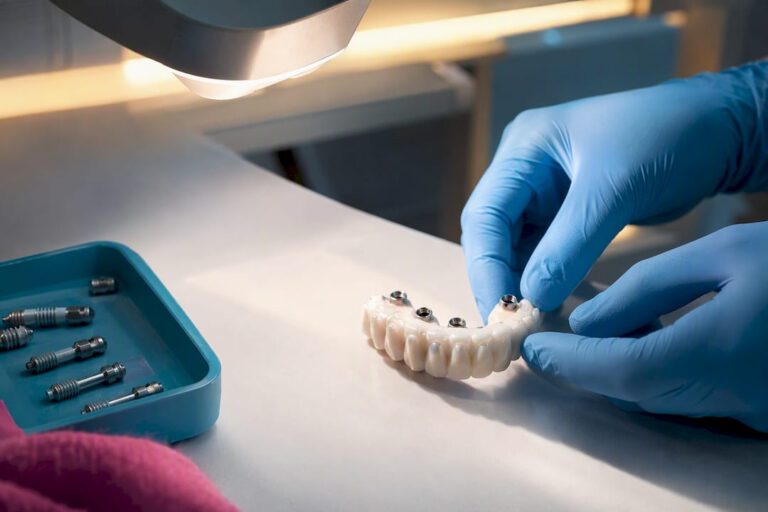
Most dental implant cases run 3 to 9 months from first consultation to final crown, and the reason is almost always the same: bone needs time to fuse to titanium, a process called osseointegration that takes roughly 2 to 6 months. Everything else on the calendar (extractions, grafts, lab work) gets added on top of that biological clock.
- Fastest case: a single implant in a healed socket with strong bone can move from placement to crown in about 3 to 4 months.
- Slowest case: a full-arch case needing extractions, a bone graft, or a sinus lift can stretch past a year before the final teeth go in.
Statistic Callout: The AAID notes most patients return to normal activity within 7 to 14 days of surgery, even though the bone underneath is still months from being fully integrated. Recovery from surgery and readiness for a permanent tooth are two different clocks, and confusing them is the most common reason patients feel blindsided by delays.
Key Takeaways
Most dental implant timelines run 3 to 9 months, and osseointegration, the 2 to 6 month bone-fusion window, is the single biggest driver of total treatment time.
| Point | Details |
|---|---|
| Total timeline varies widely | Simple single-tooth cases run 3 to 4 months; grafted full-arch cases can exceed a year. |
| Osseointegration sets the pace | Bone needs roughly 2 to 6 months to fuse around the implant before restoration. |
| Placement timing matters | Immediate, early, and delayed placement each trade surgery count against bone-healing quality. |
| Compliance changes outcomes | Smoking cessation and following aftercare rules directly affect healing speed and success rates. |
| Complete Dental Care streamlines diagnostics | In-house CBCT imaging and guided surgery help qualified patients access faster protocols like Teeth in a Day. |
This article is general information, not a substitute for advice from a qualified doctor. Consult a qualified healthcare professional about your own circumstances before acting on anything here.
Table of Contents
- Dental Implant Timeline: Stage by Stage
- Immediate, Early, or Delayed Placement: Which Timeline Fits You?
- What Actually Changes Your Personal Timeline
- What Recovery Actually Feels Like, Week by Week
- When a Faster Protocol Makes Sense
- How We Approach Scheduling at Complete Dental Care
- Ready for a Timeline Built Around Your Case?
- Sources
Dental Implant Timeline: Stage by Stage
Every implant case moves through the same core stages. What changes case to case is how long each one takes, and whether a stage gets skipped entirely.
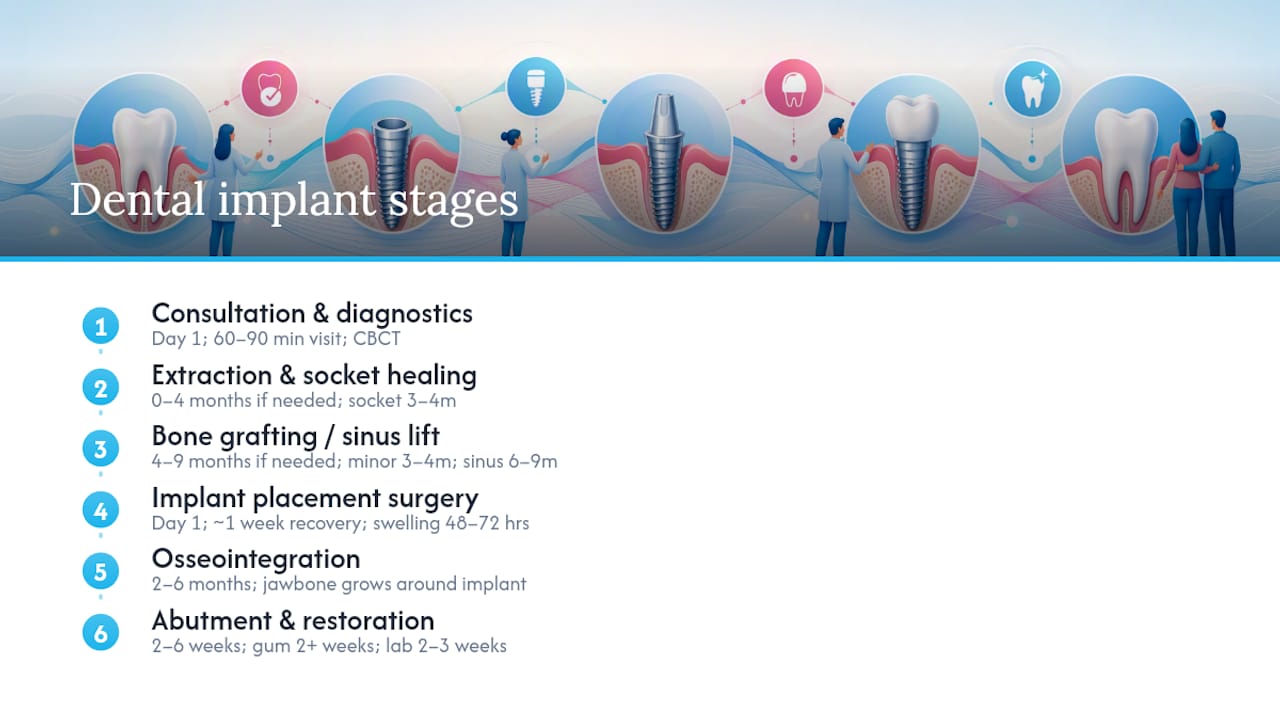
Consultation and diagnostics (Day 1, one visit). Your dentist reviews medical history and takes CBCT 3D imaging to measure bone volume, map nerves, and check sinus position. This appointment usually runs 60 to 90 minutes. Skipping thorough imaging here is how surprise complications show up mid-treatment, so most practices treat it as non-negotiable.
Extractions and socket healing (0 to 4 months, if needed). If a damaged tooth needs to come out first, soft tissue closes in about 2 weeks, but the socket needs 3 to 4 months before it’s dense enough to anchor an implant reliably.
Bone grafting or sinus lift (4 to 9 months, if needed). Thin ridges or a low sinus floor often need grafted bone before an implant can go in at all. Minor grafts add 3 to 4 months of healing; a sinus lift can add 6 to 9 months, since that graft site heals more slowly than jawbone.
Implant placement surgery (Day 1, plus one week of recovery). The oral surgeon places the titanium post under local anesthesia or sedation. Most patients feel more pressure than sharp pain and are back at a desk job within a day or two, per the AAID’s recovery guidance. Swelling peaks at 48 to 72 hours and fades over the following week.
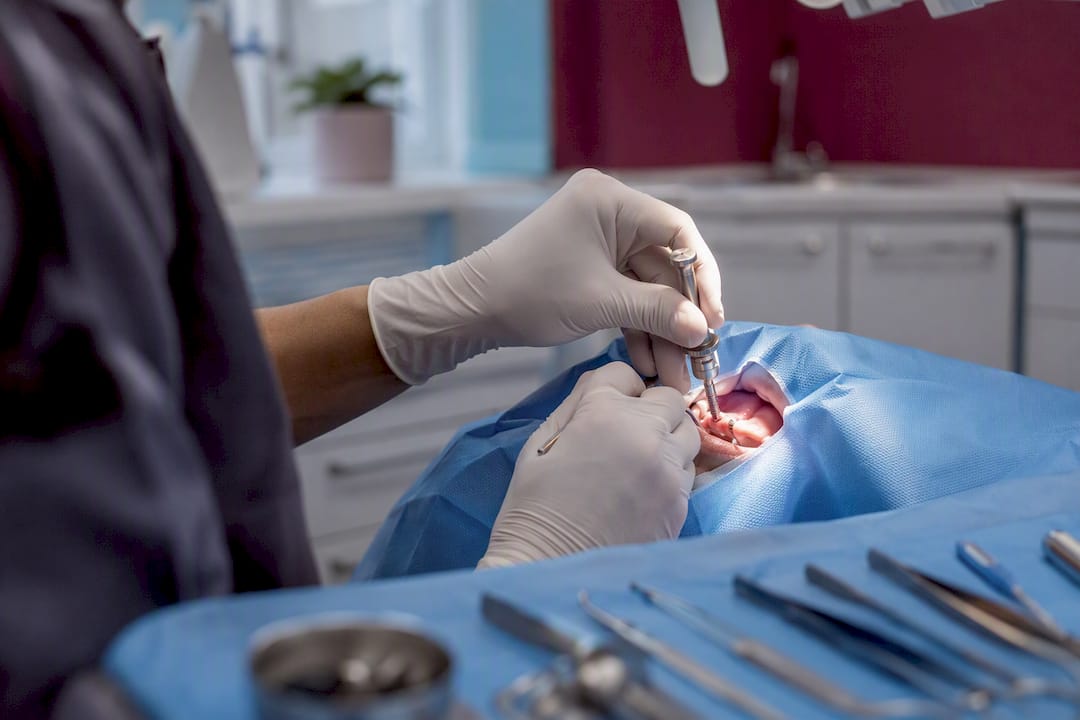
Osseointegration (2 to 6 months). This is the real waiting period. Jawbone cells grow around the implant surface until it’s structurally fused. Denser lower-jaw bone often integrates faster than the sinus-adjacent upper jaw, which is one reason upper-arch cases tend to run longer.
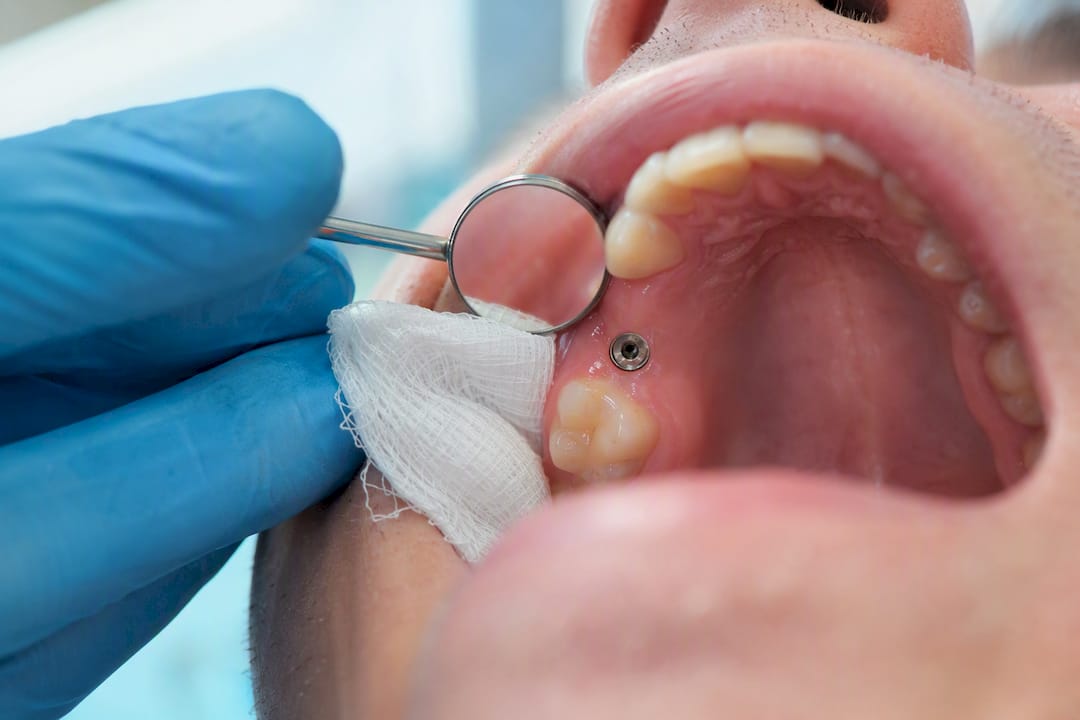
Abutment placement and restoration (2 to 6 weeks). Once integration is confirmed, a second short procedure attaches the abutment. Mayo Clinic notes the gum tissue needs at least two weeks to heal around the abutment before an impression or digital scan can be taken. The lab then needs 2 to 3 weeks to fabricate the crown.
Pro Tip: Ask your dentist for a written stage-by-stage estimate at your consultation, not just a total. Knowing which stage you’re in helps you tell the difference between “healing on schedule” and “something’s off.”
Immediate, Early, or Delayed Placement: Which Timeline Fits You?
The timing of placement relative to extraction is one of the biggest levers on your total schedule, and it’s a clinical judgment call, not a preference.
- Immediate placement: the implant goes in the same day as the extraction, cutting out separate healing time and reducing the number of surgeries.
- Early placement: the dentist waits 4 to 8 weeks for soft tissue to close before placing the implant.
- Delayed (traditional) placement: the socket heals fully for 3 to 6 months or longer before implant surgery begins.
Immediate placement sounds like the obvious winner, but the evidence is more nuanced. One clinical comparison found delayed-placement groups showed better crestal bone healing than immediate placement, even though immediate placement meant fewer surgeries and less time without a tooth. A separate retrospective analysis found similarly high survival rates for both approaches overall, but flagged higher failure risk tied to osteoporosis and male sex within their sample. Site anatomy, infection at the extraction site, and whether the tooth sits in the visible “esthetic zone” all factor into which option a surgeon recommends.
What Actually Changes Your Personal Timeline
- Smoking: tobacco use delays bone mineralization and raises failure risk, often the single biggest controllable factor in how fast you heal.
- Osteoporosis and diabetes: both are linked to slower bone remodeling and may push a surgeon toward a delayed protocol.
- Bone volume and density: thin or soft bone often means grafting first, which is the biggest schedule add-on there is.
- Implant surface technology and diameter: modern roughened-surface implants integrate somewhat faster than older smooth designs, though individual healing still varies.
- Insurance and lab turnaround: claims processing and outside lab schedules can quietly add weeks that have nothing to do with biology.
Pro Tip: If you smoke, ask about a cessation plan before surgery, not after. Quitting even a few weeks before placement measurably improves your integration odds. A smoker-specific oral care routine can also help manage staining and gum irritation during healing.
What Recovery Actually Feels Like, Week by Week
The first week is about managing swelling and soft food, not enduring serious pain. Most people are back to light work in a day or two, with swelling peaking around 48 to 72 hours. By weeks 2 through 8, sutures dissolve or get removed, gum tissue firms up, and you gradually return to normal brushing and a wider diet. Months 2 through 6 are the quiet phase: bone is maturing around the implant, so avoiding hard, crunchy foods and grinding habits matters more than it seems.
Persistent swelling past a week, fever, uncontrolled bleeding, or an implant that feels loose or shifts under pressure are not normal healing signs. Call your dentist immediately if any of these show up.
When a Faster Protocol Makes Sense
Well-qualified patients, meaning sufficient bone volume, no active infection, and stable overall health, are often candidates for accelerated care. Complete Dental Care uses in-house CBCT imaging, digital scanning, and computer-guided surgical guides to plan placement with more precision before the first incision, which is part of what makes protocols like Teeth in a Day possible for the right candidates. Speed only makes sense when diagnostics support it; if bone or health factors say otherwise, staged care remains the safer path to a lasting result.
Pro Tip: Bring a full medication list and any prior dental X-rays to your first visit. The more your dentist knows upfront, the more accurate your timed treatment plan will be.
How We Approach Scheduling at Complete Dental Care
Every timeline we give balances speed with what the bone actually needs to heal well long term. Diagnostics come first because a plan built on real imaging holds up better than one built on guesswork, and patient follow through, especially around tobacco and diet, matters as much as anything we do in the chair.
Ready for a Timeline Built Around Your Case?
Generic online estimates can’t account for your bone density, your medical history, or whether you need a graft first, which is exactly why a consultation with imaging matters more than a quick search. Complete Dental Care’s in-house CBCT scanning and digital planning let you walk out of your first visit with an actual, personalized schedule instead of a rough guess.
Whether you need a single implant, a full-arch solution, or want to know if you qualify for an accelerated protocol, our surgical implant dentistry team can map out every stage before you commit to anything. If you’ve been told you might be a candidate for a same-day solution, ask about Teeth in a Day during your visit. Schedule your consultation today and get a written, stage-by-stage plan instead of a vague estimate.
Sources
- What to Expect – The Dental Implant Experts – AAID-Credentialed Dentists
- Dental implant surgery – Mayo Clinic
- Immediate vs delayed implant placement study (PMC8687037)
- Survival rates comparison of immediate and delayed implants (MDPI Journal of Clinical Medicine)