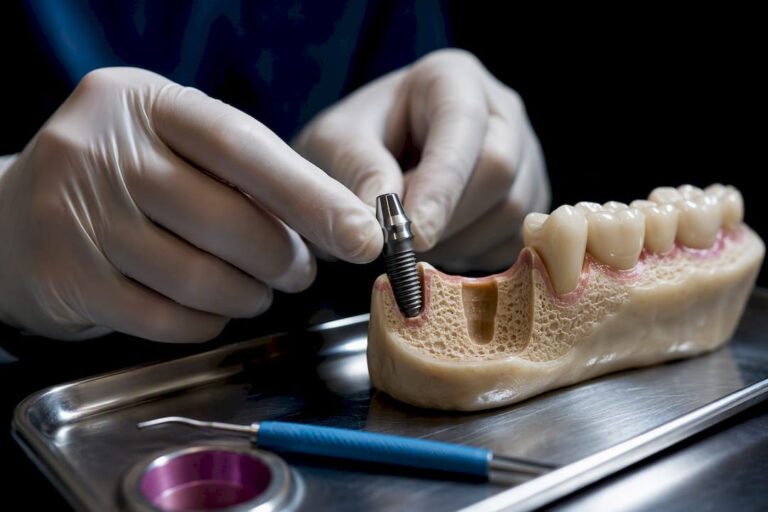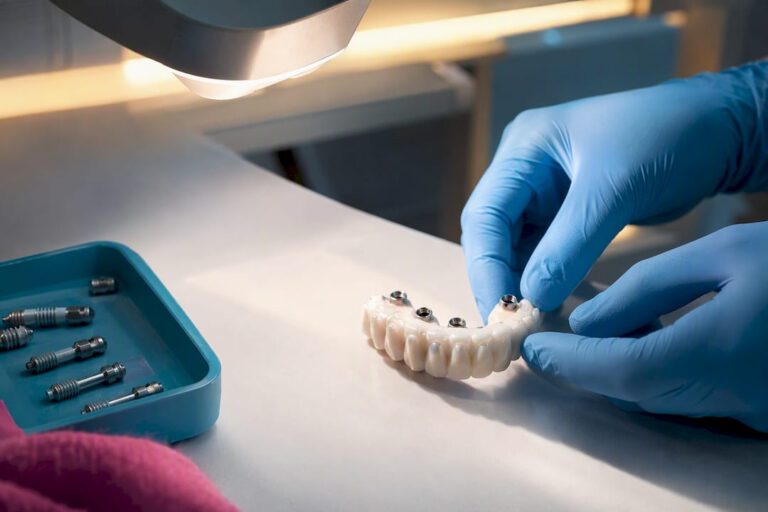
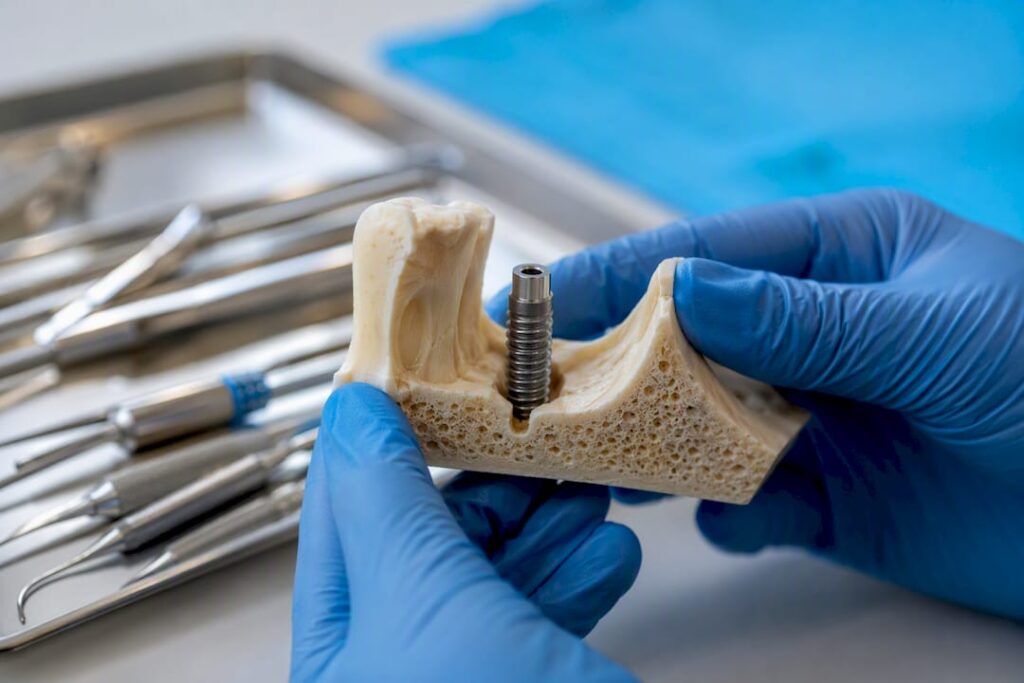
A titanium implant post commonly lasts decades, often for the rest of a patient’s life, while the crown attached to it typically needs replacing after roughly 10 to 15 years. That distinction trips up almost everyone researching implants for the first time, because “dental implant lifespan” actually describes two different clocks running at once.
The data backs this up at scale. A 20-year meta-analysis of implant survival found prospective studies reporting survival near 92% and retrospective studies near 88%, with conservative estimates dropping toward 78% once patients lost to follow-up are factored in. Ten-year outcomes look even stronger.
- 10-year survival: commonly cited above 90% across systematic reviews
- 20-year survival: roughly 78% to 92%, depending on study design
- Biggest modifiable factor: consistent supportive implant therapy and early treatment of gum inflammation around the implant
The single biggest lever a patient controls isn’t the implant brand or the surgeon’s technique. It’s whether they show up for maintenance visits and treat early inflammation before it becomes bone loss.
Key Takeaways
Dental implant fixtures routinely last decades or a lifetime, while crowns need replacement roughly every 10 to 15 years, and long-term survival depends far more on maintenance than on the implant hardware itself.
| Point | Details |
|---|---|
| Fixture outlasts crown | The titanium post can last decades or a lifetime; the crown typically needs replacement every 10 to 15 years. |
| 20-year survival varies by method | Estimates range from about 78% to 92% depending on study design and dropout assumptions. |
| Maintenance is the top lever | Adherence to supportive implant therapy is one of the strongest predictors of long-term implant survival. |
| Watch modifiable risks | Smoking, uncontrolled diabetes, bruxism, and missed cleanings all raise failure risk and can be managed. |
| Full-arch needs closer follow-up | Immediate-load and full-arch solutions carry higher biomechanical demands and require a clear maintenance plan, which Complete Dental Care builds into every full-arch treatment plan. |
Table of Contents
- What Determines Dental Implant Lifespan Over Time?
- Implant Post, Abutment, or Crown: Which Part Wears Out?
- What Raises the Risk of Early Implant Failure?
- How Often Should You See a Dentist After Getting Implants?
- What Happens to Implants at 5, 10, and 20 Years?
- What Should You Ask Before a Full-Arch or Same-Day Implant?
- What Are the Warning Signs of Implant Failure?
- Why Implant Longevity Comes Down to Habits, Not Hardware
- Ready to Discuss Your Implant Options?
- Frequently Asked Questions About Dental Implant Lifespan
- Sources
What Determines Dental Implant Lifespan Over Time?
Survival statistics vary more than most patients expect, and the gap usually comes down to how researchers define “success” and how long they track patients. A systematic review of long-term implant outcomes puts 10-year survival comfortably above 90%, with minimal average bone loss over that window. Push the timeline to 20 years and the picture splits three ways depending on methodology.
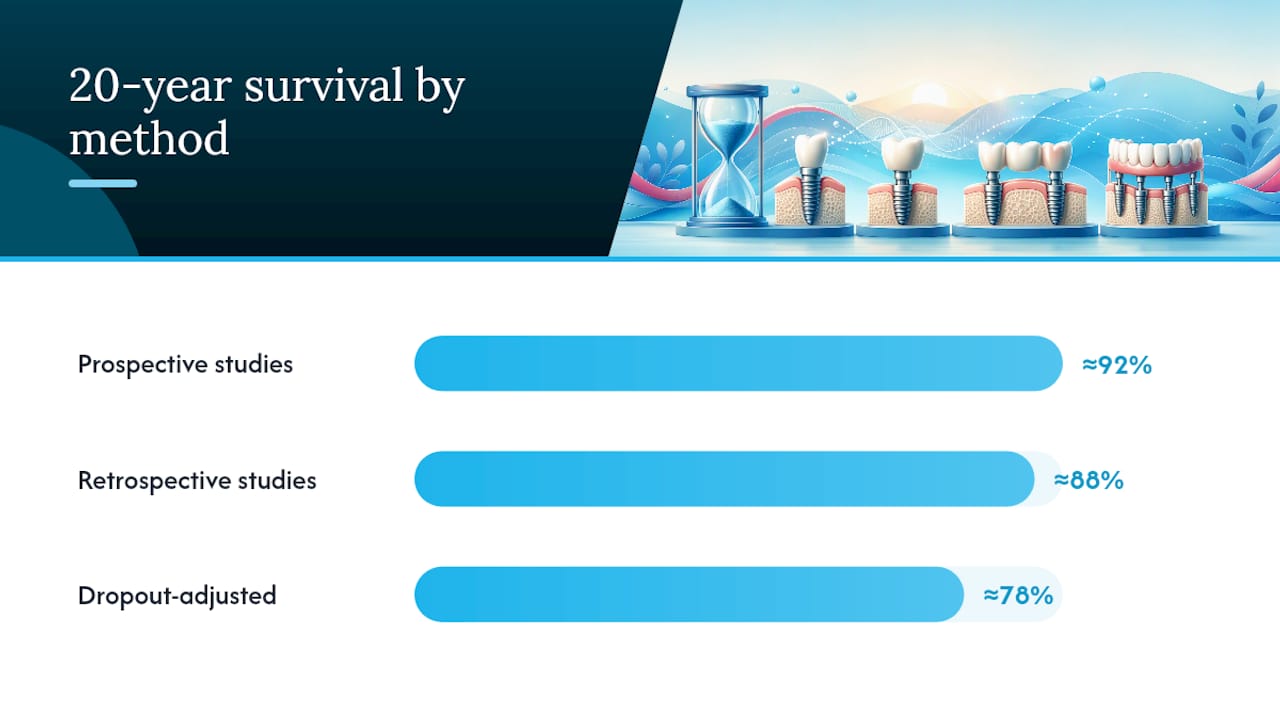
The 20-year meta-analysis breaks it down clearly: prospective studies, where researchers actively track patients, report about 92% survival. Retrospective studies, which pull from existing records, land closer to 88%. When researchers apply a conservative statistical correction assuming that patients who dropped out of the study had failed implants, survival estimates fall to around 78%.
That’s not implants getting worse with age. It’s a math problem: longer studies lose more patients to follow-up, and every reasonable assumption about those missing patients changes the final number.
- Prospective (actively monitored) studies: ~92% at 20 years
- Retrospective (records-based) studies: ~88% at 20 years
- Conservative dropout-adjusted estimate: ~78% at 20 years
Here’s the part that matters most for planning: most late-stage implant loss traces back to biological complications, not mechanical wear. Peri-implant mucositis affects roughly 43% of implant patients, and peri-implantitis affects about 22%, and untreated cases are the primary driver of implants failing after the 10-year mark. The titanium itself rarely wears out.
Implant Post, Abutment, or Crown: Which Part Wears Out?
“How long do dental implants last” is really three separate questions, because the implant has three parts with three different service lives.
The fixture is the titanium post surgically anchored into the jawbone. Once it fuses with bone through osseointegration, it’s built to last 20-plus years and often functions for the patient’s entire life. A long-term cohort study following implants for 38 to 40 years found a cumulative survival rate of 95.6% for the fixture itself, which is a remarkable number for any medical device.
The abutment connects the post to the visible crown and generally lasts as long as the fixture unless it’s damaged or the prosthetic design changes.
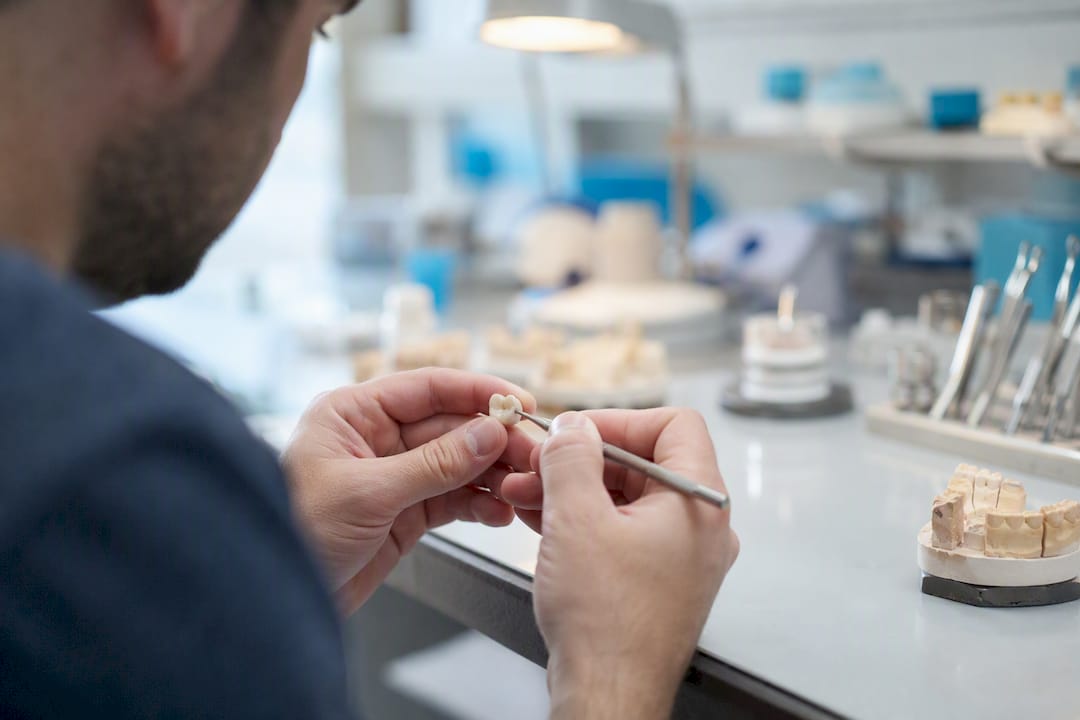
The crown, the visible tooth-shaped cap, is the wear item. That same 38 to 40 year cohort study found crown survival of only about 60.9%, meaning most patients needed at least one replacement crown well before the underlying implant showed any trouble. Crown replacement isn’t implant failure. It’s routine, expected, and comparable to replacing a car’s tires while the engine keeps running. Material matters too: zirconia abutments resist corrosion better than some alternatives, and monolithic zirconia or layered porcelain crowns each carry different chip and wear profiles worth discussing with your dentist.
What Raises the Risk of Early Implant Failure?
Certain habits and health conditions measurably shorten implant lifespan, and the encouraging news is that most of them are within a patient’s control.
- Smoking. Cigarette use is repeatedly linked to reduced implant survival by impairing blood flow to healing tissue. Mitigation: quitting before surgery, even a few weeks out, measurably improves integration odds.
- Uncontrolled diabetes. Poor glycemic control slows healing and raises infection risk around the implant site. Mitigation: coordinating implant timing with your physician once blood sugar is stable.
- History of periodontitis. Patients with prior gum disease carry a higher baseline risk for peri-implant complications. Mitigation: full periodontal treatment before implant placement, not after.
- Skipping maintenance visits. Lack of adherence to supportive implant therapy is one of the strongest predictors of implant loss. Mitigation: keeping every recall appointment, even when nothing feels wrong.
- Bruxism (teeth grinding). Excess mechanical load can loosen components or crack crowns over time. Mitigation: a custom night guard.
- Insufficient bone volume. Thin or short bone at the surgical site raises early failure risk. Mitigation: bone grafting or 3D-imaging-guided placement planning.
- Certain medications. Observational research has associated SSRIs and proton pump inhibitors with higher implant failure rates, likely through effects on bone metabolism.
Pro Tip: Bring your full medication list, including over-the-counter antacids, to your implant consultation. Many patients don’t think to mention a PPI they’ve taken for years, and it’s exactly the kind of detail that changes a treatment plan.
How Often Should You See a Dentist After Getting Implants?
Supportive implant therapy is the maintenance system that separates a 10-year implant from a 30-year implant, and it’s more specific than “brush and floss.”
- Professional recall visits, typically every three to six months depending on your risk profile, where your dentist checks probing depths around the implant and reviews radiographs for early bone changes.
- Targeted cleaning using instruments designed not to scratch the implant surface, since scratches can create bacteria-trapping grooves.
- Daily interdental brushes or implant-specific floss to clear the tight space between the crown and gum, where a regular toothbrush can’t reach effectively.
- A powered toothbrush, which several studies associate with better plaque control around implant restorations than manual brushing alone.
- Topical antiseptic rinses, when your dentist recommends them, especially during the months right after placement.
The evidence for sticking to this schedule is strong. A systematic review on supportive therapy and implant longevity found that patients who kept up with maintenance had significantly fewer biologic complications and lower implant loss than those who didn’t. The ITI consensus treats catching peri-implant mucositis early as the single highest-leverage moment in an implant’s entire lifespan, because that stage is still reversible.
Pro Tip: If your gums around an implant look slightly puffy or bleed when you floss, don’t wait for your next scheduled cleaning. Mucositis is easy to treat early and much harder to reverse once it progresses to bone loss.
What Happens to Implants at 5, 10, and 20 Years?
Think of implant ownership in checkpoints rather than a single lifespan number.
- Year 5: routine check, usually uneventful if hygiene has been consistent.
- Year 10: the point where crown wear becomes noticeable for many patients; a replacement crown here is common and not a sign anything went wrong with the implant itself.
- Years 10 to 20: peri-implantitis risk climbs if maintenance has lapsed, making this the window where most preventable losses occur.
- Beyond 20 years: fixtures placed decades ago and well maintained, as documented in the 38 to 40 year cohort data, frequently remain in function.
Younger patients face a longer risk horizon simply because they’ll carry the implant longer, which makes early habit-building more valuable than for older patients. Older patients need closer attention to comorbidities like diabetes or osteoporosis medications that can influence healing and bone density over time.
What Should You Ask Before a Full-Arch or Same-Day Implant?
Full-arch and immediate-load solutions, often marketed as “Teeth in a Day,” carry heavier biomechanical loads across more connected components than a single implant, which raises the maintenance stakes. Research on full-arch rehabilitation outcomes shows good survival rates are achievable, but only with clear maintenance agreements between patient and provider from day one.
Before committing to a provider for full-arch implant treatment, ask:
- What imaging technology guides the placement plan?
- How many full-arch cases has this team completed?
- What does the recall schedule look like in year one versus year five?
- Who handles prosthetic repairs if a component needs adjustment?
Pro Tip: Ask specifically how digital 3D imaging factors into your treatment plan. It’s one of the clearest indicators of how precisely your case has been mapped before surgery even starts.
What Are the Warning Signs of Implant Failure?
Failure timing tells you what’s actually going wrong. Early failure, usually within the first few months, means the implant never properly fused with bone. This shows up as looseness, pain, or the implant not integrating during healing.
Late failure, arriving years later, is typically peri-implantitis (an infection eating away at supporting bone) or a mechanical issue like a loosened screw or fractured crown.
- Non-surgical treatment for early-stage inflammation, cleaning and antimicrobial therapy.
- Surgical peri-implant therapy for more advanced bone loss around an otherwise stable fixture.
- Crown repair or replacement for chips, cracks, or normal wear, which doesn’t touch the implant itself.
- Explantation and re-implantation planning in cases where the fixture itself has failed, often requiring bone grafting before a second attempt.
A specialist referral is appropriate whenever bone loss is visible on imaging or when a general dentist has attempted non-surgical treatment without improvement.
Why Implant Longevity Comes Down to Habits, Not Hardware
The conventional pitch around implants leans hard on the hardware: titanium, precision surgery, the promise of a permanent fix. That framing undersells the real story. The 38 to 40 year cohort data showing 95.6% fixture survival against only 60.9% crown survival tells you the metal was never the weak link. The soft tissue around it was.
That’s where most patient education falls short. People get detailed instructions for the first two weeks after surgery and then are left to assume the implant is maintenance-free forever. It isn’t. The ITI’s framing of implant therapy as a lifelong commitment is the more honest one, and it should change how patients budget both their time and their expectations.
If there’s one priority to take from the research, it’s this: treat peri-implant mucositis the moment you notice it, not at your next scheduled cleaning. That single habit does more for 20-year survival than any material upgrade or surgical technique ever will.
Ready to Discuss Your Implant Options?
Complete Dental Care builds every implant treatment plan around 3D imaging and digital scanning from the start, which means the maintenance schedule you’ll need years down the road gets mapped before surgery ever happens, not figured out after the fact.
For patients considering full-arch or same-day solutions, Teeth in a Day at Complete Dental Care includes the recall structure and hygiene coaching that the research in this guide points to as essential for long-term success. Single or multiple implant patients get the same digital-planning approach through the practice’s surgical implant dentistry services. Patients weighing long-term costs alongside insurance may also find it useful to review dental coverage options for ongoing care as part of their planning.
If you’re ready to find out what your mouth actually needs, schedule your first visit and get a treatment plan built around your bone structure, your habits, and your long-term goals, not a generic timeline.
Frequently Asked Questions About Dental Implant Lifespan
Do dental implants wear out like natural teeth?
The titanium fixture doesn’t wear the way enamel does. Most long-term loss comes from gum and bone infection around the implant, not mechanical erosion of the post itself.
What is the average lifespan of dental implants compared to the crown on top?
The implant post commonly functions for 20-plus years or a lifetime, while the crown typically needs replacement around the 10 to 15 year mark due to normal wear.
Can poor oral hygiene really cause an implant to fail years later?
Yes. Plaque buildup around an implant can progress to peri-implantitis, a leading cause of late implant loss, which is why consistent home care and professional cleanings matter as much years 10 through 20 as they do in year one.
Are zirconia implants more durable than titanium ones?
Both materials show strong long-term survival data in current research. Titanium has the longer track record from multi-decade studies, while zirconia offers a metal-free option some patients prefer for aesthetic reasons.
Does smoking really shorten dental implant lifespan?
Research consistently links smoking to reduced implant survival, primarily because it impairs the blood flow tissue needs to heal and stay healthy around the implant.
This article is general information, not a substitute for advice from a qualified doctor. Consult a qualified healthcare professional about your own circumstances before acting on anything here.
Sources
- Meta-analysis of 20-year dental implant survival (PMC)
- Effects of anti-infective preventive measures on implant complications (ITI consensus)
- Outcome of single dental implants over 38–40 years (Clinical Implant Dentistry and Related Research)
- Factors associated with reduced dental implant survival (Clinical Implant Dentistry research)
- Influence of medications and implant design on outcomes (PubMed)