Stick to cool or lukewarm liquids and very soft foods that need no chewing for the first 48 hours after surgery, and load them with protein. Skip anything hot, crunchy, sticky, or seeded until your dentist clears you. Beyond texture, healing depends on what’s actually in the food. Protein rebuilds tissue, vitamin C supports the gum repair, and vitamin D plays a real role in how well the implant fuses to bone.
TL;DR:
- Soft, lukewarm foods rich in protein, vitamin C, and vitamin D should be prioritized to support tissue repair and implant stability during healing.
- Avoid hard, sticky, hot, or seed-containing foods, as they can dislodge the clot, irritate tissues, or introduce infection risks.
- Healing from implants involves phased dietary changes, with restrictions extending from 48 hours up to 12 weeks, depending on the procedure type.
- Vitamin C supplements around 1,000 mg daily and maintaining adequate protein intake can help improve soft tissue healing and osseointegration.
- Longer recovery periods are necessary for grafts, immediate-loading cases, and diabetic patients to prevent complications and ensure proper healing.
questions about this? we're happy to help.
Every patient's situation is a little different. If you want to talk through what this means for you, our Greenville team is one call away.
schedule a free consultationTable of Contents
- What to Eat After Implants: A Phased Timeline
- Best Soft Foods for Implant Recovery
- Foods to Avoid After Dental Implant Surgery
- What Nutrients Actually Speed Up Healing?
- Diet Adjustments for Grafts, All-on-4, and Diabetes
- Sample Meals for Implant Recovery
- What Recovering Patients Get Wrong About Eating
- Get Personalized Recovery Guidance From Complete Dental Care
- Sources
- FAQ
What to Eat After Implants: A Phased Timeline
Your mouth heals in stages, and your plate needs to match each one. Rushing from smoothies to steak in week one is the fastest way to disturb a healing clot or irritate a fresh incision. Here’s how the phases break down.
- 0 to 48 hours: Liquids and ultra-smooth purees only. Think broth, yogurt, blended soup, and protein shakes eaten with a spoon, not a straw. Suction from sipping can dislodge the clot protecting the surgical site. Hot drinks increase bleeding and swelling right when you need neither.
- Days 3 to 7: Move into spoonable purees and lukewarm blended soups. Rinse gently only if your dentist has specifically told you to, and never swish hard enough to feel pressure.
- Weeks 2 to 4: Soft solids enter the picture. Scrambled eggs, well cooked pasta, flaky fish. Keep chewing off the implant side, and stay away from anything with seeds or hard fragments that could lodge near the site.
- Beyond week 4: Most patients can start reintroducing firmer foods gradually, testing one texture at a time. If chewing near the implant still feels tender or you notice swelling that hasn’t faded, extend the soft phase and call your dentist rather than pushing through it.
Best Soft Foods for Implant Recovery
Soft doesn’t have to mean boring, and it definitely shouldn’t mean skipping meals because nothing sounds appealing. Building actual meals around a short list of reliable ingredients makes the soft-food phase easier to stick with, which matters because half-hearted compliance is usually where healing setbacks start.
Breakfast and dairy
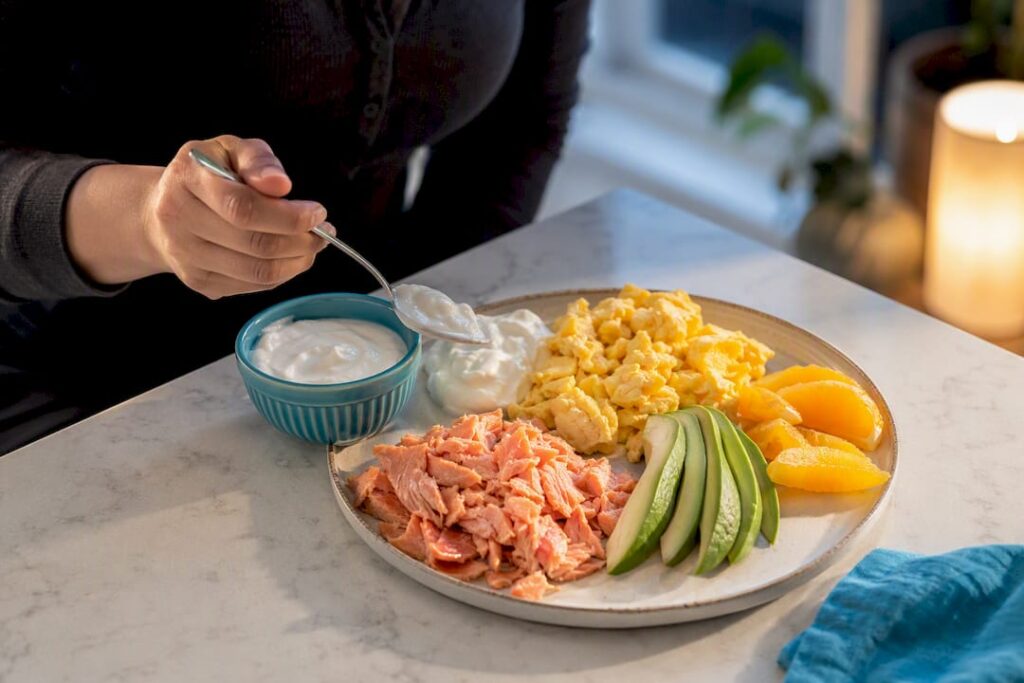
- Soft scrambled eggs, cooked low and slow until custardy
- Greek yogurt or cottage cheese, plain or blended with soft fruit
- Oatmeal cooked longer than usual and thinned with milk
Soups and broths
- Strained or fully blended vegetable soups
- Bone broth, served lukewarm rather than steaming
Proteins
- Mashed soft white fish like tilapia or cod
- Silken tofu, mashed or blended into sauces
- Pureed legumes, such as smooth lentil or bean mash
- Protein shakes, sipped from a spoon or open cup
Fruits and vegetables
- Ripe bananas and unsweetened applesauce
- Cooked and mashed carrots, sweet potato, or squash
- Avocado, mashed straight or folded into eggs
Snacks and comfort foods
- Pudding or soft ricotta with a drizzle of honey
- Homemade popsicles made from non-citrus fruit, kept away from anything acidic
Pro Tip: Batch-cook one protein and one vegetable puree at the start of the week, then mix them into different bases (broth, yogurt, mashed potato) so you’re not eating the same bowl of mush for seven straight days.
Foods to Avoid After Dental Implant Surgery
A handful of food categories cause the majority of avoidable setbacks, and the risk isn’t always what people expect.
- Hard and crunchy foods like nuts, chips, and hard bread crusts can crack against the surgical site or a healing prosthesis.
- Sticky or chewy foods such as caramel and gum pull at tissue that’s still knitting together.
- Acidic, spicy, or very hot foods irritate exposed tissue and can increase swelling right when you’re trying to calm it down.
- Small seeds and gritty foods, including strawberries and sesame, can embed in the surgical site and raise infection risk.
- Straws, vigorous rinsing, and alcohol all threaten the blood clot or dry socket healing in the first days, even though none of them are technically food.
What Nutrients Actually Speed Up Healing?
Protein is the foundation. It supplies the amino acids your body uses to rebuild collagen and soft tissue, and a review of wound-healing strategies after implant surgery points out that a soft diet still has to deliver enough protein and calories, not just enough softness. If chewing fatigue is killing your appetite, spread protein across smaller meals or lean on shakes rather than skipping it.
Some perioperative protocols call for roughly 1,000 mg of vitamin C daily around implant surgery, based on clinical trial dosing, though the right amount for you depends on your health history and should come from your dentist, not a guess.
A randomized trial on vitamin C supplementation found improved early soft-tissue healing scores in some implant and bone graft patients, particularly around day 7 and day 14. Vitamin D matters just as much on the bone side. A scoping review on nutrients and osseointegration links low vitamin D status to weaker implant stability and higher early failure rates, which is why screening at-risk patients before or shortly after surgery is worth asking about. None of this is a green light to self-prescribe megadoses. Talk to your dentist or physician before adding high-dose supplements on your own.
Diet Adjustments for Grafts, All-on-4, and Diabetes
Not every implant patient follows the same clock. A few groups need a longer runway.
- Bone grafts need a particulate-free soft diet extended to 4 to 6 weeks or more, since grains and seeds can contaminate the graft site before it’s fully integrated.
- Immediate-loading cases (All-on-4 and other same-day options) often call for a soft diet across 8 to 12 weeks to keep chewing forces off the provisional teeth while they settle, a point echoed in immediate-loading survival data.
- Diabetes raises the stakes on blood sugar control, so lean on balanced protein and vegetables rather than building meals around sugary smoothies just because they’re easy to swallow.
- Older adults sometimes struggle to hit calorie and micronutrient targets on a liquid-heavy diet, so fortified shakes or a daily multivitamin can help fill the gap during longer recovery windows.
Sample Meals for Implant Recovery
Turning the food list into actual meals removes the guesswork at dinnertime.
- Breakfast: Soft scrambled eggs, mashed avocado, and a side of Greek yogurt.
- Lunch: Blended lentil or vegetable soup with pureed white fish or silken tofu stirred in for protein.
- Dinner: Slow-cooked shredded chicken folded into a light béchamel or broth, then mashed until smooth.
- Snacks: Protein pudding, ricotta with a touch of honey, or a spoonable smoothie (no straw).
Use broth, sauces, and a little olive oil or butter to loosen thick foods so they slide down without chewing. Let everything cool to lukewarm before it hits your mouth. For more ideas on nutrient-dense choices that support bone healing longer term, this guide to foods for bone density is worth a look once you’re past the acute recovery phase.
What Recovering Patients Get Wrong About Eating
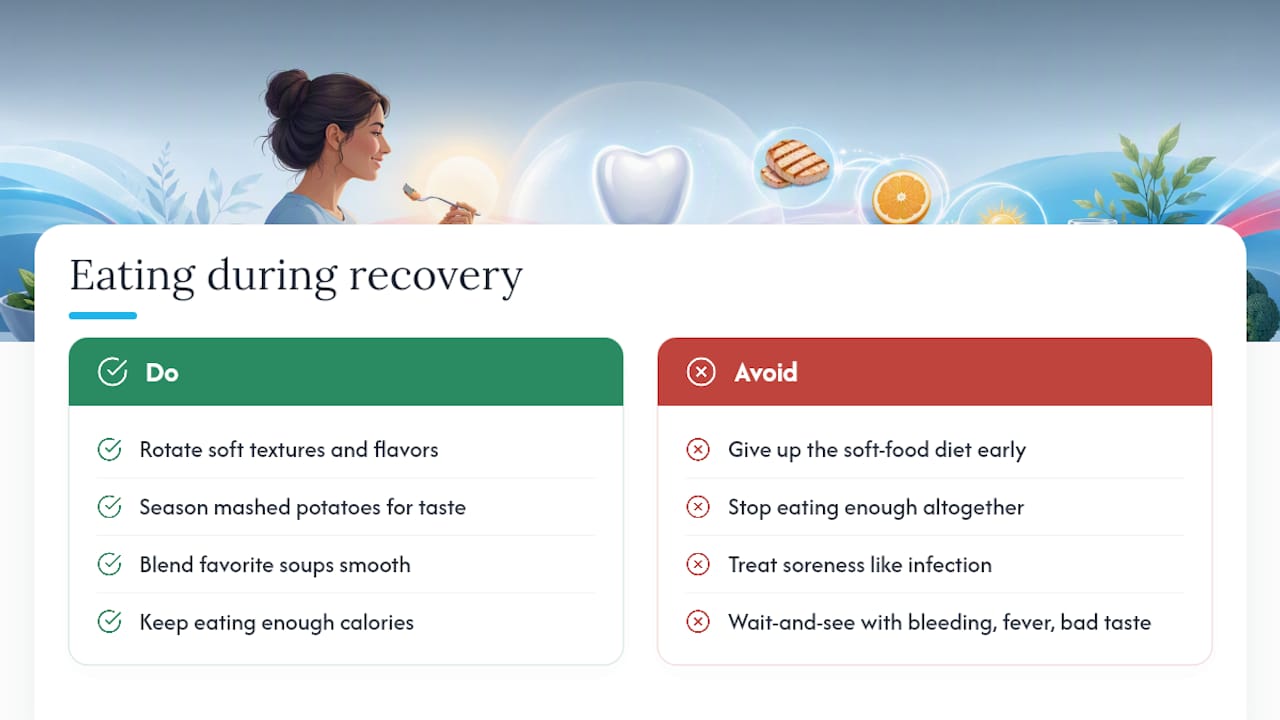
The soft-food stretch feels endless around day five, when the novelty of smoothies has worn off and real food still isn’t an option. That frustration is normal, and it’s usually where people either give up on the diet too early or stop eating enough altogether.
The fix isn’t willpower. It’s variety. Rotate textures and flavors you actually like in soft form, mashed potatoes with real seasoning, a favorite soup blended smooth, so the diet doesn’t feel like punishment. Watch for warning signs that go beyond normal soreness: persistent bleeding, fever, severe or worsening pain, or a bad taste that suggests infection. Any of those means a call to your dental team, not a wait-and-see approach.
— Complete Dental Care
Get Personalized Recovery Guidance From Complete Dental Care
A food list only goes so far when your recovery timeline depends on your specific procedure, whether that’s a single implant, a bone graft, or a full-arch case. Complete Dental Care builds post-op nutrition guidance around your actual surgery, not a generic printout, using surgical implant dentistry planning that accounts for graft sites, immediate-loading provisionals, and your general health history.
If you’re considering Teeth in a Day or comparing full-arch options, bring a list of your current medications and any chronic conditions like diabetes to your consultation so your dietary timeline can be set correctly from day one. And if you’re already recovering and notice swelling that’s getting worse, a fever, or pain that escalates instead of easing, contact Complete Dental Care directly rather than waiting for your next scheduled visit. Book a consultation today to get a diet and recovery plan built around your case, not a one-size-fits-all handout.
This article is general information, not a substitute for advice from a qualified doctor. Consult a qualified healthcare professional about your own circumstances before acting on anything here.
Sources
- Dietary Strategies to Optimize Wound Healing after Periodontal and Dental Implant Surgery: An Evidence-Based Review
- Role of vitamin C in wound healing after dental implant surgery in patients treated with bone grafts and patients with chronic periodontitis
- The effect of dietary factors and nutrients on osseointegration, dental implant success and survival: a scoping review
- Hygienic and dietetic guidelines for implant-supported full-arch immediate loading prostheses
FAQ
How long after a dental implant can I eat normal food?
Most patients return to a normal diet several weeks post-surgery, though bone graft and All-on-4 patients often need an extended soft food period before resuming regular textures.
What are the best foods to eat after getting All-on-4 implants?
Blended soups, mashed proteins like silken tofu or soft fish, and smooth purees work best, since All-on-4 provisionals need reduced chewing force for 8 to 12 weeks to stay stable.
What foods should I avoid after implant surgery?
Avoid hard and crunchy foods, sticky candy or gum, acidic or spicy dishes, small seeds, and anything eaten through a straw, since each one risks disturbing the healing site.
What helps dental implants heal faster?
Adequate protein intake, correcting a vitamin D deficiency if one exists, and following your dentist’s phased diet plan all support healing, and some clinical protocols also include vitamin C supplementation around 1,000 mg daily under medical guidance.