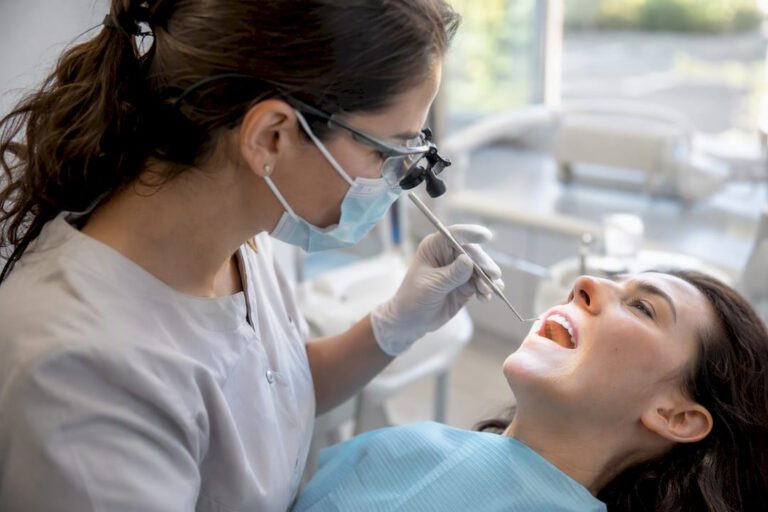

Protect the blood clot. That’s the whole job for the next 24 hours: bite down on gauze, skip anything that creates suction in your mouth (such as straws, smoking, and aggressive spitting), and let the socket alone. This one habit prevents the most painful complication in post-extraction recovery, dry socket, which happens when that clot gets dislodged too soon.
Here’s what’s normal in the days ahead:
- Light bleeding or pink-tinged saliva is normal in the initial period after extraction
- Swelling typically increases around the second or third day
- Soreness generally responds to medication rather than increasing in intensity
What you’re watching for: pain that gets worse instead of better around day 3 or 4. That pattern is the classic sign of dry socket, and it needs a call to your dentist, not another dose of ibuprofen. Complete Dental Care built this guide around the same clinical standards used at Cleveland Clinic and outlined by the ADA, paired with what actually works in the exam chair.
Key Takeaways
Protecting the blood clot for the first 24 to 72 hours through gauze pressure, rest, and avoiding suction is the single factor that most determines whether recovery stays on track or turns into dry socket.
| Point | Details |
|---|---|
| Protect the clot first | Bite gauze for 30 to 60 minutes and avoid straws, smoking, and spitting for at least 24 hours. |
| Medicate before pain peaks | Take pain relievers before numbness fully wears off to stay ahead of discomfort. |
| Expect swelling by day 2 or 3 | Use ice for the first 72 hours, then switch to warm compresses if stiffness remains. |
| Watch days 3 to 4 closely | Increasing pain in this window is the classic sign of dry socket and needs a dental call. |
| Complete Dental Care plans ahead | 3D imaging and digital scanning reduce surgical trauma, supporting an easier recovery from the start. |
Table of Contents
- Tooth Extraction Aftercare for the First 24 Hours
- How Do You Stop Bleeding After a Tooth Extraction?
- Managing Pain After Tooth Extraction
- When Does Swelling Peak After a Tooth Extraction?
- What Can You Eat After a Tooth Extraction?
- Caring for Your Mouth Without Disturbing the Socket
- Tooth Extraction Recovery Timeline: What to Expect Each Day
- Special Situations That Change the Standard Plan
- How Complete Dental Care Supports Safe Extraction Recovery
- Our Take: Why the Standard Advice Undersells the First 72 Hours
- Ready for a Smoother Recovery? Start With the Right Extraction Plan
- Sources
Tooth Extraction Aftercare for the First 24 Hours
The first day sets the tone for everything after it. Get this part right and the rest of recovery tends to take care of itself.
- Bite down on the gauze pad your dentist placed, keeping steady pressure for 30 to 60 minutes. If it’s still bleeding after that, fold a fresh piece, dampen it slightly, and bite again for another 30 minutes.
- Rest with your head elevated, even while sleeping. An extra pillow keeps blood pressure in your head lower, which cuts down on both bleeding and swelling.
- Skip the gym, the yard work, and the heavy lifting for 48 to 72 hours. Anything that raises your heart rate can restart bleeding you thought had stopped.
- Ice the outside of your cheek in 20 minutes on, 40 minutes off cycles for the first day. Wrap the ice pack in a towel. Bare ice against skin for an extended stretch can cause frostbite, not just discomfort.
For day zero specifically, do not rinse, spit, use a straw, smoke, or vape. Don’t poke at the site with your tongue either, tempting as it is.
Pro Tip: Prop yourself up with two or three pillows the first night instead of lying flat. Gravity alone does noticeable work in keeping swelling down.
How Do You Stop Bleeding After a Tooth Extraction?
A little oozing or pink saliva for the first 24 to 48 hours is expected and not a reason to panic, according to MedlinePlus. If it’s more than that, work through these steps in order:
- Fold clean gauze into a thick pad and bite directly on the socket for a full 30 to 60 minutes without checking on it every five minutes.
- Dampen a fresh pad and repeat if the first round didn’t slow things down.
- Try a moist black tea bag folded and bitten gently for 30 minutes. The tannic acid in black tea helps promote clotting, and it’s a trick oral surgeons have recommended for decades.
Bright red blood pooling in your mouth, soaking through gauze in a few minutes, or bleeding that won’t slow after three rounds of pressure means it’s time to call your dentist. Uncontrolled bleeding that doesn’t respond to any of this is an emergency room situation, not a wait-and-see one.
Managing Pain After Tooth Extraction

Take your first dose of pain medication before the numbness fully wears off, not after the pain starts. Cleveland Clinic notes this timing gets ahead of the pain signal instead of chasing it, which generally means you need less medication overall to stay comfortable.
For most people, over-the-counter options handle this fine:
- Ibuprofen (400 to 600 mg) tends to outperform acetaminophen alone for dental pain, since it also targets inflammation
- Alternating ibuprofen and acetaminophen on a staggered schedule covers pain more evenly than either alone
- Skip ibuprofen if you have a history of stomach ulcers, kidney disease, or an NSAID allergy, and check with your pharmacist if you’re on blood thinners
If your dentist prescribed something stronger for a surgical extraction, take it exactly as directed. Never mix opioids with alcohol, avoid driving while using them, and taper off to OTC medication as soon as the pain allows rather than finishing the bottle out of habit.
When Does Swelling Peak After a Tooth Extraction?
Swelling typically peaks within a few days after the procedure, and research on postoperative healing shows that this increase on day two is a normal part of the inflammatory response, not a sign of infection. Cold therapy works best in that window.
- Apply ice in cycles of on and off periods, repeated during the first couple of days
- Switch to warm, moist compresses after 72 hours to help loosen residual stiffness and improve circulation to the area
- Sleep with your head propped up rather than flat for the first few nights
- Move your jaw gently once swelling starts easing, opening and closing slowly to prevent stiffness from setting in
Pro Tip: Bruising along the jawline or neck a few days out looks alarming but is just blood settling under the skin. It fades on its own within a week or two.
What Can You Eat After a Tooth Extraction?
Your mouth needs calories and hydration without putting the socket at risk. Here’s how the week typically breaks down:
- Day 0: cool liquids, smoothies without a straw, and blenderized soups
- Days 1 through 7: yogurt, mashed potatoes, scrambled eggs, oatmeal, and soft-cooked pasta
- Skip anything with small seeds or crunchy edges, chips, nuts, and popcorn, all of which can lodge in the socket or scrape it raw
- No straws for at least 24 to 72 hours; the suction is the exact mechanism that pulls the clot loose
Chew on the opposite side of your mouth from the extraction site, and drink plenty of water throughout the day even though solid food feels like the priority.
Caring for Your Mouth Without Disturbing the Socket
Clean is good; aggressive is not. Follow this order over the first several days:
- Avoid brushing and rinsing directly at the extraction site during the first day. Brush your other teeth gently that same night.
- Start a salt-water rinse around 24 to 72 hours out. Mix half a teaspoon of salt into eight ounces of warm water and swish gently, letting it fall out rather than spitting with force.
- Use a chlorhexidine rinse only if your dentist prescribed one, and follow the exact schedule given rather than improvising based on how the socket feels.
- If you have stitches, avoid poking at them with your tongue or a toothbrush bristle, and mention any that feel loose at your follow-up visit.
Tooth Extraction Recovery Timeline: What to Expect Each Day
Recovery follows a fairly predictable pattern, and knowing the map helps you spot when something’s actually off.
- Day 0: the clot forms, mild bleeding and numbness are normal
- Days 1 to 3: swelling and pain peak, generally manageable with medication on schedule
- Days 3 to 7: swelling recedes, but this window is also the highest-risk period for dry socket, which classically shows up as increasing pain two to four days after the procedure
- Week 2: the surface tissue has largely closed over, though the bone underneath keeps remodeling for months
Watch for swelling that keeps growing after day 3, a fever, or foul-tasting drainage. Any of those means it’s time to call rather than wait it out.
Special Situations That Change the Standard Plan
A few groups need to adjust this playbook rather than follow it exactly as written.
- Children need medication dosed by weight, not adult amounts scaled down by guesswork, and parents should call the office quickly if a fever or heavy bleeding shows up.
- Smokers and vapers face a much higher dry socket risk and should hold off for at least 72 hours, ideally a full 7 days.
- Anyone on blood thinners should never stop that medication without direction from the prescribing doctor. Coordinate with both providers before the procedure whenever possible, per clinical guidance on oral surgery care.
- Impacted wisdom tooth extractions typically bring more swelling and a longer recovery window. Follow the oral surgeon’s specific instructions over general guidance.
How Complete Dental Care Supports Safe Extraction Recovery
Complete Dental Care plans extractions with 3D imaging and digital scanning before the first cut, which means fewer surprises during the procedure and a smoother healing process afterward. That level of planning matters most for surgical or impacted extractions, where precision up front shortens recovery on the back end.
Call the office rather than waiting if you notice uncontrolled bleeding, pain that’s climbing instead of easing by day 3 or 4, swelling that keeps expanding, or numbness that hasn’t faded within the expected window from your anesthesia.
Patients recovering from extractions as part of a larger restoration plan, including those moving toward full-arch solutions, benefit from the same digital planning and sedation options used across the practice’s surgical work.
For anyone whose extraction is a step toward replacing missing teeth, the practice’s Teeth in a Day approach picks up right where healing leaves off, and its comfort-focused sedation options are worth asking about if dental anxiety is part of what’s kept you from getting care sooner.
Our Take: Why the Standard Advice Undersells the First 72 Hours
Most aftercare handouts read like a legal disclaimer with a few tips buried inside. The gap we see most often isn’t a lack of information, it’s that patients treat the first day as recovery already underway when it’s really still an active medical window. The clot hasn’t stabilized. The tissue hasn’t started its real repair work yet. Treating day zero with the same caution as a surgical wound, because that’s what it is, prevents more dry socket cases than any amount of salt water ever will.
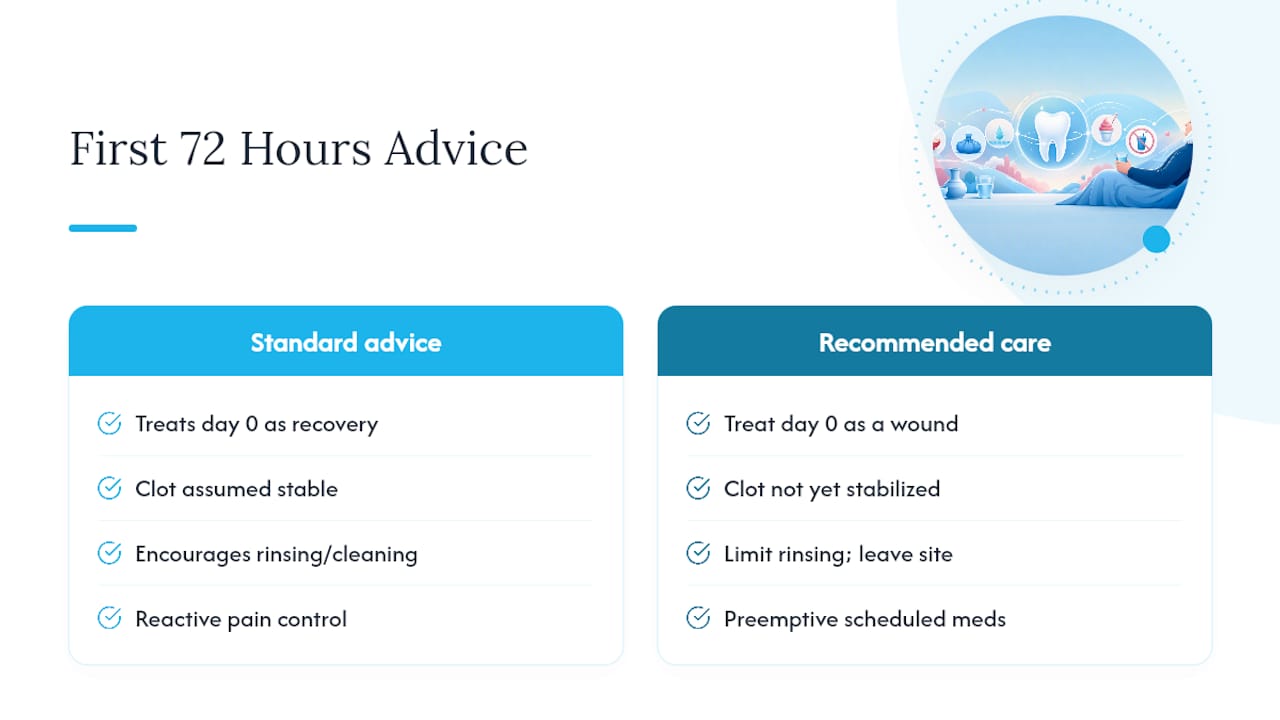
The conventional wisdom oversells rinsing and undersells rest. Patients want to do something proactive, so they reach for mouthwash and vigorous cleaning days before their tissue is ready for it. The better instinct is closer to what you’d do after a minor surgery elsewhere on your body: elevate, ice, medicate on schedule, and leave the site alone longer than feels necessary.
If we had to name the single most skipped step, it’s preemptive pain medication. Waiting for pain to arrive before treating it is the difference between a manageable Tuesday and a miserable one.
— Complete Dental Care
Ready for a Smoother Recovery? Start With the Right Extraction Plan
A rough recovery often traces back to how the extraction itself was planned, not just how the aftercare was followed. Complete Dental Care uses 3D imaging and digital scanning to map out extractions before treatment day, which cuts down on the surgical trauma that makes dry socket and prolonged swelling more likely in the first place.

If dental anxiety has kept you from booking a needed extraction, the practice also offers sedation options and a patient-first approach designed to make the visit itself less stressful, not just the healing afterward. Whether you’re facing a routine extraction, a surgical removal, or you’re weighing next steps like full-arch implants down the road, schedule a visit with Complete Dental Care to get a recovery plan built around your specific case instead of a generic handout.
Sources
- Tooth Extraction: Surgery & Healing – Cleveland Clinic
- Tooth extraction – MedlinePlus Medical Encyclopedia
- Postoperative edema and management (peer-reviewed source)
- Postextraction problems – Merck Manual
This article is general information, not a substitute for advice from a qualified doctor. Consult a qualified healthcare professional about your own circumstances before acting on anything here.