
A simple tooth extraction in the U.S. typically runs $75 to $300 per tooth, averaging around $150 to $175, while a surgical extraction lands between $225 and $650. Anesthesia and imaging are usually billed as separate line items, and they can add hundreds more depending on what your case needs. If you’re paying cash or you’re uninsured, federal law entitles you to a written Good Faith Estimate before treatment, so you’re never guessing at the final number.
TL;DR:
- Private general dentist offices typically charge between $75 and $450 per simple tooth extraction, depending on complexity and location.
- Surgical extractions and impactions can range from $225 to over $2,500 in hospital outpatient settings, with costs influenced by anesthesia and imaging needs.
- Insurance usually covers 50% to 80% of extraction costs, but coverage varies by plan, with Medicaid and Medicare offering limited or no coverage for routine extractions.
- Patients can obtain a detailed Good Faith Estimate before treatment, which itemizes procedures, anesthesia, imaging, and facility fees to avoid unexpected bills.
- Dental schools and federally funded clinics offer significantly lower prices, often 40% to 60% less than private practices, especially for those paying out of pocket or with income-based sliding scales.
Table of Contents
- How Much Does Tooth Extraction Cost by Type and Location?
- What Actually Drives the Final Bill?
- How Much Will Insurance Cover for a Tooth Extraction?
- How Do I Get a Written Estimate Before Treatment?
- How Can I Lower My Tooth Extraction Cost?
- Why Transparent Pricing Changes the Extraction Experience
- Get a Straight Answer on Your Extraction Cost
- Sources
How Much Does Tooth Extraction Cost by Type and Location?
The number on your quote depends heavily on two things: how complicated the tooth is to remove, and where you sit in the chair. A tooth that’s fully erupted and easy to grasp costs far less to pull than one buried in bone.
Here’s how the ranges typically break down per tooth in cash-pay terms:
- Simple extraction (visible tooth, forceps only): $75 to $300, averaging $150 to $175
- Surgical extraction (tooth broken at the gumline or requiring incision): $225 to $650
- Soft-tissue impaction (partially through the gum): roughly $250 to $450
- Full bony impaction (wisdom tooth trapped in jawbone): often $400 to $800
- All four wisdom teeth removed in one visit: frequently less per tooth than four separate appointments, since anesthesia and facility fees get spread across the whole procedure rather than charged four separate times
Where you get the work done moves the price almost as much as the procedure itself. A private general dentist’s office is often the most affordable setting for a straightforward pull. An oral surgeon’s office costs more but is the right call for impactions or complications. Dental school clinics run noticeably below market rate because students perform the work under faculty supervision. Federally Qualified Health Centers (FQHCs) use income-based sliding scales that can bring costs down sharply for eligible patients. Hospital outpatient settings sit at the top of the range, since a routine extraction there is usually reserved for medically complex cases and can push total costs to $800 to $2,500 or more once facility fees are added.
| Site of service | Typical price range (per tooth) |
|---|---|
| Dental school clinic | 40% to 60% below private-practice rates |
| General dentist’s office | $75 to $450 depending on complexity |
| Oral surgeon’s office | $225 to $800 |
| FQHC / sliding-scale clinic | Varies by income, often well below cash rate |
| Hospital outpatient | $800 to $2,500+ |
The bundling effect matters more than most patients expect. If you need two adjacent teeth pulled, ask whether the office prices per tooth or offers a package rate. Shared anesthesia time and one set of facility fees instead of two is where the savings show up.
What Actually Drives the Final Bill?
Dentists bill extractions using CDT procedure codes, and the code selected determines a huge chunk of your total. A simple extraction code covers a tooth removed with forceps alone. A surgical code applies the moment the dentist has to reflect gum tissue, section the tooth, or remove bone, and that code carries a materially higher fee regardless of which tooth it is.
Anesthesia is the second-biggest swing factor, and it’s billed on its own line:
- Local anesthesia: usually included in the base extraction fee
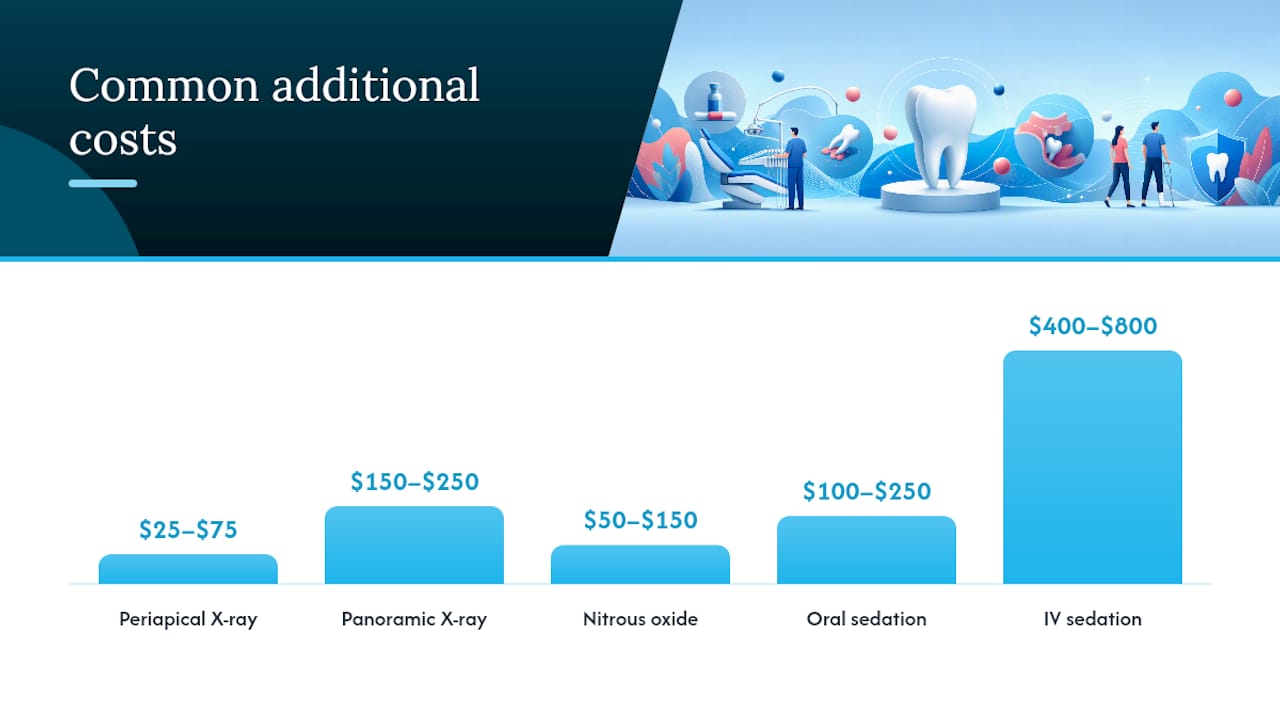
- Nitrous oxide: adds about $50 to $150
- Oral sedation: adds roughly $100 to $250
- IV sedation: often adds $400 to $800 or more, typically billed in time increments after the first hour
- General anesthesia: reserved for complex surgical cases, usually the most expensive option
One detail that surprises a lot of patients: the extraction can change complexity mid-procedure. A tooth that looks like a simple case on X-ray can turn out to have a curved or fractured root once the dentist starts working, and that converts the billing code from simple to surgical on the spot.
Imaging adds its own cost. A single periapical film (a close-up X-ray of one tooth) typically runs $25 to $75, while a full panoramic radiograph showing your entire jaw runs $150 to $250. Facility fees, provider credentials, chair time, and post-op prescriptions round out the rest of the invoice.
How Much Will Insurance Cover for a Tooth Extraction?
Most dental plans classify extractions as a basic service, and coverage typically falls between 50% and 80% after your deductible is met. Surgical extractions often land at the lower end of that range, and some plans impose a waiting period before covering anything beyond preventive care. Annual maximums matter too. Many plans cap total benefits between $1,000 and $2,000 a year, so a surgical extraction paired with other treatment can push you past that ceiling fast.
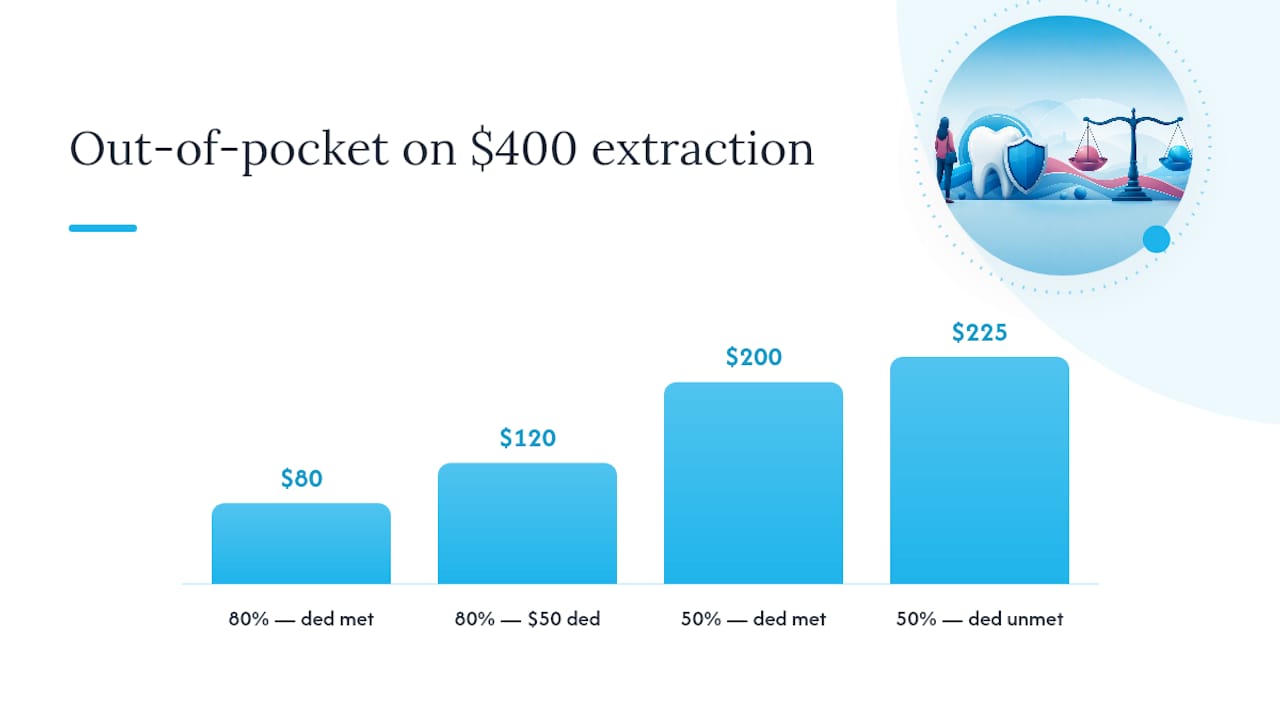
Here’s how the math plays out on a $400 surgical extraction:
- 80% coverage, deductible already met: you owe about $80
- 80% coverage, $50 deductible not yet met: you owe $50 plus 20% of the remaining $350, or about $120 total
- 50% coverage, deductible met: you owe $200
- 50% coverage, deductible not met: you owe closer to $225
Two coverage gaps trip people up constantly. Medicaid coverage for adult dental care varies widely by state, and reimbursement rates run well below cash prices. Original Medicare generally does not cover routine extractions at all, which catches a lot of retirees off guard.
Pro Tip: Before scheduling, ask your insurer for a pre-determination of benefits. It’s a written estimate of what they’ll actually pay for your specific case, and it takes the guesswork out of the math above.
Checking your plan’s coverage details before your appointment saves you from an unpleasant surprise at checkout.
How Do I Get a Written Estimate Before Treatment?
Under the No Surprises Act, any patient paying cash or without insurance can request a written Good Faith Estimate before non-emergency dental work, and the office is required to provide it within a set timeframe once you ask.
A complete estimate should itemize:
- The specific extraction procedure code (simple vs. surgical)
- Imaging charges, listed separately
- Anesthesia type and its cost
- Facility or administrative fees
- Estimated cost of prescribed medications
Ask the office directly: “Will this be billed as simple or surgical?” and “What happens to the price if it turns out more complex once you start?” Comparing itemized estimates line by line, rather than comparing one bottom-line number to another, is the most reliable way to shop between offices. If your final bill comes in substantially higher than the estimate you were given, you have grounds to dispute the charge with the practice or file a complaint through the federal process.
How Can I Lower My Tooth Extraction Cost?
Dental school clinics remain one of the biggest savings levers available, often pricing 40% to 60% below private-practice rates for the same procedure, performed under faculty supervision. FQHCs offer sliding-scale fees tied to income, and many accept patients regardless of insurance status.
A few tactics worth trying at any office:
- Ask directly whether a cash discount applies if you’re paying out of pocket
- Request bundled pricing if you need more than one tooth pulled in the same visit
- Bring recent X-rays from another provider so you’re not paying for duplicate imaging
Financing fills the gap when savings alone aren’t enough. In-house payment plans, third-party patient financing, and HSA or FSA funds all cover extraction costs, and using pre-tax HSA dollars effectively discounts the procedure by your tax rate.
Pro Tip: Keep every itemized receipt if you’re using an HSA. Documentation requirements are stricter than most patients expect, and a missing receipt can complicate reimbursement later.
Why Transparent Pricing Changes the Extraction Experience
The biggest driver of “surprise” dental bills isn’t dishonesty. It’s incomplete information going in. A simple extraction that turns surgical mid-procedure is the single most common reason a quoted price and a final bill don’t match, and it’s almost always preventable with better imaging up front.
Complete Dental Care uses 3D imaging and digital scanning during the initial exam specifically to catch curved roots, bone density issues, and impaction angles before treatment starts, not after the dentist is already mid-procedure. That’s the difference between an estimate that holds and one that doesn’t. When a case shows signs of full bony impaction or complex root anatomy, we refer to oral surgery rather than force a straightforward extraction that isn’t straightforward. For patients weighing cost against complexity, we also walk through financing and membership options at the consult, not after the fact.
— Complete Dental Care
Get a Straight Answer on Your Extraction Cost
You’ve seen the ranges and the variables. What you actually need is a number specific to your tooth, your mouth, and your insurance, not a national average. Complete Dental Care builds every extraction quote around a 3D scan taken at your first visit, so the estimate you receive already accounts for root shape and bone density instead of guessing at them.
Bring your insurance card to your consult, and we’ll walk through your itemized Good Faith Estimate together, including anesthesia options and what financing looks like if you need it. If your case involves impaction or you’re also considering implant options down the line, that’s a conversation worth having before, not after, treatment starts. Schedule a consultation with Complete Dental Care and get a written estimate before you commit to anything.
This article is general information, not a substitute for advice from a qualified doctor. Consult a qualified healthcare professional about your own circumstances before acting on anything here.
Sources
- No Surprises Act | CMS
- Tooth Extraction Cost Without Insurance in 2026 | CoveredUSA
- Tooth extraction cost — GoodRx
- Tooth Extraction Surgery Cost: A US Price Guide – Cost Digest