
Sedation is routinely used for dental implant surgery, and the right level depends on your case rather than a one-size-fits-all default. Options range from local anesthesia alone to nitrous oxide, oral sedatives, IV sedation, and general anesthesia. Your clinician matches the choice to the complexity of your surgery, your anxiety level, and your medical history.
TL;DR:
- Local anesthesia underpins nearly every implant procedure; nitrous oxide effects usually fade within minutes after mask removal, while oral sedatives have less predictable effects.
- A single implant often needs less sedation than full arch reconstruction, while sleep apnea, heart disease, medication use, and anxiety can change what is safe.
- Moderate or deep sedation requires monitoring of oxygen levels, blood pressure, breathing, and alertness; capnography can flag shallow breathing before oxygen levels fall.
- Disclose every medication and substance: benzodiazepines combined with opioids can slow breathing, while some diabetes and weight loss drugs raise aspiration risk.
- Arrange an escort after oral, IV, or general anesthesia; oral and IV sedation usually require 30 to 60 minutes of office observation before discharge.
questions about this? we're happy to help.
Every patient's situation is a little different. If you want to talk through what this means for you, our Greenville team is one call away.
schedule a free consultationTable of Contents
- Types of Sedation and Anesthesia Used for Dental Implant Surgery
- How Clinicians Choose the Sedation Level for an Implant Case
- What to Expect During Sedation and Intraoperative Monitoring
- Recovery, Aftercare, and Practical Patient Requirements
- Safety, Drug Interactions, and a Pre-Op Checklist Patients Should Follow
- [We build sedation plans around each patient’s health history and anxiety level rather than defaulting to one method for everyone, matching monitoring standards to the depth of sedation chosen. For procedure-specific detail, our sedation safety page and nitrous oxide explainer walk through what to expect at our practice.](#we-build-sedation-plans-around-each-patients-health-history-and-anxiety-level-rather-than-defaulting-to-one-method-for-everyone-matching-monitoring-standards-to-the-depth-of-sedation-chosen-for-procedure-specific-detail-our-sedation-safety-pagehttpscompletedentalcarecomdental-sedation-safety-and-nitrous-oxide-explainerhttpscompletedentalcarecomnitrous-oxide-sedation-walk-through-what-to-expect-at-our-practice)
- Ready to Discuss Sedation Options for Your Implants?
- FAQ
- Sources
Types of Sedation and Anesthesia Used for Dental Implant Surgery
Local anesthesia numbs the implant site and is the foundation of pain control for nearly every case, whether or not additional sedation is added on top. Nitrous oxide, delivered through a nasal mask, is typically titrated to a moderate concentration for anxiolysis, with oxygen given before and after to prevent lingering grogginess, and most patients recover within minutes of removing the mask, according to a review of dental sedation techniques.
Oral sedatives, usually a benzodiazepine taken before the appointment, reduce anxiety but produce effects that vary from patient to patient, so clinics require an escort to drive you home regardless of how alert you feel. IV sedation allows a clinician to titrate the dose in real time, which is part of why single-agent, titratable techniques are considered safer for outpatient settings, per the same sedation techniques review. Common IV agents include:
- Midazolam, a benzodiazepine that produces calm, often with partial amnesia of the procedure.
- Propofol, used for deeper sedation with rapid onset and recovery.
- Dexmedetomidine, an emerging option that may cause less respiratory depression than midazolam, though its longer elimination half-life can affect how quickly you bounce back, according to the implant sedation review in MDPI.
- Remimazolam, a newer agent being studied as an alternative with a different recovery profile.
General anesthesia, which produces full unconsciousness and requires airway management, is reserved for extensive reconstructions or patients who cannot tolerate any awareness during surgery, and it is typically delivered in a hospital or surgical center rather than a standard dental operatory.
How Clinicians Choose the Sedation Level for an Implant Case
Your sedation plan is not arbitrary. Clinicians weigh several factors before recommending a level, and understanding them helps you know what to expect at your consultation.
- Procedure complexity: a single implant usually needs far less sedation than full-arch reconstruction, bone grafting, or a sinus lift.
- Health and risk profile: your ASA classification, body mass index, sleep apnea status, and any cardiopulmonary disease all shape what is safe.
- Personal factors: anxiety level, past reactions to sedation, needle phobia, and your current medication list all factor into the decision.
- Who delivers sedation and where: a dentist, oral surgeon, or anesthesiologist may be involved depending on the depth of sedation planned, and facility monitoring capacity matters too, consistent with training and monitoring guidance from the ADA’s sedation guidelines.
Light sedation in low-risk patients is generally considered the safest approach for outpatient dental settings, with careful patient selection and appropriate equipment as central safety components, according to the PMC review on dental sedation.
What to Expect During Sedation and Intraoperative Monitoring
Once sedation begins, monitoring becomes continuous and layered. For moderate or deep sedation, that typically includes pulse oximetry, blood pressure checks, capnography to track your breathing, and direct visual observation by trained staff. Capnography in particular is increasingly recommended during moderate and deep sedation because it can flag shallow breathing before oxygen levels drop, per ADA guidance.
Consciousness shifts along a spectrum depending on the method chosen:
- With local anesthesia or nitrous oxide alone, you stay awake and aware, just relaxed.
- With oral or IV sedation, you move into a drowsy, often amnesic state where time seems to pass quickly and memory of the procedure is incomplete.
- Under general anesthesia, you are fully unconscious and unaware throughout.
A dentist or oral surgeon typically manages light to moderate sedation, while an anesthesiologist may be brought in for deeper sedation or general anesthesia, particularly for complex full-arch cases. Monitored sedation generally allows faster recovery and avoids the need for a breathing tube, unlike general anesthesia, which may involve airway support, according to MedlinePlus. Expect an IV line for anything beyond oral sedation, supplemental oxygen, and a chair time that runs longer than the surgery itself once setup and recovery are included.
Recovery, Aftercare, and Practical Patient Requirements
Recovery time depends on what you received. Oral and IV sedation usually call for 30 to 60 minutes of observation in the office before you are cleared to leave, while general anesthesia requires a longer recovery period before discharge.
- You cannot drive yourself home after any sedation beyond local anesthesia or nitrous oxide, so arrange an escort in advance.
- Expect possible nausea, lingering drowsiness, or gaps in memory for several hours afterward.
- Plan to rest for the remainder of the day and avoid operating machinery or making major decisions.
- Call the clinic promptly if you notice unusual bleeding, severe pain, difficulty breathing, or a reaction that feels worse than expected, and seek emergency care for breathing difficulty or chest pain. For a fuller week-by-week picture, our dental implant recovery timeline covers what typically happens after the sedation wears off.
Safety, Drug Interactions, and a Pre-Op Checklist Patients Should Follow
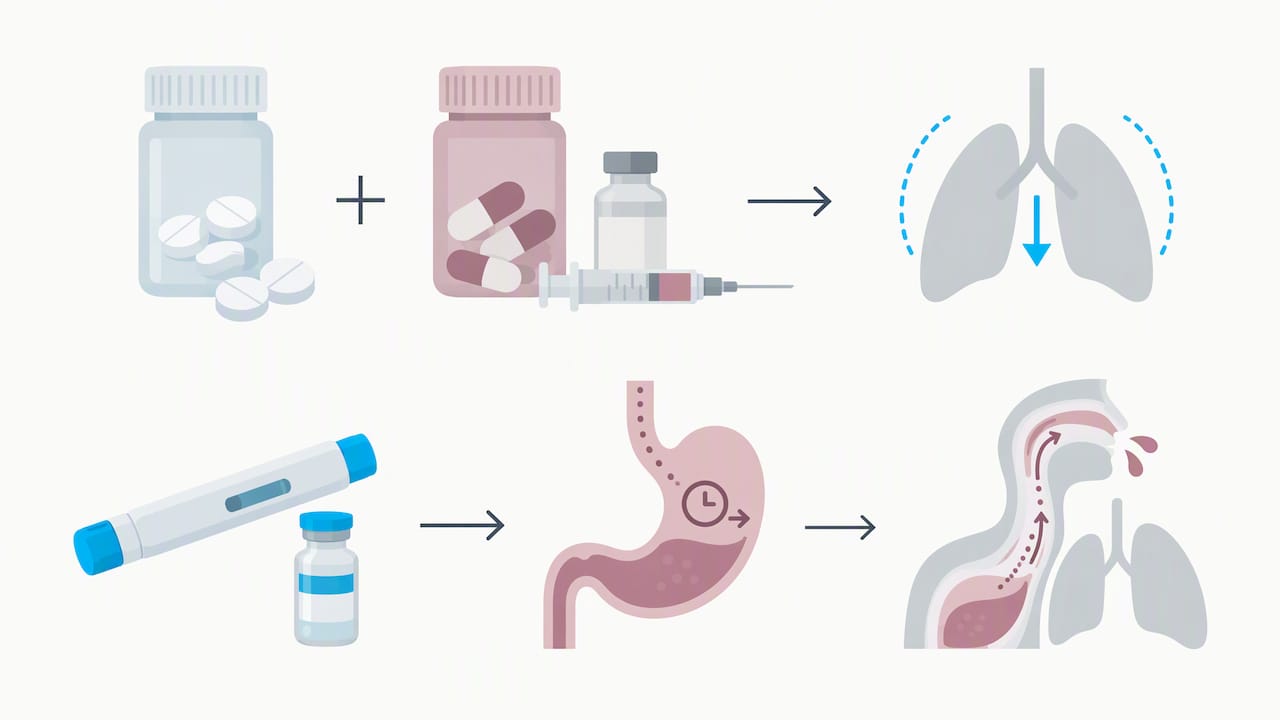
Combining benzodiazepines with opioid painkillers can cause profound sedation, slowed breathing, and in rare cases has been linked to fatal outcomes, which is why disclosing every medication you take, prescription or otherwise, is non-negotiable before sedation, according to an FDA safety labeling notice. GLP-1 receptor agonists, increasingly common for diabetes and weight management, can slow gastric emptying and raise the risk of aspiration during sedation, so mentioning this class of medication early allows your team to adjust fasting instructions, per guidance on drugs affecting gastric emptying. If you use cannabis, it is worth knowing that it can also interact with sedative and anesthetic drugs, a consideration covered in more detail by this overview of cannabis and anesthesia interactions.
Conditions such as obstructive sleep apnea, COPD, severe cardiac disease, or pregnancy may shift your plan toward lighter sedation or a specialist referral.
Before your appointment:
- Write out every medication, supplement, and recreational substance you use, including dosages.
- Follow fasting instructions exactly if IV sedation or general anesthesia is planned.
- Confirm your escort and transportation home.
- Ask whether any regular medications need to be paused or adjusted beforehand.
- Bring an updated medical history, including any sleep apnea diagnosis or cardiac conditions.
Pro Tip: Keep a written medication list on your phone and bring a printed copy too, since forms filled out under stress on appointment day often miss something important.
We build sedation plans around each patient’s health history and anxiety level rather than defaulting to one method for everyone, matching monitoring standards to the depth of sedation chosen. For procedure-specific detail, our sedation safety page and nitrous oxide explainer walk through what to expect at our practice.
— Complete Dental Care
Ready to Discuss Sedation Options for Your Implants?
We offer dental implants, including same-day Teeth in a Day full-arch solutions, alongside surgical and implant dentistry built around in-house 3D imaging and digital planning. Sedation is part of that planning conversation from the start, not an afterthought.
- Medical history and anxiety level are reviewed before recommending a sedation level.
- Monitoring and recovery expectations are explained before surgery.
- Escort and aftercare logistics are coordinated for a smooth experience.
If you are weighing your options, schedule a consultation and we will walk through a sedation plan built around your case.
This article is general information, not a substitute for advice from a qualified doctor. Consult a qualified healthcare professional about your own circumstances before acting on anything here.
FAQ
Can you be put to sleep for dental implants?
Yes, general anesthesia is an option for dental implants, though it is typically reserved for complex or full-arch cases rather than routine single-implant placement. Many patients instead choose IV or oral sedation, which keeps them relaxed and often amnesic without full unconsciousness, according to MedlinePlus.
What makes some dental procedures more anxiety-inducing than others?
Procedures involving needles, drilling, or extended chair time tend to provoke the most anxiety, and implant surgery often falls into this category because it combines several of these elements. This is one reason conscious sedation techniques are widely used in dentistry, to manage anxiety while preserving protective reflexes, per the NCBI overview of conscious sedation.
How should parents prepare a young child for general anesthesia during dental work?
Preparation typically includes following fasting instructions precisely, disclosing the child’s full medical history, and discussing any prior reactions to anesthesia with the treating team in advance. Because pediatric general anesthesia involves different risk considerations than adult sedation, it should be coordinated directly with the child’s dentist and anesthesia provider.
What factors could rule someone out for dental implant sedation?
Severe cardiopulmonary disease, uncontrolled sleep apnea, certain medication combinations, and pregnancy can all change or limit sedation options, though they do not necessarily rule out implants entirely. A thorough pre-op evaluation, including a full medication list and relevant screening such as BMI and OSA risk, helps determine what is safe, consistent with ADA sedation guidance.
How long does sedation last after a dental implant procedure?
Recovery time depends on the method: nitrous oxide wears off within minutes, while oral and IV sedation usually require 30 to 60 minutes of in-office observation before you can leave with an escort. Lingering drowsiness or memory gaps can persist for several hours afterward, so plan to rest for the remainder of the day.
Sources
- Conscious Sedation in Dentistry (NCBI Bookshelf)
- Techniques to administer oral, inhalational, and IV sedation in dentistry (PMC)
- FDA benzodiazepine safety labeling change notification
- Anesthesia – MedlinePlus
questions about this? we're happy to help.
Every patient's situation is a little different. If you want to talk through what this means for you, our Greenville team is one call away.
schedule a free consultation