A conservative smile makeover, such as whitening plus bonding on a few teeth, typically runs a few hundred to a few thousand dollars. A common veneer-focused plan covering multiple teeth often costs several thousand to around twenty thousand dollars. A comprehensive case with implants, crowns, and full-arch work can cost tens of thousands of dollars or more. The single biggest variable is how many teeth get treated. Lab and material choice is a close second.
- Conservative (whitening + bonding on a few teeth): Costs range from low hundreds to a few thousand dollars. Best for minor chips, staining, or small gaps with no structural issues.
- Mid-range veneer makeover (multiple porcelain veneers + whitening): Typically costs several thousand to around twenty thousand dollars. The most common scope for patients wanting a visible aesthetic change across the smile zone.
- Comprehensive/full-mouth reconstruction (veneers, crowns, implants, aligners): Generally costs tens of thousands of dollars. Appropriate when multiple teeth are structurally compromised or missing, not just cosmetically imperfect.
The national average and state-level data from Pearl confirms that geography alone can shift these totals by 30–60%, with major metro markets consistently at the top of the range.
Key Takeaways
A smile makeover’s total cost is determined primarily by how many teeth are treated and which lab fabricates the restorations, making scope and material choices the two levers most worth negotiating.
| Point | Details |
|---|---|
| Cost ranges by scope | Conservative: $500–$3,000; veneer makeover: $9,000–$22,000; full reconstruction: $30,000–$80,000+. |
| Biggest cost driver | Number of teeth treated multiplies cost directly; lab and material choice can shift per-tooth price by 3–5×. |
| Insurance and financing | Most cosmetic work is not covered; in-house plans, healthcare credit lines, HSA/FSA, and staged treatment manage out-of-pocket costs. |
| Get an itemized quote | Ask every provider to separate materials, lab fees, chair time, and warranty terms before comparing totals. |
| Complete Dental Care | Offers veneers, implants, Teeth in a Day, and in-house financing with digital planning and itemized treatment plans. |
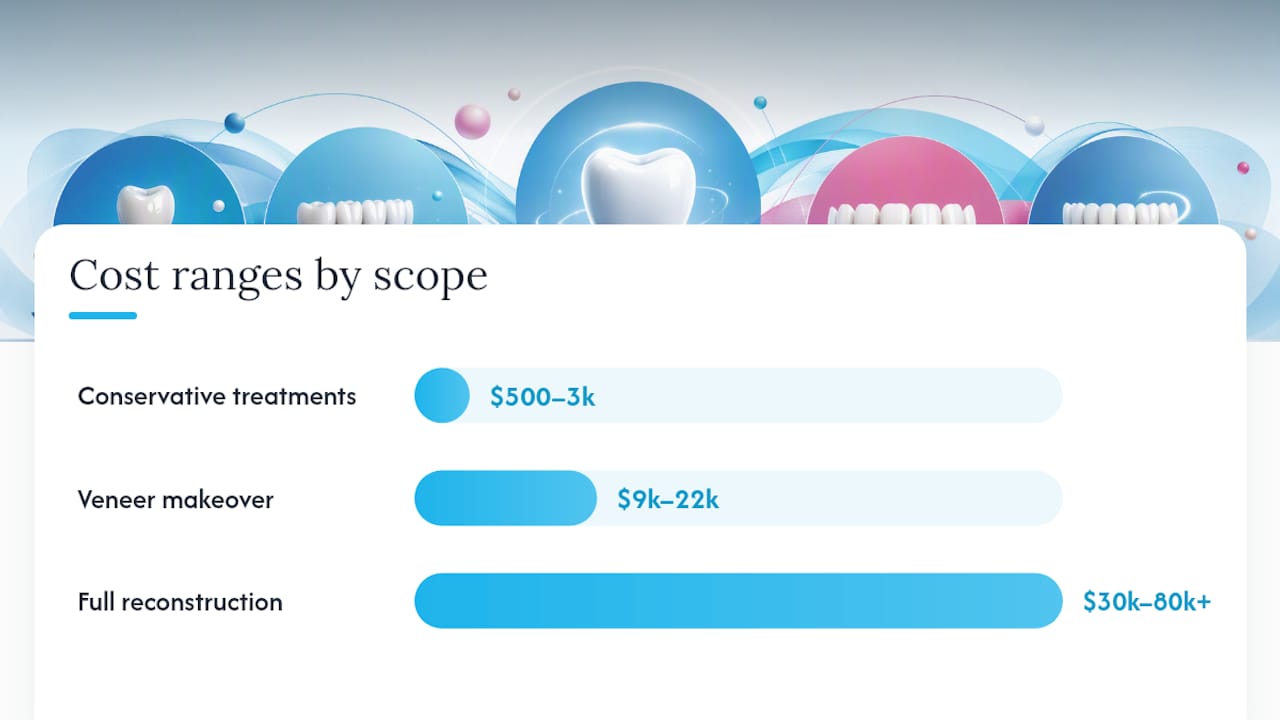
Table of Contents
- What procedures can be included in a smile makeover?
- Per-procedure smile makeover cost breakdown
- Realistic case scenarios: what a smile makeover actually costs
- What drives the price up or down
- Insurance, financing, and what you’ll pay out of pocket
- How long does a smile makeover take?
- How to estimate your own smile makeover cost
- How to choose a provider and what to ask at your consultation
- How we advise patients on budgeting a smile makeover
- Complete Dental Care’s cosmetic and implant services
- Sources
What procedures can be included in a smile makeover?
A smile makeover is not a single treatment. It is a custom combination of procedures selected to address your specific concerns, whether that is color, shape, alignment, spacing, or missing teeth. Here is what typically appears on a treatment plan:
- Porcelain veneers: Thin ceramic shells bonded to the front surface of teeth. Used for staining that whitening cannot fix, chips, minor misalignment, gaps, and shape irregularities. Cleveland Clinic’s clinical overview of dental veneers notes they are best suited for teeth with intact structure.
- Composite bonding: Tooth-colored resin applied and sculpted directly on the tooth. Treats chips, small gaps, and minor shape issues. Faster and less expensive than veneers, though less durable.
- Dental crowns: Full-coverage caps that replace the visible portion of a damaged or weakened tooth. Used when a tooth is too compromised for a veneer. Per Cleveland Clinic’s crown guidance, crowns are the standard when structural integrity is at stake.
- Dental implants: Titanium posts surgically placed in the jaw to replace missing teeth. The FDA’s patient guidance on dental implants classifies them as regulated medical devices, which affects both cost and clinical planning.
- Teeth whitening (in-office): Professional-strength bleaching done chairside in one to two hours. Treats surface and intrinsic staining.
- Take-home whitening: Custom trays with professional-grade gel worn over days or weeks. Lower cost, slower results.
- Clear aligners: Removable plastic trays (the Invisalign system is the most recognized brand) that gradually shift teeth. Used for mild to moderate crowding, spacing, and bite issues.
- Gum lift / gum contouring: Reshaping the gum line with a laser or scalpel to reduce a “gummy smile” or create more even tooth exposure.
- Teeth contouring / enameloplasty: Removing small amounts of enamel to reshape slightly uneven or pointed teeth. Quick, inexpensive, and permanent.
Pro Tip: If color is your only concern, get a professional whitening assessment before committing to veneers. The ADA’s whitening resources confirm that professional bleaching is one of the most cost-effective first steps, and many patients find it resolves the issue entirely without touching enamel.
Per-procedure smile makeover cost breakdown
The table below gives realistic per-tooth or per-treatment ranges, typical lifespans, and the primary problems each procedure addresses. These figures draw from CareCredit’s national cost data and Realdentalcosts.
What pushes costs to the high end:
- High-end hand-layered ceramic labs charge practices significantly more than budget labs, and that markup passes directly to the patient.
- Sedation or IV anesthesia adds $300–$1,000+ per visit.
- Pre-treatment work (periodontal therapy, root canals) is billed separately and can add thousands before cosmetic work even begins.
- Diagnostic fees (cone-beam CT scans, digital impressions, study models) typically run $150–$500 and are often not included in quoted procedure prices.
Geographic market matters too. Pearl’s state-by-state data shows that patients in high-cost markets like New York, Hawaii, and California routinely pay 30–60% above the national average for the same procedures.
Realistic case scenarios: what a smile makeover actually costs
These four scenarios show how individual procedure costs stack into real totals. The math uses mid-range per-procedure figures.
Scenario 1 — Conservative enhancement ($1,200–$3,500)
- In-office whitening: $500
- Composite bonding on 3 teeth: $450 (avg. $150/tooth)
- Consultation and X-rays: $200
- Estimated total: $1,150–$2,500
Best for patients with mild staining and one or two chipped or slightly uneven teeth. No enamel removal, no lab work.
Scenario 2 — Common veneer makeover ($12,000–$22,000)
- 8 porcelain veneers at $1,500/tooth: $12,000
- In-office whitening (lower teeth): $500
- Consultation, digital planning, and X-rays: $350
- Contingency (10%): $1,285
- Estimated total: $14,135
This is the most frequently quoted scope for patients who want a visible, lasting change across the full smile zone. CareCredit’s national data lists the average porcelain veneer cost at $1,765 per tooth, which would push this scenario closer to $16,000–$18,000 at typical pricing.
Scenario 3 — Extensive makeover with crowns ($20,000–$40,000)
- 10 porcelain veneers at $1,700/tooth: $17,000
- 2 dental crowns at $1,400/tooth: $2,800
- Whitening: $500
- Diagnostic imaging: $400
- Contingency (15%): $3,105
- Estimated total: $23,805
Appropriate when several teeth have existing large restorations that rule out veneers.
Scenario 4 — Full reconstruction with implants ($40,000–$80,000+)
- 6 porcelain veneers: $10,200
- 4 dental crowns: $5,600
- 2 implants (post + crown): $10,000
- Clear aligners (pre-treatment): $5,000
- Gum contouring: $1,500
- Diagnostics and planning: $800
- Contingency (15%): $4,965
- Estimated total: $38,065–$55,000+
Full reconstructions vary the most. The same patient assessed by two different clinicians can receive quotes that differ by 2–5× depending on recommended scope and lab choice.
What drives the price up or down
Understanding these variables lets you evaluate quotes intelligently rather than just comparing bottom-line numbers.
- Number of teeth treated: The most direct cost multiplier. Each additional tooth adds the full per-unit cost. Treating only the teeth visible when you smile (typically 6–10 upper teeth) is the honest budgeting baseline.
- Materials and lab fees: High-end ceramicists and hand-layered porcelain labs can charge practices 3–5× what budget labs charge. That difference shows up in your quote, and it also shows up in the final result.
- Dentist’s credentials and market positioning: A cosmetic dentist with advanced training, a recognized aesthetic portfolio, and a high-demand practice charges more. That premium often reflects real skill differences, particularly for complex veneer cases.
- Geographic market: Metro areas consistently run higher. Rural and mid-size markets offer the same procedures at meaningfully lower prices.
- Diagnostic and imaging fees: Cone-beam CT scans, digital impressions, and study models are frequently quoted separately. Budget $150–$500 for diagnostics before any treatment begins.
- Anesthesia and sedation: Oral sedation adds roughly $300–$600 per visit. IV sedation can add $1,000 or more. Patients with dental anxiety should budget for this explicitly.
- Pre-treatment requirements: Active gum disease must be treated before cosmetic work begins. A root canal on a tooth receiving a crown adds $800–$1,500 to that tooth’s total cost.
- Warranty and aftercare terms: Some practices include remake guarantees for a set period. Others do not. A quote with a five-year remake warranty is worth more than a lower quote with none.
Pro Tip: Ask every clinician to give you an itemized quote that separates materials, lab fees, chair time, and any warranty terms. A quote that bundles everything into one number makes it impossible to compare fairly or understand what you are actually paying for.
Insurance, financing, and what you’ll pay out of pocket
Most cosmetic dental work is elective and not covered by dental insurance. There are exceptions: a crown placed on a structurally damaged tooth may qualify for partial coverage, and implants replacing a tooth lost to disease sometimes receive partial benefits depending on the plan. Check your insurance details before assuming coverage is zero, but do not count on it for purely aesthetic procedures like veneers or whitening.
Common ways patients manage the cost:
- In-house 0% financing plans: Many practices offer short-term interest-free periods (typically 6–18 months) for qualified patients. These work well for mid-range cases under $10,000.
- Healthcare credit lines (CareCredit-style): Third-party healthcare financing with promotional 0% periods ranging from 6 to 24 months. After the promotional period, standard interest rates apply, often 26–29% APR, so paying off within the promotional window matters.
- HSA / FSA funds: Health Savings Accounts and Flexible Spending Accounts can cover restorative dental work. Purely cosmetic procedures (whitening, elective veneers) typically do not qualify, but crowns and implants often do.
- Dental membership plans: In-house membership plans typically cover preventive care and offer discounts on restorative and cosmetic work, reducing out-of-pocket costs without involving insurance.
- Staged treatment: Spreading work across two or more calendar years lets you use annual insurance maximums twice and manage cash flow. A 12-veneer plan split into two six-veneer phases is a common approach.
Illustrative monthly payment examples:
- $12,000 plan on 18-month 0% financing: approximately $667/month
- $30,000 plan on 24-month 0% financing: approximately $1,250/month
Pro Tip: Before signing any financing agreement, ask three questions: What is the APR after the promotional period? What happens if additional work is discovered mid-treatment? Can we stage the plan to reduce the initial amount financed? The answers reveal a lot about how the practice handles surprises.
How long does a smile makeover take?
Timeline depends almost entirely on scope. A simple case can be done in days. A comprehensive reconstruction with implants and aligners can take well over a year.
- Consultation and planning: 1–2 appointments covering examination, X-rays or 3D imaging, and treatment planning. Digital planning tools can compress this phase significantly.
- Preparatory work: Periodontal treatment, extractions, or root canals happen before cosmetic work begins. This phase can add 4–12 weeks depending on healing.
- Provisional phase: Temporary veneers or mock-ups let you preview the result and give feedback before final restorations are fabricated. Typically 2–4 weeks.
- Final restorations: Placement of permanent veneers, crowns, or implant crowns. For lab-fabricated work, expect 2–3 weeks of lab turnaround per set.
- Follow-up and adjustments: One to two follow-up visits within the first month to check bite, polish, and address any sensitivity.
Typical total durations:
- Whitening + bonding: days to 2 weeks
- Veneer cases (6–8 teeth): 4–12 weeks
- Comprehensive cases with aligners: 6–18 months
- Full-arch implant cases: 3–12 months depending on workflow
Pro Tip: Practices using in-house digital planning and 3D imaging can often eliminate one or two lab-turnaround cycles. Teeth in a Day implant workflows, for example, place a full arch of teeth in a single appointment, compressing what used to be a 6–12 month process into days.
How to estimate your own smile makeover cost
Use this method to build a personal estimate before your first consultation. It will not replace a clinical quote, but it gives you a realistic range to walk in with.
Step-by-step calculation:
- List the procedures you likely need. Be honest about what bothers you: color only, shape, gaps, missing teeth, alignment.
- Assign a low, typical, and high value to each procedure using the ranges in the table above.
- Add diagnostic and consultation fees. Budget $200–$500 for X-rays, scans, and the initial exam.
- Add a 10–20% contingency for unexpected findings (a tooth that needs a root canal, gum work, or an extra veneer).
- Sum the columns to get your low, typical, and high estimate.
Example: 6 veneers + whitening + 1 crown
Mini worksheet (copy into your notes app):
- Procedure 1: _________ × $____ per tooth = $____
- Procedure 2: _________ × $____ per tooth = $____
- Procedure 3: _________ total = $____
- Diagnostics: $____
- Subtotal: $____
- Contingency (15%): $____
- Your estimated range: $____ – $____
Common costs people forget to include:
- Cone-beam CT scan (often needed for implant planning): $150–$500
- Sedation or anesthesia: $300–$1,000+ per visit
- Provisional / temporary restorations: $200–$800
- Lab rush fees if timeline is compressed
- Retainers after aligner treatment: $200–$600
- Post-treatment whitening touch-ups
How to choose a provider and what to ask at your consultation
The consultation is where you gather the information to make a confident decision. Go in with specific questions.
What to look for in a provider:
- Before-and-after photos of cases similar to yours in scope and starting condition.
- A written treatment plan that explains why each procedure is recommended and what alternatives exist.
- Digital planning tools or mock-ups so you can preview results before committing.
- Clear disclosure of which lab they use and what materials are specified.
- Written warranty or remake terms for veneers and crowns.
- An itemized quote, not a single bundled number.
Questions to ask at your consultation:
- Why are you recommending this number of teeth? What changes if we treat fewer?
- Which lab will fabricate my restorations, and what ceramic material will you specify?
- Have we ruled out whitening as a first step before committing to veneers?
- What financing options do you offer, and what is the APR after any promotional period?
- What is the expected lifespan of these restorations, and what does maintenance involve?
- What is your remake or warranty policy if a veneer chips or debonds within the first few years?
- What happens to the quote if you discover additional work is needed once treatment begins?
Red flags to watch for:
- Pressure to treat more teeth than your visible smile zone requires.
- Vague or evasive answers about which lab is used or what ceramic material is specified.
- No itemized quote, only a total.
- No before-and-after portfolio for cases comparable to yours.
- A plan that skips whitening entirely when color is your primary concern.
A second opinion for any quoted makeover over roughly $10,000 is a practical, low-cost step that often uncovers less invasive alternatives or confirms the original scope is appropriate.
How we advise patients on budgeting a smile makeover
The most common mistake patients make is letting a clinician define the scope before they have articulated their own priorities. A well-run consultation starts with the patient’s concerns, not a full-mouth treatment plan.
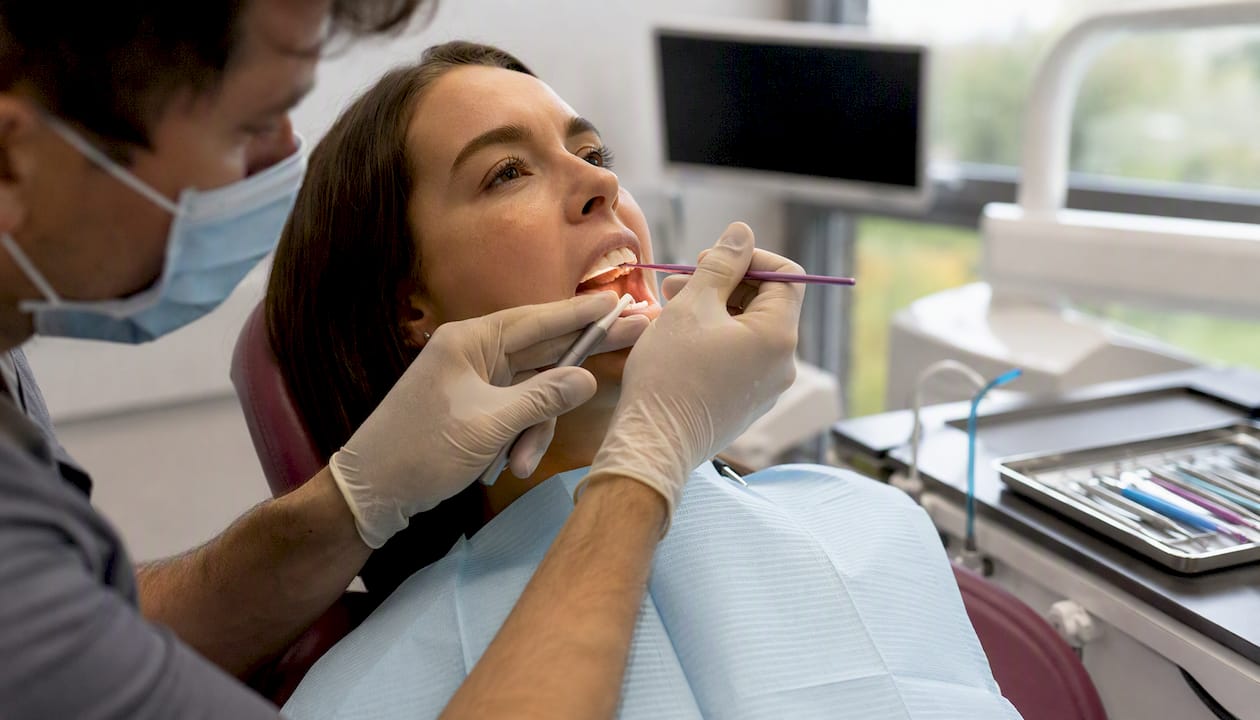
At Complete Dental Care, the approach is to start conservative. If whitening addresses the concern, that is the recommendation. If bonding can close a gap without removing enamel, that comes before veneers. Digital planning and 3D imaging let patients see a proposed outcome before any irreversible work begins, which removes a significant source of anxiety and prevents scope creep. For patients who need implants, the Teeth in a Day workflow compresses what used to be a multi-year process into a single appointment, with a fixed, transparent cost.
Larger cases are staged when staging makes clinical and financial sense. Spreading treatment across two plan years, using in-house financing, and applying membership plan discounts can make a $20,000 case feel manageable without cutting corners on materials or lab quality. Every patient leaves with a written plan, an itemized quote, and realistic expectations about longevity and maintenance.
Complete Dental Care’s cosmetic and implant services
Complete Dental Care offers the full range of procedures that appear in smile makeover plans: cosmetic dentistry including porcelain veneers, composite bonding, and professional whitening; dental implants and full-arch Teeth in a Day solutions for patients with missing teeth; Invisalign clear aligners; and restorative work including crowns and root canals. In-house 3D imaging and digital planning mean the diagnostic and planning phases happen in one place, with no referrals and no coordination gaps.
Financing options include in-house payment plans and membership plans that reduce the cost of both preventive and cosmetic care. Patients with dental anxiety are supported with sedation options and comfort dogs. To see what a personalized plan and itemized quote look like for your situation, schedule a first visit with Complete Dental Care.
Sources
The figures and clinical guidance in this article draw from the following sources:
- Dental implants: What you should know | FDA
- Whitening | American Dental Association
- Dental veneers | Cleveland Clinic
- What Is a Smile Makeover and How Much Does It Cost?
- Smile Makeover Cost — National Average & by State | Pearl
This article is general information, not a substitute for advice from a qualified doctor. Consult a qualified healthcare professional about your own circumstances before acting on anything here.