Fluoride varnish cuts cavities by roughly 37% in baby teeth and 43% in permanent teeth compared to no treatment at all, according to a pooled analysis of controlled trials. The standard clinical version is a 2.26% sodium fluoride varnish, applied at least twice a year for most patients and more often for those at high risk. Professional application is safe for children and adults, including kids under six, because the amount of fluoride used is small and swallowing risk is minimal.
TL;DR:
- Applying fluoride varnish twice a year can reduce cavity formation by approximately 43% in permanent teeth and 37% in primary teeth, with more frequent applications offering larger benefits for high-risk children and adults.
- The varnish creates a fluoride reservoir that slowly releases ions over several weeks, actively helping to remineralize enamel and prevent acids from bacteria.
- Children, especially those with cavities, dry mouth, or orthodontic devices, benefit most from regular applications, with some high-risk groups potentially needing quarterly treatments.
- Public health guidelines recommend using 2.26% fluoride varnish applied repeatedly, typically biannually, as a cost-effective way to prevent decay alongside oral health education.
- Varnish is safe for children under six, with minor, temporary side effects, and is easier to apply than gels or sealants, making it practical for diverse patient needs.
Table of Contents
- Fluoride Varnish Benefits Backed by Systematic Reviews and Clinical Guidelines
- How Fluoride Varnish Actually Works on Your Teeth
- Who Benefits Most From Regular Fluoride Varnish Applications
- Is Fluoride Varnish Safe? Side Effects and Common Concerns
- What to Expect During and After a Fluoride Varnish Application
- Fluoride Varnish vs. Dental Sealants: Which One Do You Need?
- How Complete Dental Care Uses Fluoride Varnish in Preventive Care
- The Real Gap Between Fluoride Varnish Research and Everyday Practice
- Ready to Ask About Fluoride Varnish? Here’s How to Book a Visit
- Sources
Fluoride Varnish Benefits Backed by Systematic Reviews and Clinical Guidelines
The strongest evidence for fluoride varnish benefits comes from a Cochrane review that pooled multiple randomized trials and found varnish reduced decay by about 43% in permanent teeth and 37% in primary teeth when compared against no fluoride treatment. That’s not a marginal effect. It’s the kind of number that changes how public health programs allocate resources, and it’s why varnish shows up in school-based prevention programs across the country rather than staying confined to dental offices.
A newer meta-analysis adds nuance to that headline figure. It confirmed the overall protective effect but found larger benefits in younger children and certain high-risk groups, with some studies showing bigger reductions when varnish was applied quarterly instead of twice a year. That detail matters for anyone trying to figure out whether the standard biannual schedule is enough for their situation, or whether a tighter interval makes sense.
Here’s what tends to trip people up about this evidence: the trials behind these numbers aren’t uniform. Study populations range from low-income children in fluoride-deficient water areas to general pediatric populations with normal exposure. Application frequency varies. Some trials ran for one year, others for three. That heterogeneity is exactly why reviewers report a range rather than a single fixed number, and why guideline bodies frame varnish as a strong preventive tool rather than a guaranteed fix.
Major guideline organizations have lined up behind the evidence:
- The CDC recommends professionally applied fluoride varnish as part of comprehensive caries prevention, particularly for children.
- Clinical effectiveness reviews recommend 2.26% varnish applied at least twice yearly for many children and for adults with elevated caries risk.
- Public health guidance treats varnish as most cost-effective when delivered repeatedly over time, paired with counseling on diet and hygiene.
The number that matters most: a 43% reduction in permanent-tooth decay is a bigger effect than most people expect from a treatment that takes less than a minute to apply. That’s the figure driving its adoption in pediatric offices, school programs, and general dental practices alike.
How Fluoride Varnish Actually Works on Your Teeth
Fluoride varnish doesn’t just coat a tooth and disappear. It creates what the CDC describes as a fluoride reservoir, a thin layer that clings to enamel and keeps releasing fluoride ions into saliva and onto the tooth surface over time. That steady release slows the demineralization process, where acids from bacteria strip minerals out of enamel, and it actively helps redeposit calcium and phosphate back into weakened spots.
A few details explain why varnish outperforms a quick fluoride rinse or gel:
- Varnish adheres to enamel for hours to days, not the few minutes a gel sits in a tray.
- Fluoride ion release peaks in the first three weeks after application, giving weakened enamel a sustained window to rebuild.
- Uptake is higher on already-demineralized enamel, meaning the treatment concentrates its benefit exactly where decay risk is greatest, in pits, fissures, and early white-spot lesions.
Think of it less like a coat of paint and more like a slow-release patch. The longer contact time is the mechanical reason varnish edges out short-contact alternatives in real-world use.
Who Benefits Most From Regular Fluoride Varnish Applications
Children and anyone with elevated caries risk see the largest gains from routine varnish treatment. That includes kids with a history of cavities, people with dry mouth from medication or medical conditions, orthodontic patients whose braces trap plaque, and adults with exposed root surfaces from gum recession.
- Children ages one through adolescence. Some guidelines recommend starting varnish as early as age one for infants at highest risk, since primary teeth are thinner and more vulnerable to rapid decay.
- High-caries-risk adults. People with frequent cavities, dry mouth, or limited access to fluoridated water often need two to four applications a year instead of the standard two.
- Patients with xerostomia. Reduced saliva flow, common with certain medications and autoimmune conditions, strips away the mouth’s natural buffering, making the varnish’s reservoir effect more valuable.
- Special-needs patients and anyone with a strong gag reflex. Varnish sets quickly and needs no tray or prolonged isolation, which makes it far easier to tolerate than gel trays or rinses.
Pro Tip: If your child has had even one cavity, ask about moving from twice-yearly to quarterly varnish applications. The recent meta-analysis found quarterly dosing produced larger reductions in some high-risk groups than the standard biannual schedule.
Is Fluoride Varnish Safe? Side Effects and Common Concerns
Professionally applied fluoride varnish carries a strong safety record, and public health reviews describe it as safe even for children under six, the age group where accidental fluoride ingestion is the biggest theoretical concern. The dose used per application is small, and because varnish hardens on contact with saliva, it limits how much a child can actually swallow compared with a fluoride gel or rinse.
Minor, temporary effects are the norm rather than the exception:
- A yellow or brownish tint on teeth that wears off within a day as the varnish is brushed away.
- A slightly gritty texture or altered taste for a few hours after application.
- Occasional mild, short-lived gum irritation right at the application site.
Severe toxicity from professional varnish is very unlikely given the small quantities involved and the way it’s applied directly to tooth surfaces rather than swallowed in bulk. Parents worried about a child mouthing or chewing right after treatment should know the varnish sets almost immediately, which is part of what makes it safer than take-home fluoride products if left unsupervised.
What to Expect During and After a Fluoride Varnish Application
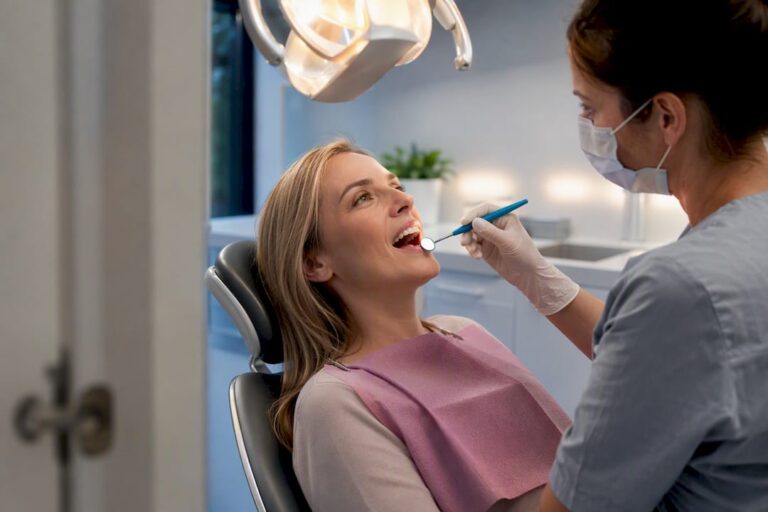
The appointment itself is quick, and the aftercare is simple enough that most patients forget they had it done by the next day.
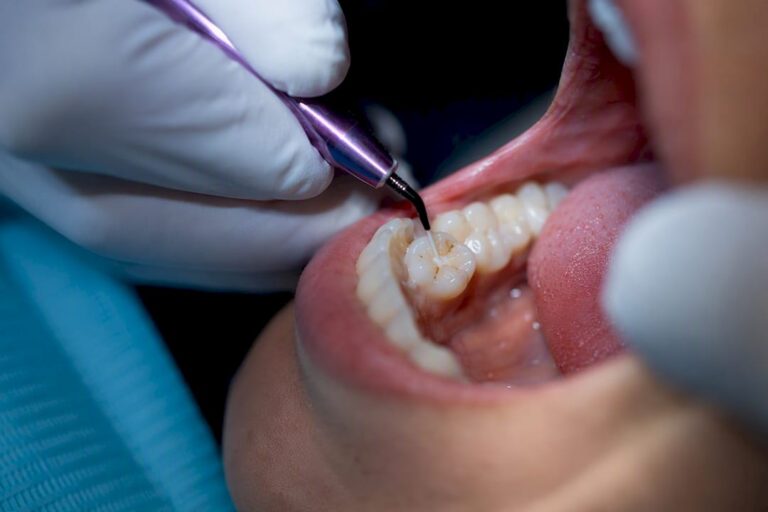
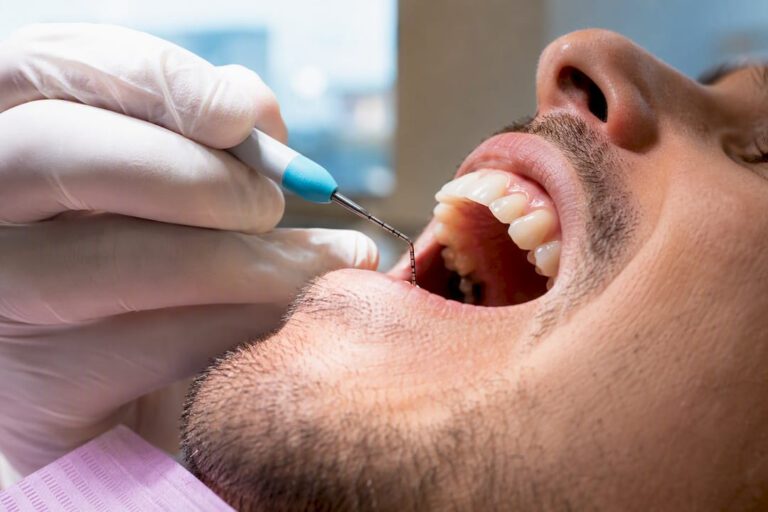
- Cleaning and drying. The dentist or hygienist briefly cleans and dries the teeth before application.
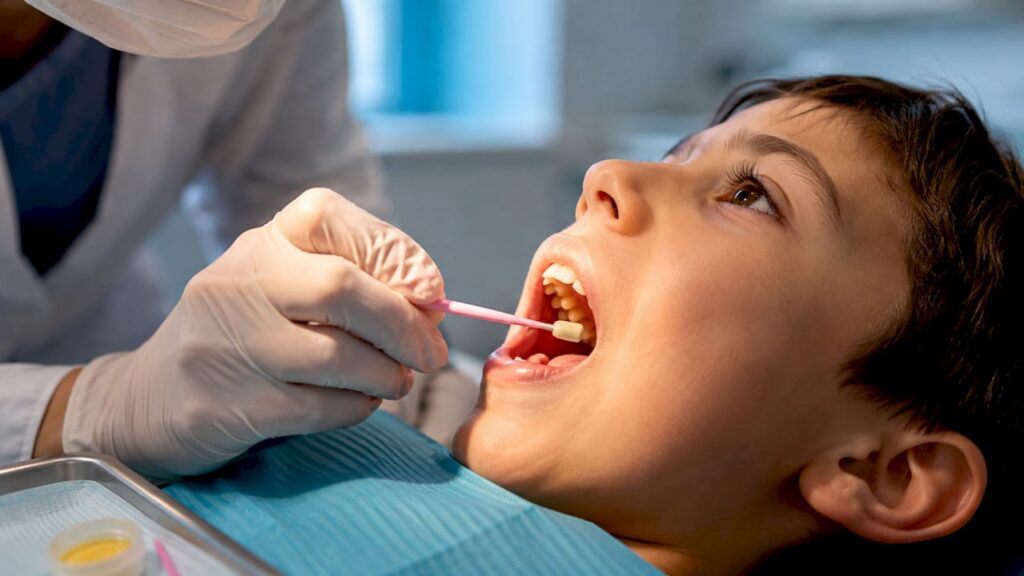
- Application. A small brush paints the varnish directly onto tooth surfaces, taking well under a minute for a full set of teeth.
- Setting. The varnish hardens on contact with saliva almost instantly, so there’s no waiting around with a mouth tray.
- Brushing guidance. Patients are typically told to avoid brushing for four to twelve hours to let the fluoride keep releasing.
- Eating and drinking. Soft foods and lukewarm drinks are fine right after; avoid hot, hard, or crunchy foods for the rest of the day.
Beyond that, keep brushing twice daily with fluoride toothpaste and stick to routine cleanings and exams, since varnish supplements a good hygiene routine rather than replacing it.
Fluoride Varnish vs. Dental Sealants: Which One Do You Need?
Both fissure sealants and fluoride varnish reduce decay on the chewing surfaces of back teeth, and neither one clearly outperforms the other across every study. The right choice usually comes down to the tooth, the patient, and the practical circumstances of the visit.
- Sealants physically block out bacteria and food debris from deep grooves, but placement is technique-sensitive and requires a dry field, which can be tough with squirmy toddlers.
- Varnish needs no isolation or drying time, making it the practical pick for very young children, anxious patients, or anyone with a strong gag reflex.
- Longevity favors sealants once properly placed, while varnish requires repeat visits to maintain its protective effect.
A risk-based approach makes sense: lean on varnish when sealants aren’t practical, and use sealants when a tooth’s anatomy and the patient’s cooperation allow for a clean, dry placement.
How Complete Dental Care Uses Fluoride Varnish in Preventive Care
This practice builds fluoride varnish into individualized preventive plans rather than treating it as a one-size-fits-all add-on. Children and high-risk adults typically get a varnish recommendation as part of a broader plan that includes digital exams, patient education on brushing habits, and a candid conversation about what’s actually driving that patient’s decay risk.
Preventive care works best when it’s specific to the person in the chair, not a script. A varnish schedule for a five-year-old with early enamel changes looks different from one for an adult managing dry mouth from medication, and patients deserve to understand why.
[brand_signal] Chair time for a varnish application is short, side effects are minimal and temporary, and the clinical team walks patients and parents through exactly what to expect before, during, and after.
The Real Gap Between Fluoride Varnish Research and Everyday Practice
The research is more settled than most patients realize. A 43% reduction in permanent-tooth decay from a treatment that takes under a minute isn’t a marginal intervention. It’s one of the higher-value moves in preventive dentistry, and it’s underused outside pediatric and public health settings.
Where conventional advice falls short is frequency. Most people hear “twice a year” and stop thinking about it, but the newer meta-analysis data suggests high-risk patients, especially young children and those with dry mouth or a recent cavity, may benefit from a tighter schedule. That’s a conversation worth having at every checkup, not just assuming the default interval fits everyone.
The other overlooked point: varnish is a component of a plan, not a substitute for one. Skipping the daily fluoride toothpaste or the routine cleaning because “I got the varnish” undermines the whole point. Prioritize the conversation about your personal risk level first. The concentration and schedule should follow from that, not from a generic default.
— Complete Dental Care
Ready to Ask About Fluoride Varnish? Here’s How to Book a Visit
If you’re wondering whether fluoride varnish fits your situation or your child’s, the easiest next step is a preventive visit where a dentist can actually assess caries risk instead of guessing from a search result. The dental office schedules these evaluations alongside routine exams and cleanings, so you’re not making an extra trip just to ask a question.
Booking is straightforward through the Complete Dental Care landing page, where you can check insurance details and ask about pediatric visit options if you’re bringing a young child in for the first time. Bring a list of your child’s recent cavities or any dry-mouth medications you’re taking, since both factors change how often varnish makes sense. At the appointment, ask directly whether your risk level calls for the standard twice-yearly schedule or a more frequent one, and whether combining varnish with general dentistry checkups changes your overall prevention plan. A few minutes of conversation at that visit will tell you more than another hour of searching online.
Sources
- Fluoride varnishes for preventing dental caries in children and adolescents (Cochrane review)
- Fluoride Varnishes for Dental Health: A Review of the Clinical Effectiveness, Cost-effectiveness and Guidelines
- How fluoride works (CDC)
- Systematic review and meta-analysis (2026) on fluoride varnish effectiveness