Full mouth reconstruction rebuilds a damaged or failing dentition using a combination of implants, crowns, bridges, dentures, grafting, and endodontic care, with the goal of restoring stable chewing function, proper bite alignment, facial support, and a natural-looking smile. Care happens in planned stages rather than a single visit, and most patients move from consultation to a finished result over several months, depending on how much surgery and healing the plan requires.
TL;DR:
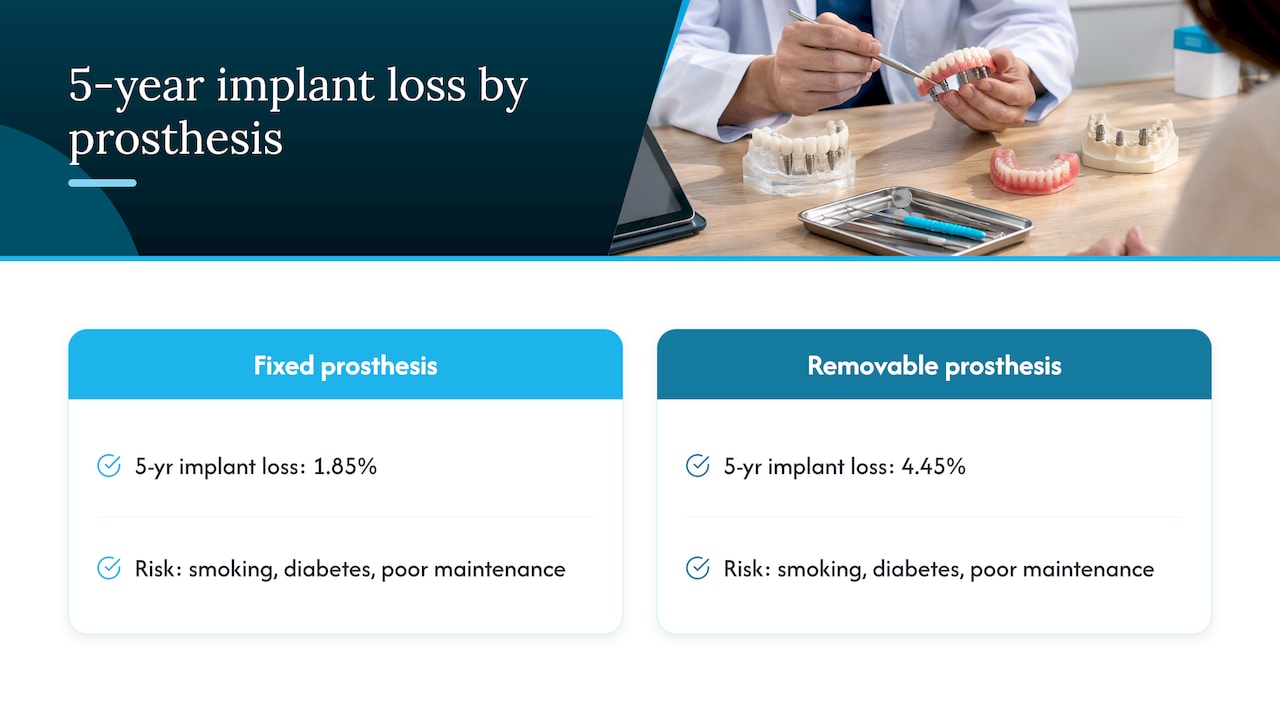
- Fixed full-arch restorations have a 1.85% five-year implant loss rate, which is lower than the 4.45% for removable options, especially when maintained well.
- Immediate loading can be done if implant stability and bone quality are sufficient, but staged healing often prolongs treatment by several months.
- Grafting, extractions, and systemic health issues can extend treatment timelines beyond six months, with no fixed duration for complex cases.
- Digital planning and in-house prosthetics can significantly reduce the time between surgery and final prosthesis delivery.
- Costs vary based on grafting, implant number, and prosthesis type, but Vague timelines and absence of digital workflows are indicators of less predictable outcomes.
questions about this? we're happy to help.
Every patient's situation is a little different. If you want to talk through what this means for you, our Greenville team is one call away.
schedule a free consultationTable of Contents
- What Full Mouth Reconstruction Involves and Who Needs It
- Pre-Treatment Planning and Preparatory Steps
- Step-by-Step Treatment Process: Surgery and Restoration
- Realistic Timeline From Consultation to Final Prosthesis
- Recovery, Aftercare, and Long-Term Maintenance
- Risks, Complications, and Realistic Outcomes
- Fixed vs. Removable: Weighing the Main Options
- How to Choose a Provider and Plan for Cost
- Why Digital Planning Shapes a Predictable Outcome
- Pacing, Partnership, and Realistic Expectations
- Complete Dental Care: How We Approach Full Mouth Reconstruction
- FAQ
- Sources
What Full Mouth Reconstruction Involves and Who Needs It
Full mouth reconstruction differs from fixing one broken tooth. It addresses the entire dental arch, or both arches, when multiple teeth are failing at once and the bite itself has broken down.
Common triggers include:
- Severe enamel wear from grinding or acid erosion that has collapsed the bite
- Multiple missing, broken, or failing teeth across the upper or lower arch
- Advanced gum disease leaving teeth loose or unsalvageable (terminal dentition)
- Traumatic injury affecting several teeth or supporting bone
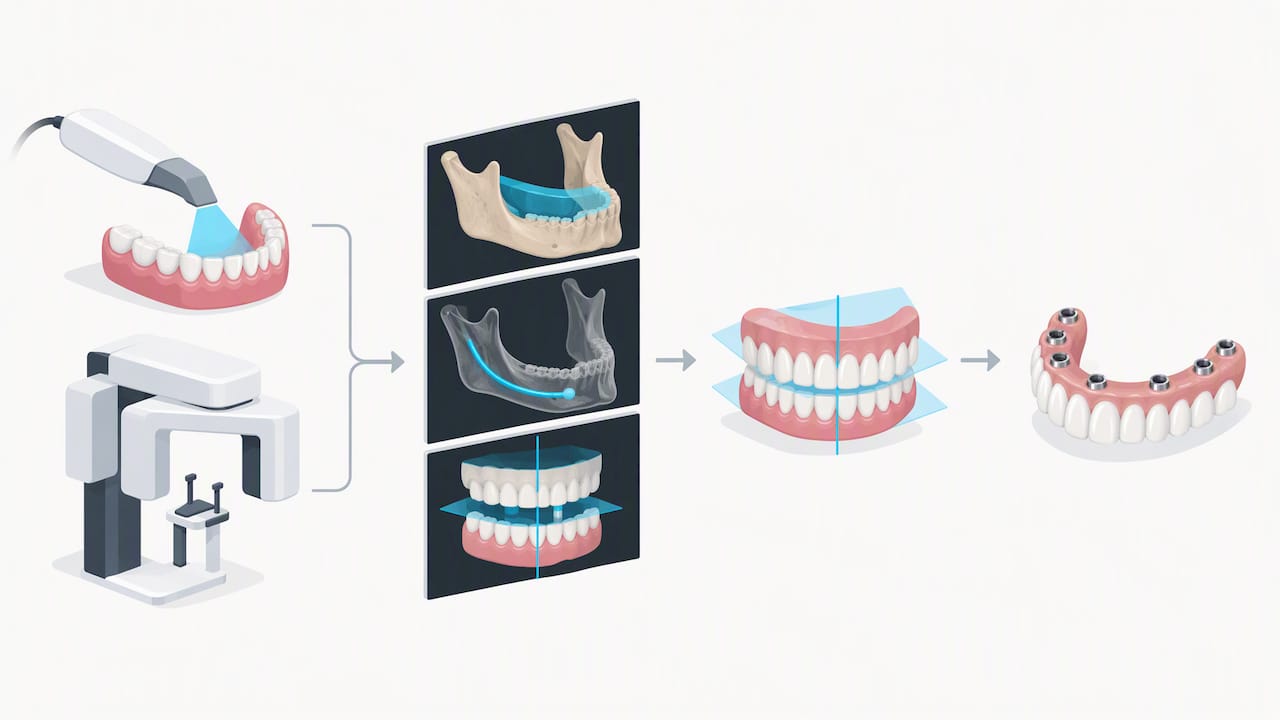
A diagnostic workup typically includes a full medical history review, a CBCT scan to evaluate bone volume and nerve position, a digital intraoral scan of the existing teeth and gums, and an occlusal exam to map how the jaws meet.
Pre-Treatment Planning and Preparatory Steps
Before any permanent work begins, the dental team gathers detailed records and resolves active disease.
- Capture photos, digital intraoral scans, and a CBCT scan to build a 3D model of the mouth.
- Use digital smile design and chairside mock-ups to preview the planned outcome and adjust proportions before committing to a final design.
- Treat active disease first, including periodontal therapy, necessary extractions, root canals, and temporary restorations to stabilize the mouth.
- Review medical and lifestyle factors, such as smoking, diabetes, and certain medications, since each can change healing time and implant planning.
Step-by-Step Treatment Process: Surgery and Restoration
The surgical phase usually starts with extractions of unsalvageable teeth, followed by grafting if the jawbone needs more volume or density. Implants are then placed, either immediately after extraction, after a short healing interval, or following a longer graft-healing period. Sinus lifts and ridge augmentation are common adjuncts when the upper jaw lacks bone height or width.
Provisionalization comes next. Some patients qualify for an immediate-load provisional, often marketed as Teeth in a Day, where a temporary fixed arch is attached to the implants on the same day as surgery. Others need a staged approach with a removable temporary denture while the implants heal undisturbed.
The definitive restorative phase follows once the implants have integrated with the bone:
- Digital impressions or scans capture the healed implant positions
- A try-in appointment checks fit, bite, and appearance before finalizing
- The lab fabricates the final prosthesis using CAD/CAM milling
- The finished restoration, whether individual crowns, a fixed hybrid arch, or an implant-retained overdenture, is delivered and adjusted
Guided surgery software and in-house CAD/CAM prosthetics can compress several of these visits by letting the surgical and restorative teams work from the same digital plan, reducing the back-and-forth that paper-based workflows require.
Pro Tip: Ask whether your provider designs and mills prosthetics in-house, since that typically shortens the wait between try-in and final delivery.
Realistic Timeline From Consultation to Final Prosthesis
Planning generally takes one to four weeks, depending on how many specialists need to weigh in and how complex the imaging review is. From there, timing splits sharply based on loading protocol.
- Immediate loading: provisional teeth attached shortly after surgery when bone quality and implant stability allow it
- Staged loading: three to six months or longer of healing with a removable temporary before any fixed provisional goes in
- Osseointegration: typically two to six months regardless of loading approach, since bone needs this window to fuse to the implant surface
- Final prosthesis: additional appointments for impressions, try-in, and delivery once integration is confirmed
Grafting, extractions, systemic health conditions, and bone density all push timelines longer. Immediate, early, and conventional loading protocols differ mainly in how soon the implant bears chewing force: immediate loading happens the same day, early loading within weeks, and conventional loading only after full integration. A detailed timeline breakdown can help set expectations for a specific case.
Recovery, Aftercare, and Long-Term Maintenance
The first week focuses on managing swelling and discomfort with prescribed medication, sticking to a soft diet, and using gentle oral rinses as directed. Most patients return to work within a few days, though strenuous activity usually waits longer.
Over the following weeks to months, diet progresses from soft foods back toward normal chewing as the implants integrate, and the provisional prosthesis may need minor adjustments along the way. A week-by-week recovery guide covers this progression in more detail.
- Professional recall visits for implant-supported restorations typically happen more often than routine dental checkups
- Home care tools like a water flosser and interdental brushes help clean around the prosthesis where a toothbrush cannot reach
- Persistent looseness, swelling, or bleeding around an implant warrants a call to the dental office rather than waiting for the next scheduled visit
Pro Tip: Build a water flosser into your daily routine from week one of using a fixed implant prosthesis, since food trapped underneath is the most common early complaint.
Risks, Complications, and Realistic Outcomes
The FDA notes that implant complications can surface soon after placement or years later, including surgical injury, infection, and outright implant failure, all of which should be discussed with the treating provider before surgery.
A 2021 systematic review found 5-year cumulative implant loss of 1.85% for fixed full-arch prostheses compared with 4.45% for removable designs, suggesting fixed restorations tend to hold up better in the mid-term when other factors are controlled. Smoking, uncontrolled diabetes, and inconsistent maintenance all raise complication risk regardless of which prosthesis type is chosen.
Fixed vs. Removable: Weighing the Main Options
Fixed full-arch designs, including All-on-4 and All-on-6 protocols, feel closest to natural teeth and stay in place permanently, though they typically cost more and require specific hygiene tools to clean underneath the bridge. A closer look at the All-on-4 protocol explains how implant number and position affect candidacy.
- Removable implant-retained overdentures cost less and are easier to clean since they come out, but the attachment components need periodic replacement
- Zygomatic or pterygoid implants anchor into denser bone outside the jaw itself, letting some patients with severe bone loss avoid extensive grafting while still getting a fixed result, according to a recent clinical review
- Immediate loading is generally preferred for patients with strong primary implant stability and adequate bone at the time of surgery; others may require staged healing
How to Choose a Provider and Plan for Cost
A short checklist helps separate a solid plan from a rushed one:
- Ask how the office handles case planning: who reviews the CBCT scan, and is a prosthodontist, oral surgeon, or periodontist involved alongside the restorative dentist and the lab technician who builds the final prosthesis?
- Request to see examples of completed cases similar to yours.
- Ask whether imaging, provisional fabrication, and final prosthetics happen in-house or get sent to outside labs.
- Clarify the complication and warranty policy before signing a treatment plan.
- For readers on Medicare, a plain-language guide to Medicare dental coverage explains what is and is not typically covered for implant-related work.
Cost varies by how many implants are needed, whether grafting is required, and the prosthesis type chosen. A full-arch implant cost breakdown walks through the major price drivers. Vague timelines, no digital records, or no stated maintenance plan are red flags worth asking about directly.
Why Digital Planning Shapes a Predictable Outcome
Intraoral scanning and CBCT imaging let the surgical and restorative teams see bone volume, nerve position, and bite alignment before any incision is made, which supports safer implant placement. Chairside mock-ups built from digital smile design set realistic expectations for shape, length, and symmetry before the final prosthesis is milled, reducing surprises at delivery.
Pacing, Partnership, and Realistic Expectations
Full mouth reconstruction works best as a partnership: a staged plan, honest conversations about comfort options, and a maintenance commitment that outlasts the final appointment. Ask for a written plan and documented examples before starting.
— Complete Dental Care
Complete Dental Care: How We Approach Full Mouth Reconstruction
We build full mouth reconstruction plans around 3D imaging and digital scanning from the first visit. For patients who qualify, our Teeth in a Day workflow delivers a fixed provisional arch the same day as surgery.
- Full-arch implant solutions, bone grafting, and sinus lift procedures handled through our surgical and implant dentistry team
- Sedation and comfort options are available for patients who feel anxious about surgical visits
- Digital planning helps keep cases moving without unnecessary outside referrals
If you want to know whether your case fits an immediate-load timeline, start with a consultation through our Teeth in a Day page.
This article is general information, not a substitute for advice from a qualified doctor. Consult a qualified healthcare professional about your own circumstances before acting on anything here.
FAQ
Is full mouth reconstruction painful?
Most patients manage post-surgical discomfort with prescribed pain medication; swelling usually peaks in the first few days and then subsides. Pain typically subsides within a week as the surgical sites begin healing.
How long does a full mouth reconstruction take?
Planning usually takes one to four weeks, and immediate-load provisionals can be placed shortly after surgery, while staged cases need three to six months of healing before a fixed provisional goes in. Final prosthesis delivery follows osseointegration, which generally takes two to six months.
What is the downside of full mouth implants?
Fixed full-arch implants cost more upfront than removable options and require specific cleaning tools to reach underneath the prosthesis. The FDA also notes that complications such as infection or implant failure can occur soon after placement or years later.
How many dental implants do you need for a whole mouth?
The number depends on bone quality, arch shape, and prosthesis design, with protocols like All-on-4 or All-on-6 naming the implant count directly in their design. A clinical review of full-arch strategies notes that implant number and position are chosen based on anatomy and the biomechanics of the planned prosthesis rather than a fixed rule for every patient.
Sources
- Efficacy of rehabilitation with different approaches of implant-supported full-arch prosthetic designs: A systematic review
- Dental Implants: What You Should Know | FDA
- Full-mouth implant rehabilitation review (PMC)
questions about this? we're happy to help.
Every patient's situation is a little different. If you want to talk through what this means for you, our Greenville team is one call away.
schedule a free consultation