Adults with deep molar grooves, a recent cavity, or a history of frequent decay are the clearest candidates for dental sealants, and the clinical case for them holds up well past childhood. The tradeoff is real: guidelines back sealants for arresting early lesions and newer bioactive materials show strong retention in adult trials, but most dental insurance plans still treat sealants as a kids-only benefit. What follows covers the evidence, the materials, and how to actually get coverage.
TL;DR:
- Sealants are most effective on molars with deep grooves, especially for adults with a history of cavities or dry mouth, and can arrest early lesions.
- Resin sealants provide the longest-lasting bond but require a completely dry field, while glass ionomer options tolerate moisture better for challenging cases.
- Adult sealants have proven durability, with a 93.75% success rate after two years using bioactive resin materials, outperforming older fluoride-releasing sealants.
- Insurance coverage often excludes adult sealants, but high-risk adults can sometimes have coverage if a dentist provides a medical necessity letter.
- Regular checkups during routine cleanings are essential, as sealants last several years and can be reapplied easily if they wear or chip.
questions about this? we're happy to help.
Every patient's situation is a little different. If you want to talk through what this means for you, our Greenville team is one call away.
schedule a free consultationTable of Contents
- Adult Dental Sealants: What They Are and How They Work
- Resin, Glass Ionomer, or Hybrid: Which Sealant Material Fits an Adult Mouth
- Who Actually Needs Sealants as an Adult?
- What Happens During Placement, and What Can Go Wrong
- What Adult Sealants Cost and How Insurance Usually Handles Them
- How Long Adult Sealants Last and When to Get Them Checked
- Complete Dental Care’s Take on Sealants for Adult Patients
- Get Your Molars Evaluated for Sealants in Greenville
- Sources
- FAQ
Adult Dental Sealants: What They Are and How They Work
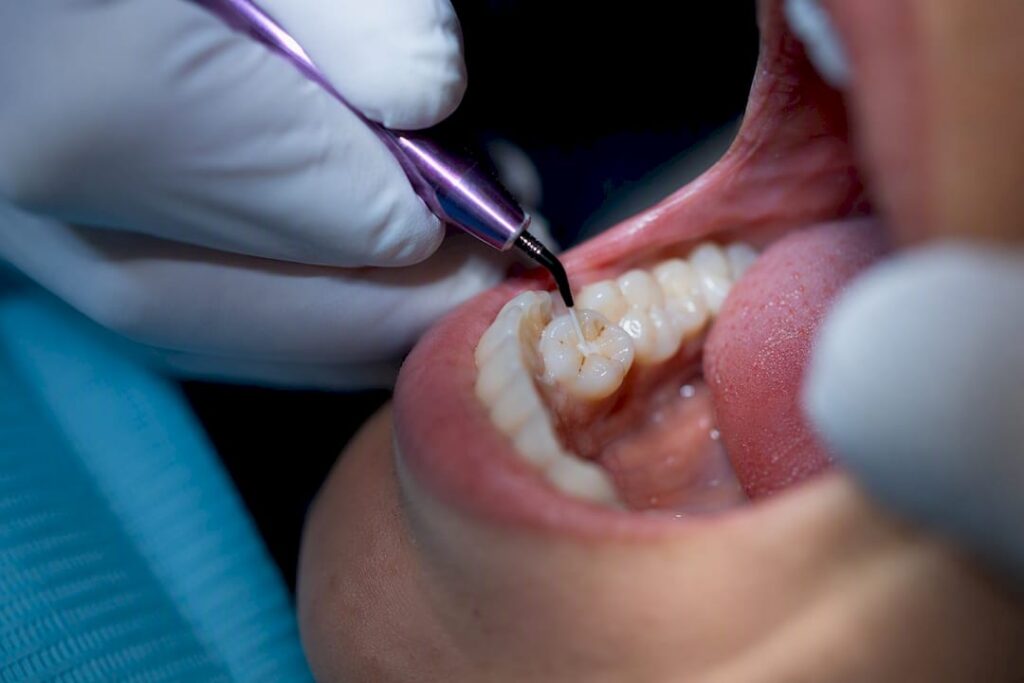
A dental sealant is a thin coating painted into the pits and grooves on the chewing surface of a molar, the spots a toothbrush bristle can’t fully reach. It hardens into a physical barrier that keeps food debris and bacteria from settling into those grooves, which is where most back-tooth decay actually starts.
The CDC estimates that sealants prevent up to 80% of cavities in the treated grooves of a tooth for two years, and protection extends well beyond that window with good retention. Sealants don’t just block new decay. Placed over an early, noncavitated lesion, a sealant can starve the bacteria underneath of the sugars they need and actually stop that lesion from progressing.
That’s a different job than fluoride varnish, which strengthens enamel broadly but doesn’t physically seal a groove. The American Dental Association notes sealants produce a more significant reduction in occlusal decay than varnish alone, particularly on molars with deep, hard-to-clean fissures.
- Applied to the chewing surfaces of molars and premolars, not front teeth
- Works as a mechanical barrier, not a chemical treatment like fluoride
- Can arrest early decay in addition to preventing new cavities
Resin, Glass Ionomer, or Hybrid: Which Sealant Material Fits an Adult Mouth
Not every sealant is made the same way, and the material matters more for adults than most people assume.
- Resin-based sealants bond tightly to enamel and hold up longest, but they need a bone-dry field during placement. Any saliva contamination weakens the bond.
- Glass ionomer sealants chemically bond to the tooth and release fluoride over time. They tolerate moisture better, which makes them useful when a molar is hard to isolate, such as one that’s partially erupted or sits behind a crowded arch.
- Hybrid and flowable composite materials blend some of resin’s strength with easier handling, and newer bioactive resin sealants add ion release that supports remineralization while still offering resin-level retention.
For adults specifically, isolation is often the deciding factor. Someone with a gag reflex, a heavily restored back tooth, or reduced saliva flow from medication may be a better candidate for glass ionomer than a moisture-sensitive resin.
Pro Tip: If your dentist mentions “bioactive” sealant material, ask whether it’s the type studied in recent adult trials. Retention rates vary a lot by brand, and that one word can matter more than the price difference.
Who Actually Needs Sealants as an Adult?
The strongest candidates are adults with a documented history of cavities, deep or irregular molar grooves, dry mouth, or a recent noncavitated lesion caught on X-ray before it turned into a full cavity. Orthodontic patients with brackets that trap plaque and anyone with limited access to routine dental care also tend to benefit.
Pediatric evidence for sealants is deep and well established, and guideline reviews note that while adult-specific trial data has historically been thinner, panels support extending that recommendation to at-risk adults when the clinical picture matches a child’s high-risk profile: deep grooves, active decay elsewhere, or a diet and hygiene pattern that keeps producing new cavities.
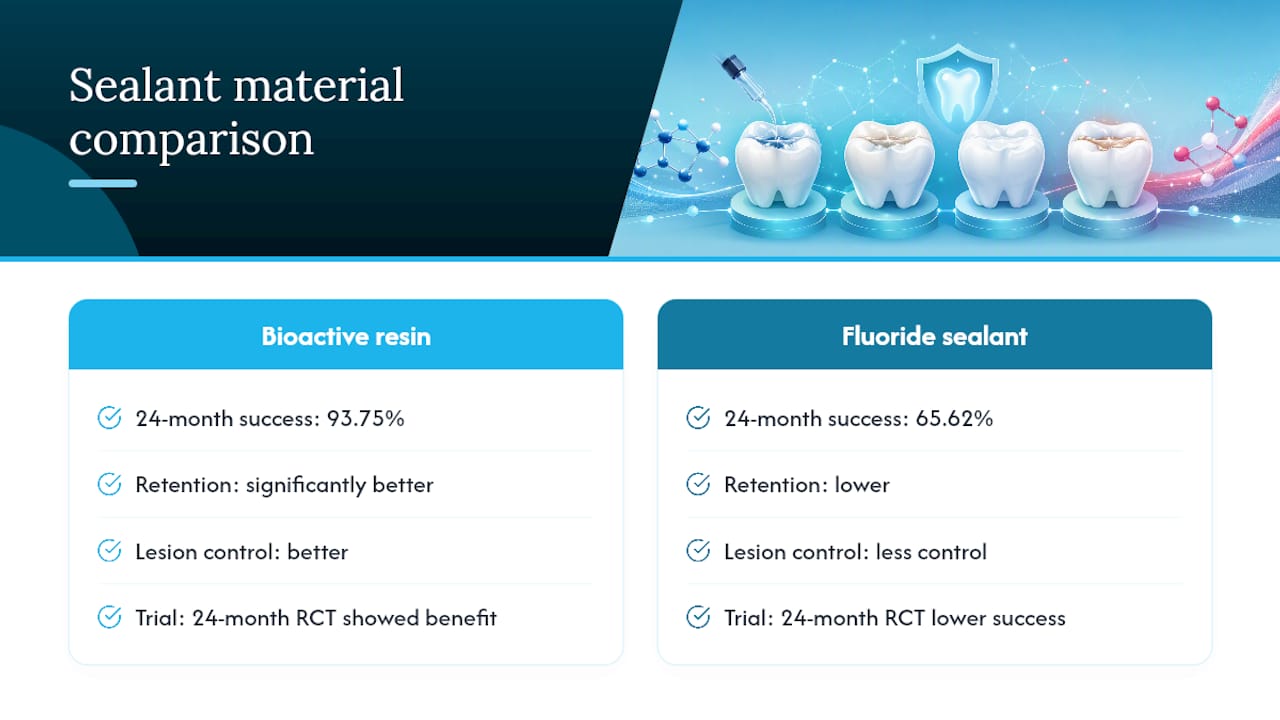
A 24-month randomized clinical trial gave that guideline extension real teeth. Adults who received a bioactive resin sealant showed a 93.75% success rate after two years, compared with 65.62% for a fluoride-releasing sealant, with the bioactive material showing significantly better retention and better control of lesion progression on the same noncavitated occlusal lesions.
That gap between materials is one adult trials have consistently flagged, and it’s a big part of why “just get a sealant” isn’t quite the full answer. Which sealant your dentist places may matter almost as much as whether you get one at all. The evidence base for adults is still smaller than the pediatric literature, so risk assessment, rather than a blanket recommendation, is how most clinicians decide who’s a candidate.
What Happens During Placement, and What Can Go Wrong
The appointment itself is quick, usually done at a routine cleaning or exam without anesthesia.
- The tooth is cleaned and dried, then isolated with cotton rolls or a rubber dam to keep saliva out.
- An etching gel roughens the enamel surface for about 15 to 30 seconds, then gets rinsed off.
- The sealant material is painted into the grooves while the tooth stays completely dry.
- A curing light hardens the material in seconds, or a chemical-cure sealant sets on its own.
- The dentist checks your bite to make sure the sealant doesn’t interfere with how your teeth come together.
Moisture control is the single biggest technical challenge, and it’s a bigger issue for adults than kids because adult molars often sit further back and are harder to isolate. Saliva contamination can seriously weaken the bond, though research on contamination and adhesion shows re-etching before resealing restores much of that lost bonding strength. On the safety side, the ADA notes BPA exposure from sealant placement is minimal, far below any level of health concern, and the main real-world risk is simply losing the sealant and needing it reapplied.
What Adult Sealants Cost and How Insurance Usually Handles Them
Per-tooth pricing for sealants typically runs in the range most general dental offices post for a preventive procedure, though cost varies by market and by the material used, with bioactive and glass ionomer options sometimes priced above standard resin.
The insurance picture is where adults get caught off guard. Most plans were built around pediatric sealant benefits and cap or exclude coverage once a patient ages out, often somewhere around 14 to 16, even though the clinical need doesn’t disappear at that birthday.
- Ask your insurer directly whether your plan covers sealants (CDT code D1351) for adults, since some do quietly cover it for high-risk patients.
- Request a letter of medical necessity from your dentist if you’ve had recent decay. It sometimes reverses an initial denial.
- If you’re uninsured or denied, ask about in-house membership plans or financing that cover preventive work at a set rate.
- Prioritize sealing your highest-risk molars first if budget is tight rather than sealing every back tooth at once.
How Long Adult Sealants Last and When to Get Them Checked
Sealants aren’t permanent, but they’re not a short-term fix either. Sealants generally offer protection lasting several years and can remain effective through routine wear when checked regularly.
- Your dentist should visually and physically check sealant integrity at every routine cleaning, not just when something feels off.
- A worn or chipped sealant doesn’t mean it failed. Dentists in practice treat this as expected wear, and resealing is a routine, low-cost procedure that typically runs about the same as the original placement.
- If a sealant has partially worn away, it likely already did its job during the years it was fully intact, which is exactly the outcome you’re paying for.
Pro Tip: Don’t wait for a sealant to visibly fail before mentioning it. Bring it up at your cleaning even if it looks fine. Catching a hairline gap early is cheaper and easier than waiting for decay to start underneath it.
Complete Dental Care’s Take on Sealants for Adult Patients
We look at caries risk the same way for a 35 year old as we would for a teenager: recent decay, deep grooves, dry mouth from medication, all of it factors into whether a sealant makes sense. Using in-house digital scanning and 3D imaging lets us actually see early lesions before they become a filling, which changes the conversation from “do you need a sealant” to “here’s what we’re seeing and here’s why.” Cost and coverage get discussed upfront, not after the fact, so you’re deciding with full information.
— Complete Dental Care
Get Your Molars Evaluated for Sealants in Greenville
If a general dentist told you sealants are a kids-only service, that’s outdated advice. Adult preventive dental care should be regarded as an important category, not an afterthought squeezed into a pediatric visit. Digital scanning can be used to show what is happening in molar grooves before recommending treatment, and patients can be informed of material options such as resin or glass ionomer, and insurance coverage can be discussed before committing to treatment.
Our team checks eligibility for sealant coverage and, when a plan excludes it, walks you through membership plans options that make preventive care affordable without a dental insurance detour. If you’ve had a recent cavity or notice sensitivity in a back molar, that’s the sign to act on. Visit Complete Dental Care to schedule an exam and get a straight answer on whether sealants fit your mouth and your budget.
This article is general information, not a substitute for advice from a qualified doctor. Consult a qualified healthcare professional about your own circumstances before acting on anything here.
Sources
- 24-month efficacy of bioactive versus fluoride sealant for non-cavitated occlusal caries in adults: a randomized clinical trial – PMC
- Dental Sealants | American Dental Association
- Guideline evidence synthesis on sealants (NCBI Bookshelf)
FAQ
Should adults get sealants on their teeth?
Adults with deep molar grooves, recent cavities, or dry mouth are strong candidates, since guidelines support extending sealant use to at-risk adults even though most trial data historically focused on children.
How much do adult dental sealants typically cost?
Per-tooth pricing varies by material and market, with glass ionomer and bioactive options often costing more than standard resin sealants.
How long do dental sealants for adults last?
Multi-year protection is typical, and a 24-month clinical trial found bioactive resin sealants held a 93.75% success rate in adults, well above older fluoride-releasing materials.
What are the downsides of dental sealants?
The main downsides are limited insurance coverage for adults, occasional loss or wear that requires resealing, and moisture-sensitive materials that need careful isolation during placement; BPA exposure from the material itself is considered minimal by the ADA.