
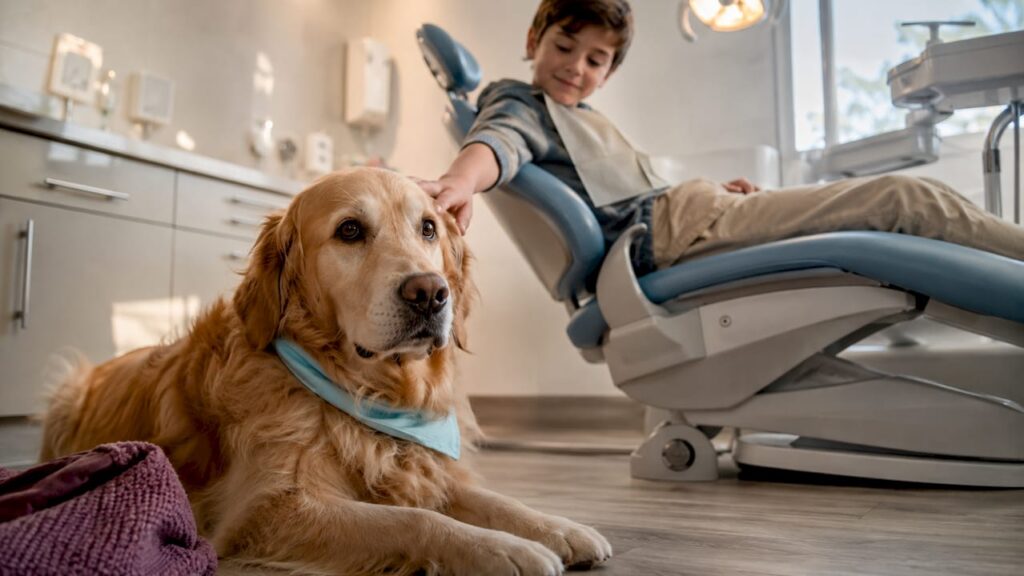
Many dental practices now offer trained therapy dogs to calm anxious patients before and during treatment, and the approach has real evidence behind it. Pediatric studies link therapy-dog visits to lower heart rates and better cooperation in the chair, while adult studies show reduced anxiety scores. Therapy dogs work alongside, not instead of, standard sedation and behavioral techniques for dental anxiety.
TL;DR:
- Pediatric trials show heart rates decrease by about 5 bpm during and after treatment with a therapy dog present.
- Adult studies report anxiety scores drop from moderate to minor levels when a therapy dog is present during dental procedures.
- Most research stems from small, recent trials, so more large-scale studies are needed to confirm these benefits.
- Therapy dogs are scheduled by appointment, and consent plus advance notice are crucial for individual patient comfort and safety.
- Infection risk remains low if the dog is well groomed and the clinic follows standard cleaning protocols, with dogs kept away from sterile areas.
Table of Contents
- What the Research Shows About Therapy Dogs at the Dentist
- Who Benefits Most from Dental Therapy Dogs
- Service Dogs, Therapy Dogs, and Emotional Support Animals Aren’t the Same Thing
- Infection Control: Is a Dog in a Dental Office Actually Safe?
- How to Request a Therapy-Dog Visit and What Happens Next
- The Complete Dental Care Approach to Comfort-Focused Care
- The Legal and Ethical Side of Having a Dog in a Dental Office
- How Therapy Dogs Change the Day-to-Day Work of a Dental Office
- What Patients Say About Therapy Dogs in the Dental Chair
- Should You Choose a Dental Practice with a Therapy Dog?
- Getting Started with Anxiety-Friendly Care at Complete Dental Care
- Sources
What the Research Shows About Therapy Dogs at the Dentist
The clearest data comes from pediatric dentistry. A randomized controlled trial found children treated with a therapy dog present had a modest but statistically significant heart rate decrease, while the control group’s heart rate increased slightly. That’s a modest but statistically real shift, and it happened during and after treatment, not just in the waiting room, according to the study on dog-assisted therapy in pediatric dentistry.
Adult patients see benefits too. One review of animal-assisted therapy in health care settings found self-reported anxiety scores fall from a “moderate” 4.30 to a “minor” 2.93 among dental patients who had a therapy dog present, alongside mid-procedure blood pressure decreases.
A 2025 trial published in JADA added another layer: patients in the animal-assisted therapy group reported significantly less postoperative pain and showed heart-rate patterns with less variation than controls, according to the pediatric dental care trial.
The caveat that matters: most of this research comes from smaller trials run since 2019, and researchers studying dog-assisted therapy protocols are still calling for larger samples and standardized measurement.
- Heart rate: measurable drops in pediatric trials, roughly 5 bpm
- Anxiety scores: reduced from moderate to minor in adult studies
- Postoperative pain: significantly lower in the 2025 JADA trial
- Evidence base: growing but still early stage, more large trials needed
Who Benefits Most from Dental Therapy Dogs
Kids show the most consistent response. Pediatric trials report high caregiver acceptability, with some surveys finding around 90% of parents approve of therapy-dog visits, and few safety concerns raised during the pediatric AAT trials. Parents often describe visits as noticeably calmer, with children more willing to sit through cleanings or fillings without a fight.
Adults get real benefit too, but it’s not universal. Some adults find a wagging tail genuinely soothing during a root canal. Others are indifferent, and a smaller group is actively afraid of dogs or allergic, which is exactly why consent and advance notice matter so much.
Patients with special needs often do well with therapy dogs, especially when visits are planned around predictable, low-surprise interactions. A dog that sits quietly beside the chair rather than jumping or barking gives these patients something steady to focus on. That said, every patient in this group needs an individual plan; a routine that calms one autistic teenager might overwhelm another.
- Children: strongest and most consistent physiological response
- Adults: helpful for many, but not everyone wants a dog nearby
- Special-needs patients: benefit from structure, but planning has to be individualized
Service Dogs, Therapy Dogs, and Emotional Support Animals Aren’t the Same Thing
These three categories get lumped together constantly, and the confusion causes real friction at the front desk. A service animal is a dog trained to perform a specific task for a person with a disability, and under the ADA’s service animal rules, these dogs have a federally protected right to accompany their handler into a dental office.
Therapy dogs and emotional support animals are different. Neither carries that federal access guarantee, which means a dental office decides its own policy on whether and when a therapy dog is present, according to guidance on service, therapy, and emotional-support animal distinctions. Readers who want a plain-language breakdown of ESA rights specifically can check this emotional support animal rights guide.
- Service animals: ADA-protected, must be allowed into treatment areas
- Therapy dogs: clinic-scheduled, present by appointment, not by legal right
- Emotional support animals: no federal access right in a dental office
- Practical move: call ahead and ask what documentation, if any, the office wants
Infection Control: Is a Dog in a Dental Office Actually Safe?
The short answer, according to the CDC’s guidance on animals in healthcare facilities, is that a well-behaved, clean animal doesn’t carry a higher infection risk than a human visitor, as long as the facility follows standard environmental cleaning protocols.
In practice, well-run therapy-dog programs build in several layers of protection. Dogs are typically bathed and groomed before visits, wear identifying vests, and stay seated near their handler rather than wandering the office. Some clinics use non-slip paw coverings and keep dogs entirely out of sterile-field procedures like extractions or implant surgery, based on implementation details from a pilot RCT on therapy-dog assisted dental exams.
- Dogs are groomed and screened before each visit
- Handlers stay with the dog at all times, no unsupervised roaming
- Dogs are kept away from sterile fields and surgical procedures
- Standard clinic cleaning protocols apply exactly as they would after a human visitor
Pro Tip: If you or a family member has allergies, asthma, or an immune condition, ask the office for its written animal-visit protocol before you book. A clinic with a real policy will have this ready to share.
How to Request a Therapy-Dog Visit and What Happens Next
Getting a therapy dog into your appointment isn’t automatic. It usually takes one phone call and a little planning ahead of time.
- Call the office first. Ask if a therapy dog is available on the day you want, since most practices schedule visits rather than keeping a dog on-site full time.
- Ask about the handler. A legitimate program has a trained handler present for the entire visit, not a dog left alone with staff.
- Ask for vaccination and training records. Reputable programs keep these current and will share them on request.
- Ask about cost. Many practices offer therapy-dog visits at no extra charge as part of standard comfort care, but confirm this before your appointment.
- Mention any allergies or fears when you book, either yours or a family member’s, so the office can schedule around it.
- Fill out a consent form on arrival. This typically covers your comfort level and any restrictions.
- Expect a short acclimation period. The dog usually greets you calmly before treatment starts rather than being introduced mid-procedure.
- Choose your interaction style. Most practices let you decide whether the dog sits beside the chair, rests near your lap, or simply greets you in the waiting room.
New patients can also flag anxiety concerns directly on intake paperwork so the front desk knows before you sit down.
The Complete Dental Care Approach to Comfort-Focused Care
Complete Dental Care builds its treatment plans around patient comfort first, using 3D imaging and digital scanning to cut down on guesswork and chair time. Comfort-dog support fits into that same philosophy: it’s one option among several, alongside sedation dentistry, for patients who feel anxious before a cleaning, an extraction, or a bigger procedure like Teeth in a Day implant work.
- Individualized comfort planning instead of a one-size-fits-all approach
- Digital workflows that reduce time in the chair
- Anxiety-support options including comfort dogs and sedation
- A straightforward path to request accommodations before your visit
Patients who want therapy-dog support typically mention it when scheduling, and the office coordinates the visit accordingly.
The Legal and Ethical Side of Having a Dog in a Dental Office
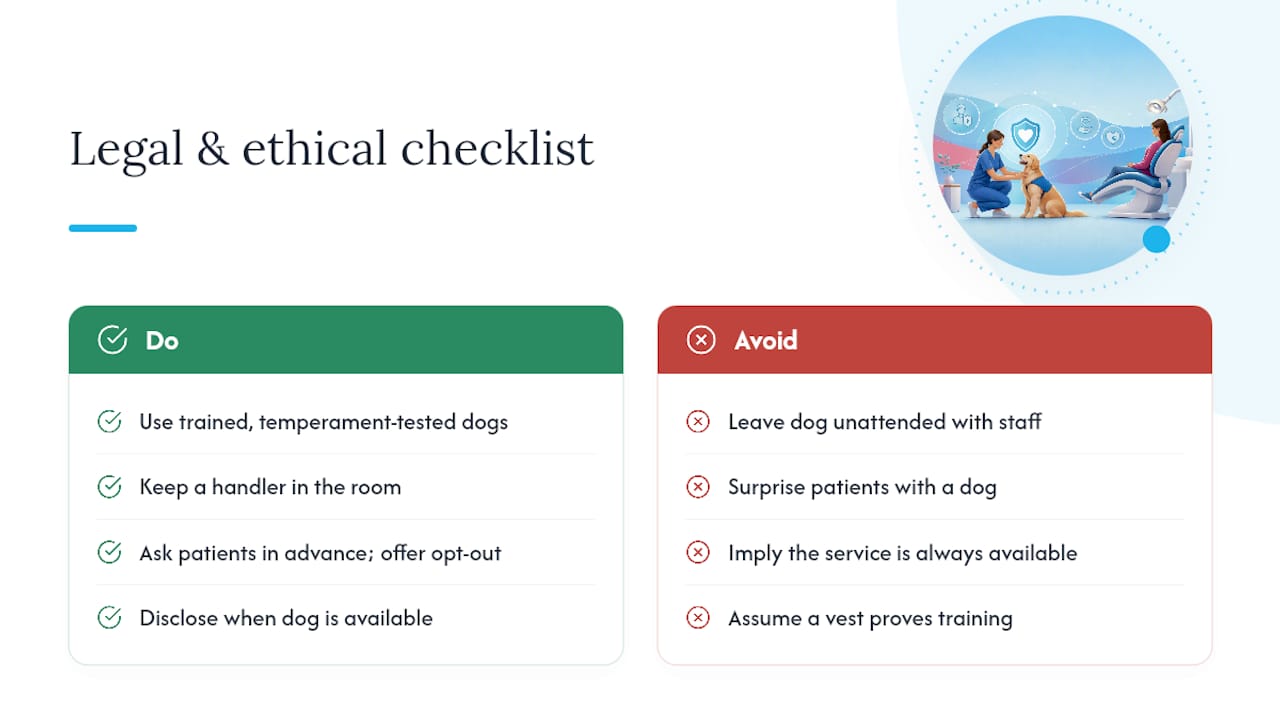
Beyond the ADA distinction between service animals and everything else, dental offices face a handful of practical legal and ethical questions when they bring a dog into a clinical space.
Liability sits at the top of the list. A practice that hosts a therapy dog needs to think through what happens if a patient has an unexpected allergic reaction, a bite incident, or simply objects to being near an animal during treatment. That’s why responsible programs use trained, temperament-tested dogs and keep a human handler in the room at all times, rather than leaving the dog with dental staff who have their own job to do.
Consent is the other pillar. No patient should ever be surprised by a dog appearing in the treatment room. Ethical practice means asking every patient in advance and offering a clear opt-out, since a therapy dog that helps one patient could genuinely distress another, whether from fear, allergy, or cultural discomfort with animals.
There’s also a fairness question worth naming honestly: therapy-dog programs cost money and staff time to run well, which means not every practice offers them, and availability can vary by day or by handler schedule. A practice that’s transparent about when the dog is and isn’t available treats patients more fairly than one that implies the service is always on hand.
Finally, credentialing matters ethically even where it isn’t legally required. A dog wearing a vest isn’t automatically trained or evaluated. Ask what certification or training program the dog and handler completed, since therapy-dog organizations vary widely in their screening standards.
How Therapy Dogs Change the Day-to-Day Work of a Dental Office
Adding a therapy dog to a practice changes more than the patient experience. It reshapes scheduling, too. Front-desk staff need to know which days the dog is on-site, block appointments accordingly, and flag any patient who has requested to avoid dog contact.
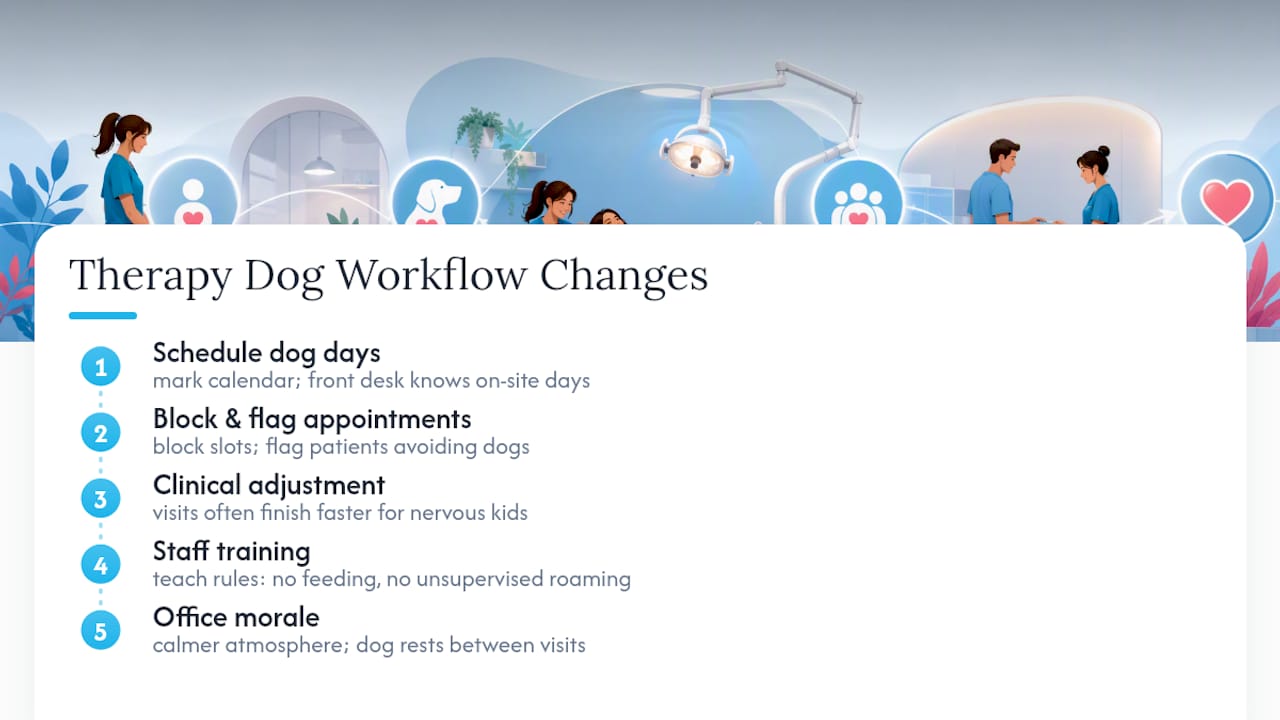
Clinical staff also adjust their workflow slightly. Hygienists and dentists working with a nervous pediatric patient often report the visit moves faster once the dog has done its job calming the child down, since less time gets spent coaxing a frightened patient into the chair. That can offset the extra planning the program requires.
There’s a training cost on the staff side as well. Everyone in the office, not just the handler, needs to know the basic rules: don’t feed the dog, don’t let it wander unsupervised, and keep it away from instrument trays and sterile setups. Offices that skip this step tend to run into small friction points, like a dog underfoot near a tray table, that a five-minute staff briefing would have prevented.
Morale is the underrated piece. Staff working in a practice with a therapy dog often describe the office atmosphere as calmer overall, not just for patients but for the team managing a full day of appointments. A dog resting quietly in a corner between visits does something for the room that’s hard to measure but easy to notice.
What Patients Say About Therapy Dogs in the Dental Chair
The physiological data tells part of the story, but the day-to-day accounts from clinics running these programs fill in the rest. Caregiver surveys tied to pediatric trials report high approval, with roughly 90% of parents saying they’d want a therapy dog present again for a future visit, based on findings from the pediatric AAT research.
Clinicians running these programs also describe a pattern worth noting: kids who normally need extra coaxing, extra breaks, or even a second visit to finish a procedure tend to sit through treatment in one sitting when a therapy dog is part of the appointment. That’s not a guarantee for every child, but it shows up often enough across trials that researchers keep measuring it.
Adult accounts tend to be more individual. Some describe the dog as the single thing that got them through a procedure they’d been avoiding for years out of fear. Others simply appreciate having something in the room besides the sound of a drill. The common thread across both age groups isn’t that the dog eliminates anxiety. It’s that having a calm, predictable presence in the room gives an anxious brain something else to focus on besides the treatment itself.
Should You Choose a Dental Practice with a Therapy Dog?
Therapy-dog programs earn their place in modern dentistry, but they’re a tool, not a cure. The practical payoff is real: fewer canceled appointments, calmer patients, and better cooperation during procedures that would otherwise require more coaxing or a second visit.
That said, know when to look beyond a comfort dog. Patients with severe dental phobia, complex medical histories, or procedures requiring deep sedation still need specialist-level anxiety management, not just a friendly Labrador in the corner. Think of a therapy dog as one layer of comfort care among several, not a replacement for the clinical tools that handle the toughest cases.
— Complete Dental Care
Getting Started with Anxiety-Friendly Care at Complete Dental Care
If dental anxiety has kept you or a family member from booking a checkup, that’s exactly the gap comfort-focused care is built to close. Some dental practices pair anxiety-support options, including comfort dogs and sedation, with digital scanning and 3D imaging that cut down on chair time and guesswork, so the visit feels shorter and more predictable.

Requesting a therapy-dog visit is simple: mention it when you call to schedule, or note it on your new-patient forms so the front desk can plan around it. If you’re weighing a bigger procedure, like implants or a full-arch restoration, the same comfort-first approach applies, and you can see how it fits into treatments like Teeth in a Day. Ready to book? Visit the Complete Dental Care website or call the Greenville office directly to ask about comfort-dog availability for your next appointment.
This article is general information, not a substitute for advice from a qualified doctor. Consult a qualified healthcare professional about your own circumstances before acting on anything here.
Sources
- Dog-assisted therapy in paediatric dentistry: physiological, psychological, and family-centred benefits in managing child dental anxiety
- Animal-assisted interventions in health care: a review of the literature
- CDC: Animals in healthcare facilities
- ADA: Service animals 2010 requirements