

Take your child to the dentist by their first birthday, or within six months of the first tooth breaking through the gum, whichever comes first. That is the standing guidance from the American Academy of Pediatric Dentistry, and it lines up with what the American Dental Association tells parents too. The point isn’t to fix problems. It’s to catch them before they start and get your child comfortable in a dental chair before anything hurts.
Here’s what that first appointment actually accomplishes:
- Establishes a dental home, a consistent provider who tracks your child’s mouth as it develops
- Catches early signs of decay while treatment is still simple
- Gives you a real answer on bottle habits, teething, and fluoride, instead of internet guesswork
The visit itself is short. Most first appointments run 30 to 45 minutes, and your job right now is simple: call a pediatric-friendly dental office, tell them your child’s age and whether any teeth have come in, and ask for an infant or age-one exam.
Key Takeaways
Scheduling a child’s first dental visit by age one, or within six months of the first tooth, is the single most reliable way to prevent early childhood cavities and avoid complex treatment later.
| Point | Details |
|---|---|
| Timing rule | Book by age one or within six months of the first erupted tooth. |
| Visit length | Expect roughly 30 to 45 minutes, often using a knee-to-knee exam technique. |
| X-rays | Usually skipped at this age unless trauma or severe decay is suspected. |
| Daily prevention | Brush twice daily with fluoride toothpaste and avoid bedtime bottles. |
| Where to book | Complete Dental Care offers morning slots and toddler-specific exam techniques for first visits. |
This article is general information, not a substitute for advice from a qualified doctor. Consult a qualified healthcare professional about your own circumstances before acting on anything here.
Table of Contents
- Why the first dentist visit age matters more than parents think
- What actually happens during the first appointment
- Getting your child (and yourself) ready for the visit
- When to skip the wait and call right away
- What comes after the first visit
- How Complete Dental Care approaches a child’s first visit
- Why the “wait until they have teeth” advice is outdated
- Ready to schedule your child’s first dental visit?
- Sources
Why the first dentist visit age matters more than parents think
Waiting until a child is “old enough” is the most common mistake parents make, and it works against the child. The AAPD’s Dental Home policy exists specifically because early, low-stakes visits let a dentist track growth patterns and flag risk factors before decay sets in.
Establishing a dental home by age one gives providers the chance to manage risk conservatively, often avoiding the fillings, extractions, or sedation-based procedures that come with delayed care.
The evidence backs this up in a fairly blunt way: research cited in the AAPD’s own Dental Home materials shows that children who see a dentist later in childhood face higher odds of cavities by the time they do get checked. Waiting doesn’t just delay the visit. It often changes what that visit requires.
What actually happens during the first appointment
Nothing about the first visit resembles a routine adult cleaning, and knowing the sequence in advance takes most of the mystery out of it for parents.
- Health history first. The dentist asks about feeding habits, teething, thumb-sucking, fluoride exposure, and any family dental history.
- A quick, gentle exam. The provider counts teeth, checks gums and soft tissue, and looks for early decay or bite issues.
- Cleaning, if needed. For a child with only a few teeth, this might just be a light polish; older toddlers may get an actual brushing demonstration.
- Fluoride varnish, when appropriate. A thin coat brushed on to help protect enamel, applied when the dentist judges the child’s risk warrants it.
- Anticipatory guidance. This is the real substance of the visit: bottle weaning timelines, night-feeding risks, and when to start using fluoride toothpaste.
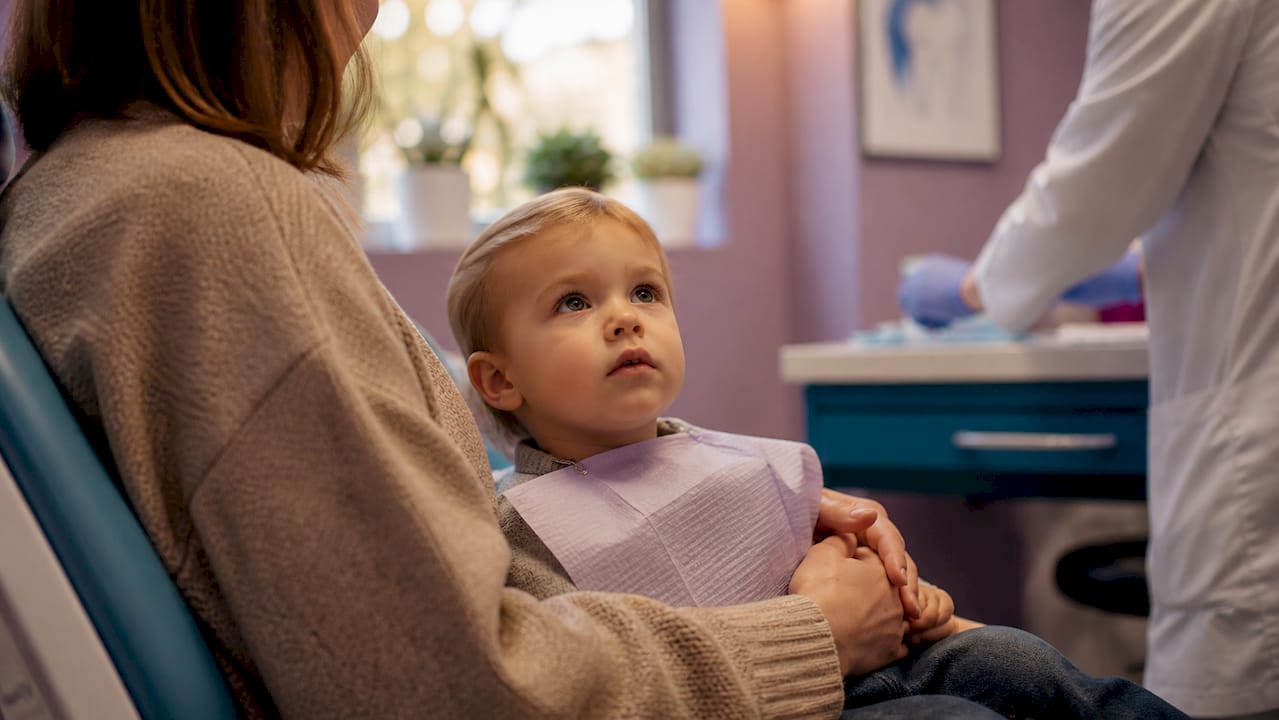
Most infant exams use a technique called knee-to-knee, where the parent and dentist sit facing each other with knees touching, and the child lies back across both laps. It sounds strange the first time you hear it, but it keeps the child secure, keeps the exam fast, and lets the dentist get a clear view of the mouth without a struggle.
X-rays are usually skipped at this age. They’re reserved for specific situations, like trauma or decay that can’t be assessed by eye.
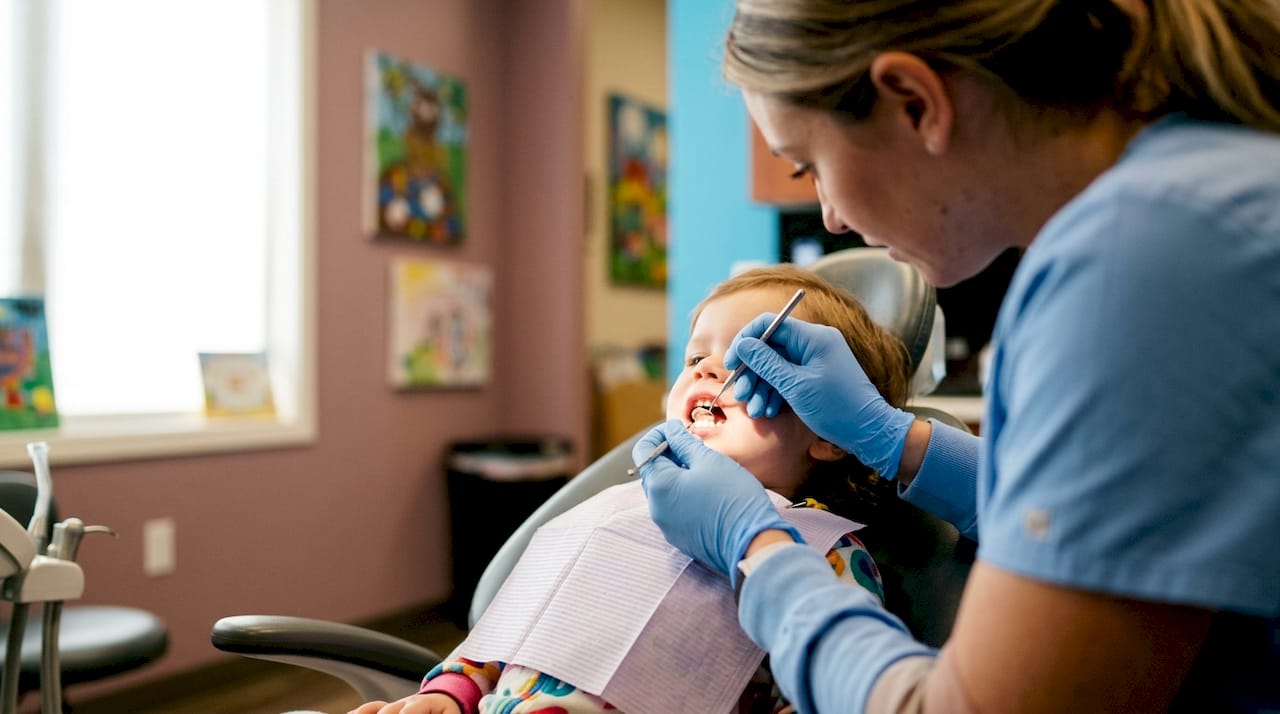
Pro Tip: Ask the office if a parent can hold the child during the exam rather than a dental chair. Most pediatric-friendly practices default to this for kids under three, and it dramatically cuts down on tears.
Getting your child (and yourself) ready for the visit
A little planning turns this appointment from stressful to routine, and most of it comes down to timing and word choice.
- Book a morning slot. Kids are more cooperative before nap time and before the day wears them down.
- Bring insurance information, a list of concerns (teething pain, a chipped tooth, feeding questions), and any new-patient paperwork the office sent ahead of time.
- Skip the dental vocabulary. Words like “shot,” “drill,” or “hurt” plant fear before the visit even starts. Stick to neutral language: “counting your teeth” or “the doctor is going to look in your mouth.”
- Never frame a dental visit as a punishment or threat. Clinicians consistently point to this as one of the fastest ways to build long-term dental anxiety in kids.
- Do a short, low-pressure role-play at home. Count your child’s teeth with a soft toothbrush the day before so the motion feels familiar.
Pro Tip: If your child is anxious about new places in general, this guide on preparing kids for clinical appointments has behavioral tricks that transfer well to dental visits, even though it wasn’t written for dentistry specifically.
When to skip the wait and call right away
Not every dental issue can wait for a scheduled checkup. Call your dentist immediately, don’t wait for the next open slot, if you notice any of the following:
- Visible swelling in the face, gums, or jaw.
- Persistent pain that disrupts sleep, eating, or normal behavior.
- Fever paired with an oral symptom, like a swollen gum or drainage.
- A knocked-out or badly chipped tooth from a fall or impact.
If it’s an injury, try to control any bleeding with gentle pressure and, if a tooth fragment is intact, keep it moist (in milk, not water) until you reach the office. When you call, tell the clinic your child’s age, what happened, and how the child is acting right now. That detail helps the front desk decide whether to fit you in same-day.
What comes after the first visit
Most children move to a recall visit every six months, though a dentist may schedule more frequent checkups if your child shows early risk factors like visible plaque buildup or a family history of cavities.
Daily habits matter more than the twice-a-year visit itself:
- Brush twice daily with a fluoride toothpaste, using a smear the size of a rice grain for kids under three and a pea-sized amount after that.
- Avoid putting a child to bed with a bottle of milk or juice. Prolonged sugar exposure overnight is one of the leading drivers of early childhood cavities.
- Move from bottle to cup around the first birthday, and start limiting sippy-cup use to mealtimes.
For children already showing early decay, some dentists recommend silver diamine fluoride (SDF), a conservative option that can slow or arrest small cavities without drilling, particularly useful for toddlers who aren’t ready for more involved treatment.
How Complete Dental Care approaches a child’s first visit
A first dental visit works best when the environment matches the guidance. Complete Dental Care builds its infant and toddler appointments around the same clinical framework outlined above, with a few practical touches that make a real difference for nervous kids and first-time parents.
- Morning appointment slots reserved specifically for young children, before energy and patience run out
- Knee-to-knee exams for infants and toddlers who aren’t ready for a dental chair
- Calm, neutral language from the entire team, not just the dentist
- Digital imaging used only when clinically necessary, and always explained to parents in plain terms before it happens
Parents can review what to expect on the Your First Visit page before booking, which covers logistics down to what paperwork to bring.
| Priority | What It Means for Parents |
|---|---|
| Timing | Book by age one or within six months of the first tooth. |
| Format | Expect a short, low-intervention exam, often knee-to-knee. |
| Communication | Ask the practice how they handle anxious toddlers before the visit. |
Why the “wait until they have teeth” advice is outdated
Plenty of parents still hear that dental visits should wait until a child has a full set of baby teeth, or worse, until something looks wrong. That advice made sense decades ago, before pediatric dentistry had the data it has now. It doesn’t hold up anymore.
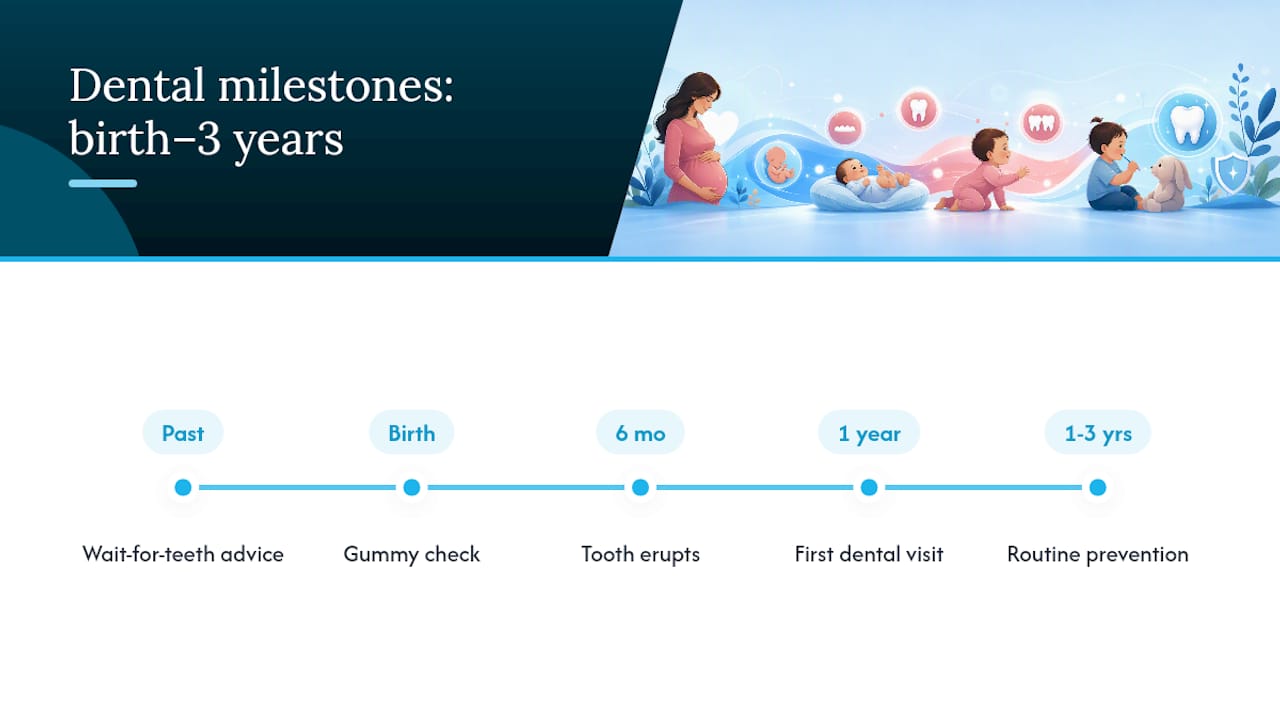
The strongest argument for the age-one visit isn’t really about treatment at all. It’s about information. A dentist who sees a child at twelve months can catch a bottle habit that’s setting up future decay, or a feeding pattern that’s affecting jaw development, months or years before a symptom would ever prompt a parent to book an appointment on their own. That’s the part conventional advice misses: the value of the first visit is preventive intelligence, not procedures.
If there’s one thing parents should prioritize above the rest of this guide, it’s picking a practice that treats toddlers as a specialty, not an afterthought squeezed between adult patients. The technique matters less than whether the provider is genuinely comfortable and unhurried with a squirming one-year-old.
— Complete Dental Care
Ready to schedule your child’s first dental visit?
Complete Dental Care treats the first dental visit as its own kind of appointment, not a shortened version of an adult exam. Families in Greenville get morning scheduling built around toddler attention spans, knee-to-knee exams for infants who aren’t ready for a chair, and a team that walks parents through every step before it happens, so there are no surprises for you or your child.

If your child is approaching their first birthday or has just cut their first tooth, this is the window the American Academy of Pediatric Dentistry points to for the biggest preventive payoff. Call Complete Dental Care or visit the new patient page to get scheduling and paperwork details, then book your child’s first appointment before that window closes.
Sources
- A Child’s First Dental Visit Fact Sheet — Stanford Medicine Children’s Health
- The Dental Home — American Academy of Pediatric Dentistry (AAPD)
- Healthychildren