Most cracked teeth can be saved if you get them diagnosed early. Salvage rates climb sharply once a dentist stabilizes the crack and places a full-coverage crown, and the American Association of Endodontists classifies these fractures into five distinct types, from harmless craze lines to a vertical root fracture that usually ends in extraction. Not every crack is an emergency, but some are.
Get to a dentist the same day if you notice:
- Severe, throbbing pain that won’t ease up
- Facial swelling or fever
- A visible fragment missing from the tooth
- Bleeding that won’t stop
- Pain that lingers long after biting or temperature exposure
The numbers back up urgency. Endodontically treated cracked teeth restored without a crown showed a two-year survival rate around 20%. With a crown placed, that number jumps to roughly 94%.
Key Takeaways
Cracked tooth repair succeeds most often when the crack is caught early and stabilized with a full-coverage crown rather than left untreated.
| Point | Details |
|---|---|
| Crack type drives treatment | Craze lines need little care; a split tooth or vertical root fracture usually means extraction. |
| Crowns dramatically improve survival | Endodontically treated cracked teeth survive at roughly 94% with a crown versus around 20% without one over two years. |
| Same-day symptoms are non-negotiable | Severe pain, swelling, fever, or a visible fragment call for a same-day dental visit, not the ER for repair. |
| Diagnosis takes multiple tests | Transillumination, biting tests, probing, and CBCT imaging combine because no single test predicts the outcome alone. |
| Complete Dental Care offers a full pathway | From digital imaging and conservative-first treatment to same-day implants through Teeth in a Day when a tooth can’t be saved. |
Table of Contents
- How to Fix a Cracked Tooth Starts With Knowing the Type
- What Symptoms Mean and When to Get Same-Day Care
- How Dentists Diagnose a Cracked Tooth in the Exam Room
- Cracked Molar Repair Options and When Each One Applies
- What to Expect: Timeline and Long-Term Outlook
- What to Do Right Now While You Wait for Your Appointment
- Complete Dental Care’s Approach to Diagnosing and Repairing Cracked Teeth
- Why “Wait and See” Is the Wrong Default
- Ready to Get Your Cracked Tooth Evaluated?
- Frequently Asked Questions About Cracked Tooth Repair
- Sources
How to Fix a Cracked Tooth Starts With Knowing the Type
Not all cracks behave the same way, and the type determines what “cracked tooth repair” actually looks like in practice. The AAE breaks longitudinal fractures into five categories:
- Craze lines — shallow surface cracks in enamel, mostly cosmetic, no treatment usually needed
- Fractured cusp — a broken corner of the tooth, often fixable with a crown or onlay
- Cracked tooth — a crack running from the chewing surface toward the root, still separate but at risk of spreading
- Split tooth — the crack has fully separated the tooth into two segments, usually not restorable
- Vertical root fracture — starts in the root and travels upward, frequently ending in extraction
Location matters as much as depth. A crack that stays above the gumline (the cementoenamel junction) is far easier to treat than one that extends below it or into the pulp chamber. Once a crack reaches the pulp or spreads across the floor of the tooth, restorability drops fast, and a split tooth or a root fracture usually means extraction is the realistic path forward.
What Symptoms Mean and When to Get Same-Day Care
A cracked tooth talks to you in a few specific ways. Sharp pain when you bite down, sudden zings from cold drinks, or pain that comes and goes usually point to a crack irritating the nerve without fully damaging it. A dull, constant ache is a different story. It often means the pulp is already inflamed or infected.
Here’s how to triage it yourself before you call:
- Mild symptoms, no swelling — call your dentist and schedule within 24 to 48 hours.
- Sharp pain that fades quickly — same window applies, but mention it clearly when you book.
- Severe pain, swelling, fever, or a visible broken piece — this needs a same-day dental visit, not a wait-and-see approach.
- Uncontrolled bleeding or facial swelling affecting breathing/swallowing — this is an emergency room situation first, then a dentist for the actual repair.
Pro Tip: An emergency room can control pain or prescribe antibiotics for infection, but it can’t bond, crown, or extract a tooth. Definitive cracked tooth repair only happens in a dental chair.
How Dentists Diagnose a Cracked Tooth in the Exam Room
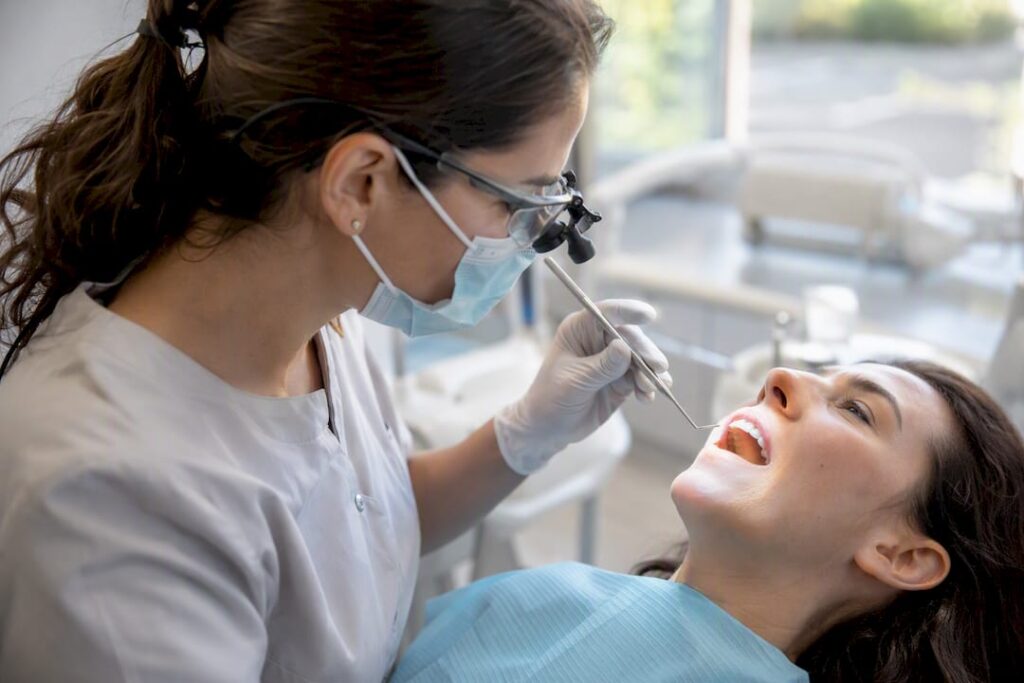
Diagnosing a crack is trickier than it sounds, because cracks are often invisible on a standard X-ray. Dentists lean on a handful of clinical tests, usually more than one, to build a full picture:
- Transillumination — shining a bright light through the tooth to reveal the crack’s path
- Biting stress test — asking you to bite on a stick or tool to isolate which cusp hurts
- Periodontal probing — checking gum pocket depth around the tooth, since a deep, narrow pocket can flag a vertical fracture
- Staining and magnification — dye and a microscope to trace hairline cracks visually
Regular X-rays often miss cracks entirely because the fracture line runs parallel to the film. When results are unclear, dentists use CBCT (cone-beam CT) imaging to check for bone changes near the root and confirm whether the crack extends into it. No single test reliably predicts long-term outcome on its own, which is exactly why clinicians combine several before recommending a treatment plan.
Cracked Molar Repair Options and When Each One Applies
Treatment depends entirely on how deep the crack runs and whether the pulp is involved. Here’s how the options break down, from least to most invasive.
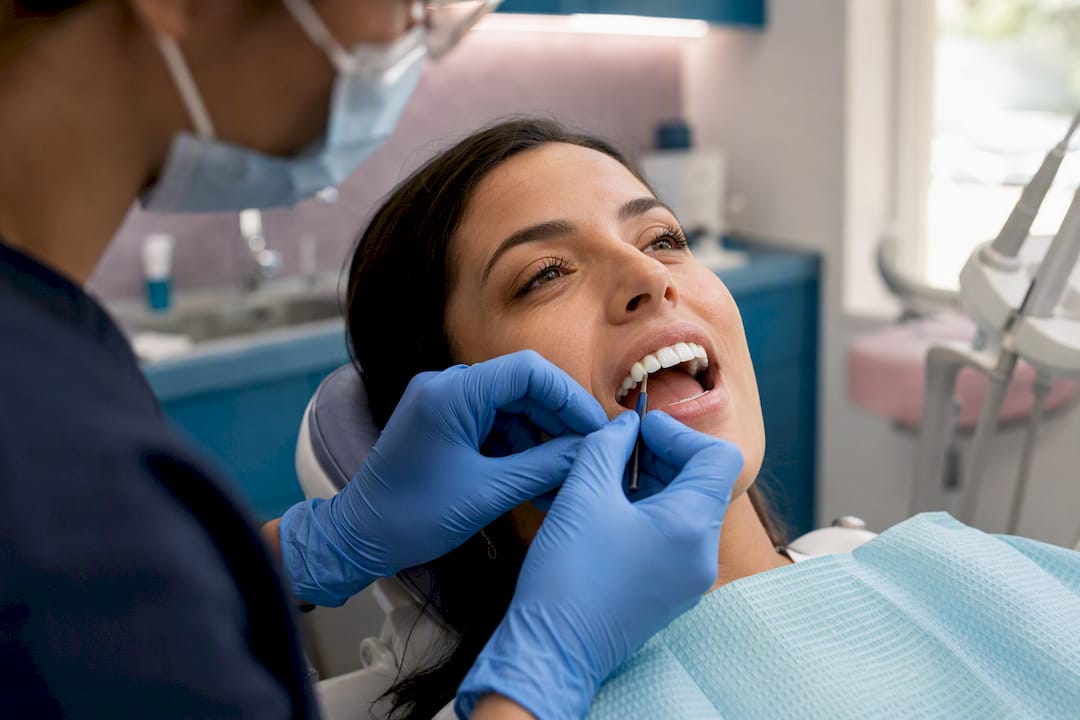
Bonding and smoothing. For craze lines or very shallow cracks, your dentist may simply smooth rough edges or apply composite bonding to seal the surface. This is fast, inexpensive, and mostly cosmetic or protective rather than structural.
Temporary stabilization. An orthodontic band or a temporary crown can hold a cracked tooth together for a few weeks. This does double duty: it relieves biting pain immediately and helps the dentist gauge whether the pulp is recovering or declining before committing to a permanent fix.
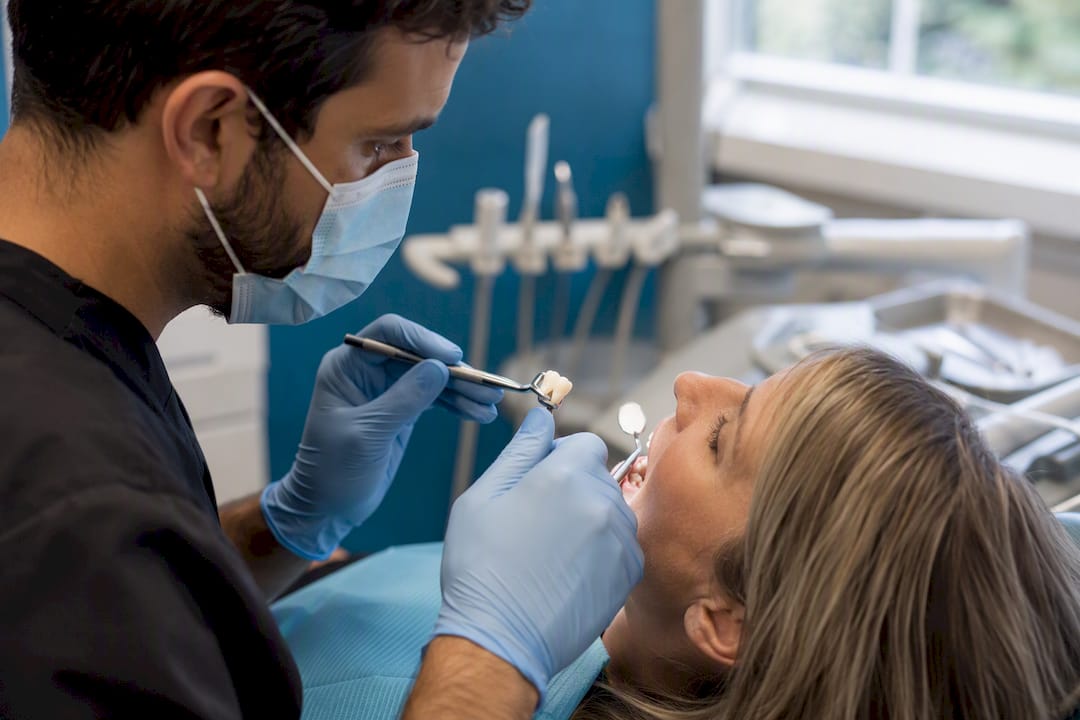
Onlays and full-coverage crowns. For a fractured cusp or a cracked tooth that hasn’t reached the pulp, an onlay or crown mechanically binds the segments together, stopping the crack from spreading under chewing force. Crowns are the more common choice because they cover the entire biting surface and distribute force more evenly than a partial onlay.
Root canal therapy plus a crown. Once a crack reaches the pulp, root canal treatment removes the damaged nerve tissue, and a crown is placed immediately afterward. This combination is where the survival data gets striking. Specialist protocols using immediate crowning and orifice barriers have pushed reported survival rates as high as 96% in some studies.
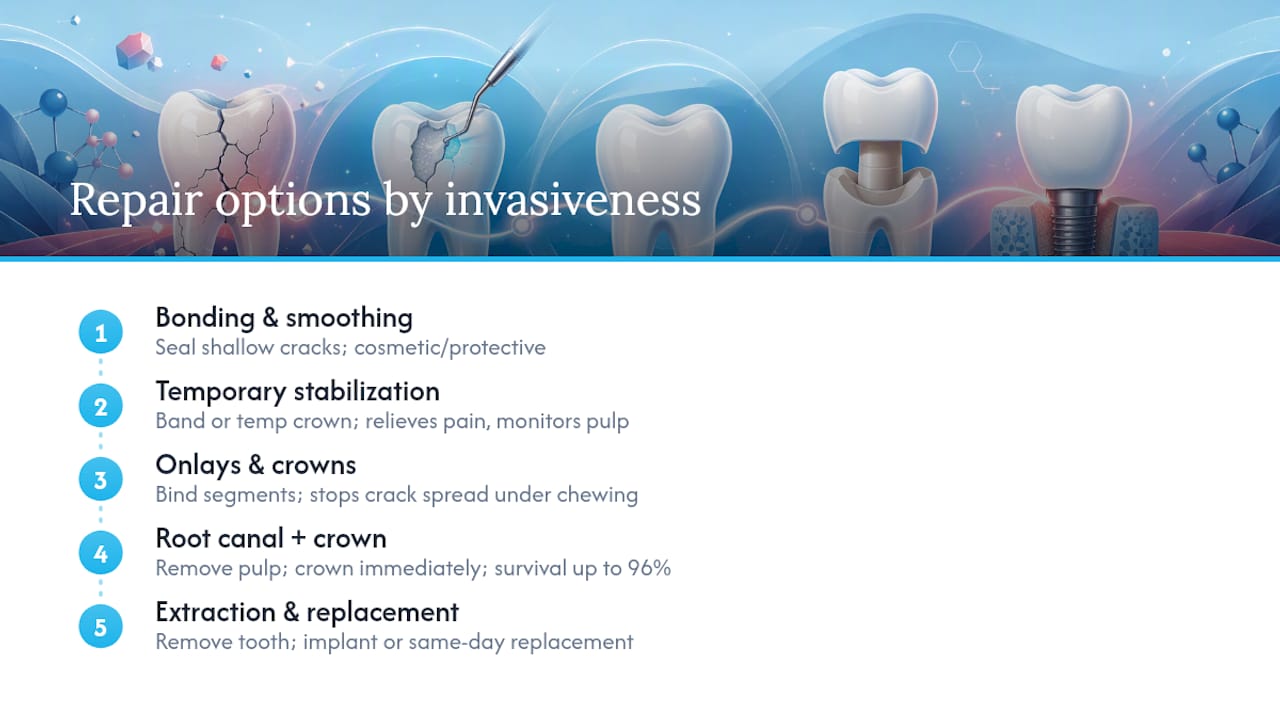
Extraction and replacement. A split tooth or a vertical root fracture usually can’t be saved. In those cases, extraction followed by a dental implant or same-day replacement option becomes the realistic path forward.
Pro Tip: Ask your dentist directly whether your crack has reached the pulp. That single answer determines whether you’re looking at a $200 bonding job or a root canal and crown.
What to Expect: Timeline and Long-Term Outlook
Cracked tooth repair usually follows a sequence rather than a single visit. First comes stabilization, often a temporary crown or band. Then your dentist reassesses the pulp over a few weeks to see if symptoms settle or worsen. If the nerve is healthy, a permanent crown goes on. If not, root canal therapy comes first, followed by the crown.
The crown timing matters more than most patients realize. Recall that two-year survival for an endodontically treated cracked tooth sits around 20% without a crown, versus roughly 94% with one placed. Longer-term studies show crowned cases holding survival rates between 84% and 97% beyond that.
A few things tend to worsen the outlook:
- A crack that extends into the root (radicular extension)
- Deep periodontal probing depths near the crack
- Delayed treatment that lets bacteria travel further into the tooth
Follow-up matters too. Expect occlusal adjustments to even out your bite and periodic exams to catch any new crack propagation early.
What to Do Right Now While You Wait for Your Appointment
You can’t fix a crack at home, but you can keep it from getting worse before your dentist sees it.
- Stop chewing on that side of your mouth immediately.
- Rinse with warm salt water to clear debris and reduce irritation.
- Save any broken fragment in milk or saline, not dry tissue, in case your dentist can use it.
- Cover sharp edges with over-the-counter dental wax so your tongue and cheek stop catching on them.
- Take an over-the-counter pain reliever and apply a cold compress if there’s swelling.
None of this replaces professional care. The AAE’s own patient guidance is blunt about it: home remedies don’t stabilize a structural crack, and delaying real treatment only gives it more time to spread.
Pro Tip: If you grind your teeth at night, ask about a custom night guard. Bruxism is one of the most common reasons a stable crack turns into a split tooth.
Complete Dental Care’s Approach to Diagnosing and Repairing Cracked Teeth
A cracked tooth exam at Complete Dental Care starts with the same clinical tests described above: biting stress tests, transillumination, and periodontal probing. When the picture is still unclear, the practice uses digital scanning and 3D imaging to look at what a standard X-ray can’t show, particularly whether a crack has moved into the root.
The philosophy is conservative first. If a tooth can be saved with bonding, a crown, or root canal therapy, that’s the plan, with every option explained clearly before treatment starts. For patients who feel anxious about the visit, comfort measures including sedation options and in-office comfort dogs are part of the process, not an afterthought.
When a crack has progressed too far to save the tooth, Teeth in a Day offers same-day extraction and implant placement rather than weeks of waiting between appointments.
Tooth preservation works best when it starts with an honest look at what the crack actually is, not a guess based on symptoms alone.
Why “Wait and See” Is the Wrong Default
The biggest misconception about a cracked tooth isn’t about pain. It’s about time. Patients assume that if a crack doesn’t hurt much, it can wait. The survival data says otherwise: the gap between a 20% and a 94% survival rate isn’t about how bad the crack looks on day one, it’s about how quickly someone acted on it.
Conventional advice tends to frame cracked teeth as a binary: fix it or pull it. That’s outdated. Modern endodontic protocols have shifted the field toward preservation, and the deciding factor is rarely the crack itself. It’s whether a crown goes on before the crack has a chance to spread further into the root.
If there’s one thing readers should prioritize, it’s this: don’t let a painless crack talk you out of an exam. Get the diagnostic tests done, even if it feels like overkill for a minor annoyance. That’s the difference between a $300 crown and a tooth you lose entirely.
Ready to Get Your Cracked Tooth Evaluated?
If you’re dealing with a cracked tooth right now, waiting for it to feel “bad enough” is the riskiest move you can make. Complete Dental Care offers same-day diagnostic exams using digital scanning and 3D imaging, so you get a clear answer about whether bonding, a crown, or root canal therapy is the right call, not a guess based on how much it currently hurts.

If a tooth genuinely can’t be saved, the practice also handles same-day extraction and replacement through Teeth in a Day, so you’re not stuck living with a gap while you wait for a follow-up appointment. For patients nervous about the visit itself, sedation and in-office comfort support are built into the process from the start.
Book your exam through Complete Dental Care’s new patient page and get a straight answer on your tooth this week, not next month.
Frequently Asked Questions About Cracked Tooth Repair
Can a cracked tooth heal on its own?
No. Enamel and dentin don’t regenerate, so a crack won’t close up naturally. The tooth can feel better temporarily while still getting structurally worse underneath.
How much does cracked tooth repair typically cost?
It depends entirely on severity. Bonding for a minor crack costs far less than a crown, and a crown costs less than root canal therapy plus a crown. Extraction and implant replacement sit at the higher end. Ask your dentist for a written estimate before treatment and check your insurance coverage ahead of time.
Is a cracked molar more serious than a cracked front tooth?
Molars take far more chewing force, so cracks there tend to progress faster and often need a crown sooner. Front teeth crack differently, usually from trauma, and are more often treated with bonding.
Will I definitely need a root canal for a cracked tooth?
Not necessarily. If the crack hasn’t reached the pulp and gets crowned early, many patients avoid root canal therapy entirely. That’s exactly why early diagnosis matters so much.
This article is general information, not a substitute for advice from a qualified doctor. Consult a qualified healthcare professional about your own circumstances before acting on anything here.