
Call your dentist’s after-hours line first, take 400 mg of ibuprofen if you can, and rinse with warm salt water while you rinse, then again apply cold compresses on the outside of your jaw. Those three moves handle most severe toothaches within 30 to 60 minutes while you line up real care. If you have facial swelling that’s making it hard to breathe or swallow, skip all of this and call 911.
- Call your dentist or their after-hours line immediately.
- Take ibuprofen 400 mg; alternate with acetaminophen 500-1,000 mg if pain persists and you have no contraindications.
- Rinse with warm salt water, then hold a cold compress against your cheek for 15 minutes at a time.
Pro Tip: Keep a written log of when you take each medication. Toothache pain makes it easy to lose track and accidentally double up.
Roughly 40% of American adults report having had a toothache severe enough to disrupt sleep or eating at some point. You’re not overreacting. Your nerves are telling the truth.
Key Takeaways
Fast tooth pain relief combines NSAIDs, salt water rinses, and cold compresses, but only a dentist can fix the actual cause.
| Point | Details |
|---|---|
| Act in this order | Call your dentist, take ibuprofen, then rinse with salt water and apply cold. |
| Skip risky shortcuts | Never place aspirin on gums or use heat on a swollen face. |
| Watch for red flags | Facial swelling with fever or breathing trouble means go to the ER. |
| Antibiotics aren’t automatic | They’re reserved for systemic infection signs, not routine pain. |
| Complete Dental Care triages fast | Same-day emergency appointments handle pain control and refer definitive treatment. |
Table of Contents
- How to Stop Tooth Pain Fast at Home
- Common Mistakes That Make Tooth Pain Worse
- What’s Actually Causing Your Tooth Pain?
- Red Flags: Dentist, Urgent Clinic, or ER?
- Medications That Actually Work (and What to Skip)
- What Happens During an Emergency Visit
- What the ADA and CDC Actually Recommend
- How Long Relief Lasts and What Care Costs
- How We Handle Toothache Calls at Complete Dental Care
- If You Need Urgent Dental Care Today
- Frequently Asked Questions
- Sources
How to Stop Tooth Pain Fast at Home
Work through these in order. Each one buys you time until you’re seen.
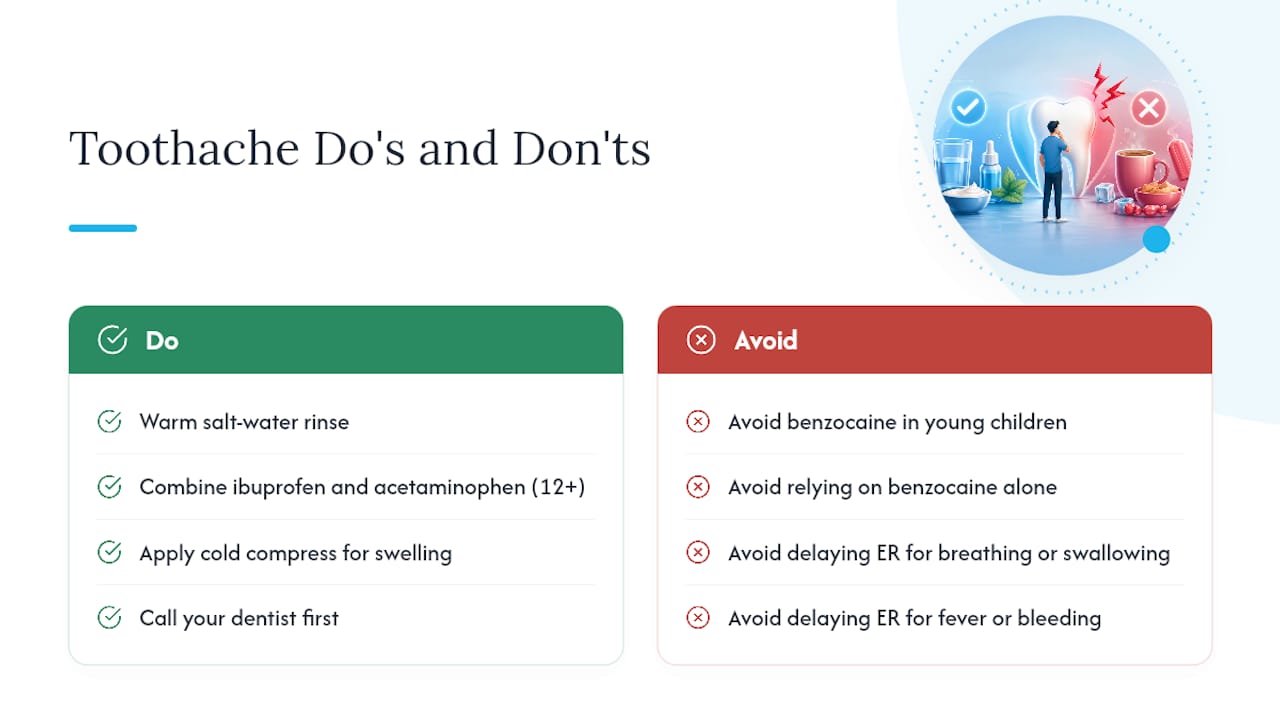
- Rinse with warm salt water. Mix half a teaspoon of salt into eight ounces of warm water. Don’t just swish quickly. Hold a mouthful on the painful side until it cools, spit, and repeat three or four times. The salt draws out surface inflammation around the gum and loosens trapped debris.
- Floss around the tooth carefully. Trapped food is a surprisingly common cause of sudden, sharp pain, and gentle flossing sometimes resolves it outright.
- Apply a cold compress. Hold it against your outer cheek for 15 to 20 minutes on, then off, especially if trauma or swelling is involved. Cold constricts blood vessels and dulls the ache.
- Use topical benzocaine sparingly, if at all. It can numb surface pain temporarily, but it carries a real risk (more on that below), so treat it as a last resort, not a first step.
Pro Tip: Always rinse and apply cold to the affected side only. Treating the whole mouth wastes salt water and delays relief where you actually need it.
Common Mistakes That Make Tooth Pain Worse
- Never press an aspirin tablet directly against your gum. It doesn’t numb anything. It causes a chemical burn on the soft tissue instead.
- Skip benzocaine gels for children under two entirely, and use them cautiously in adults. The methemoglobinemia risk is rare but serious.
- Don’t apply heat to a swollen face or attempt to pull a loose tooth yourself. Heat can accelerate infection spread.
A dental abscess is an infection. Heat feeds infections. Cold calms inflammation. Confusing the two is the single most common at-home mistake people make with a swollen jaw.
Pro Tip: If a tooth feels loose after an injury, hold it gently in place with clean gauze and get to a dentist within 30 minutes if possible. Time matters for saving the tooth.
What’s Actually Causing Your Tooth Pain?
Sharp pain that fades quickly after cold exposure usually points to decay or a worn enamel spot. Constant, throbbing pain that keeps you up at night often means the nerve inside the tooth is inflamed, a condition called pulpitis. Pain that spikes when you bite down can signal a cracked tooth, sometimes invisible on the surface. Pain paired with swelling, a bad taste, or fever usually means an abscess, a pocket of infection at the root.
Here’s a rough way to gauge how urgent your situation is:
- Mild: Sensitivity to cold or sweets that fades within seconds.
- Moderate: Aching that lingers for minutes to hours, worse with pressure.
- Severe: Constant throbbing, swelling, or pain that wakes you from sleep.
| Symptom Pattern | Likely Cause | Urgency |
|---|---|---|
| Brief sharp pain with cold | Early decay or enamel wear | Schedule soon |
| Constant throbbing pain | Pulpitis (inflamed nerve) | See dentist within 24 hours |
| Pain with facial swelling or fever | Abscess | Urgent, same day |
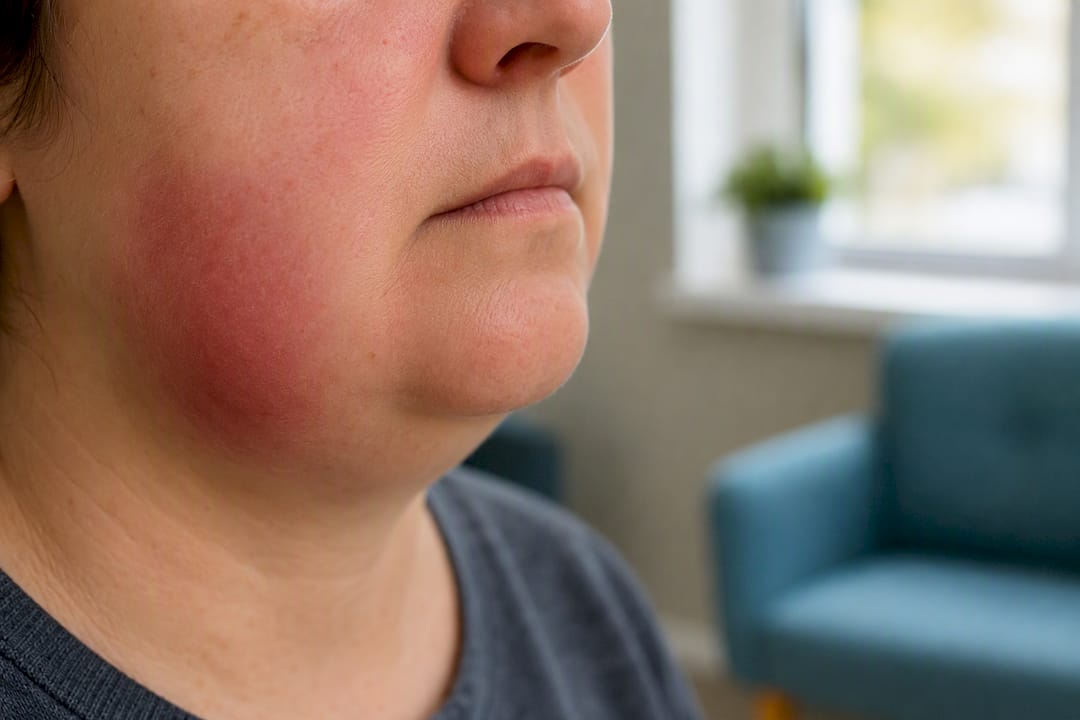
Facial swelling paired with fever is the pattern most likely to indicate a dental abscess spreading beyond the tooth, and that combination shouldn’t wait.
Red Flags: Dentist, Urgent Clinic, or ER?
Call your dentist’s emergency line first for almost every toothache, even a severe one. Most practices triage same day or offer guidance to get you through the night safely.
Go straight to the emergency room if you notice any of these:
- Swelling that’s spreading toward your eye or down your neck
- Difficulty breathing or swallowing
- A fever above 101°F alongside facial swelling
- Uncontrolled bleeding after an injury
- A tooth completely knocked out (get to care within 30 minutes)
When you call, have this ready:
- When the pain started and what makes it better or worse
- Any medications you’ve already taken and their doses
- Known allergies, especially to penicillin or NSAIDs
Pro Tip: Save your dentist’s after-hours number in your phone now, not when you’re in pain at 2 a.m. searching for it.
Medications That Actually Work (and What to Skip)
The American Dental Association’s 2024 guideline recommends NSAIDs like ibuprofen or naproxen, alone or combined with acetaminophen, as first-line treatment for acute dental pain in adults and adolescents 12 and older. Combining the two hits pain through different pathways at once, and clinical evidence backs the combination over either drug alone.
A common adult approach: ibuprofen 400 mg every six hours, with acetaminophen 500-1,000 mg staggered in between if pain persists. Skip NSAIDs if you have a history of ulcers, kidney issues, or take blood thinners; ask a pharmacist or your dentist if you’re unsure.
| Medication | Typical Adult Dose | Best For |
|---|---|---|
| Ibuprofen (NSAID) | 400 mg | First-line pain and inflammation |
| Acetaminophen | 500-1,000 mg | Combined with NSAID, or when NSAIDs aren’t safe |
| Benzocaine gel | Thin layer, brief use only | Short-term surface numbing |
Antibiotics aren’t routine for most toothaches. The CDC’s guidance built on ADA treatment standards reserves them for cases with fever, spreading swelling, or other signs the infection has moved beyond the tooth. Opioids fare no better in most cases. CDC clinical guidance points to nonopioid therapy as equally or more effective for dental pain, with opioids reserved for narrow situations under a provider’s direction. If you want to compare specific OTC formulations and dosing options before you buy, this pain relief resource breaks down what’s available without a prescription.
What Happens During an Emergency Visit
An ER visit typically means pain control and antibiotics if there are systemic signs, but most emergency departments can’t perform the actual dental procedure you need, whether that’s a root canal or extraction.
An emergency dental visit looks different:
- Temporary relief of pressure on the inflamed nerve
- Incision and drainage if there’s a localized abscess
- Scheduling for the definitive fix, extraction, root canal, or restoration
Pro Tip: Ask directly whether the ER or clinic you’re calling can treat the tooth itself, or only manage symptoms. That one question saves you a second trip.
What the ADA and CDC Actually Recommend
The guidance here isn’t guesswork. It’s built on a living clinical guideline that gets updated as evidence changes.
- NSAIDs with or without acetaminophen: first-line for acute dental pain in patients 12 and older
- Antibiotics: reserved for systemic infection signs, not routine toothaches
- Opioids: a last resort, used briefly and only when nonopioid options fail
“Nonsteroidal anti-inflammatory drugs, alone or in combination with acetaminophen, should be used as first-line therapy to manage acute dental pain,” according to the ADA’s evidence-based living guideline.
How Long Relief Lasts and What Care Costs
Salt water and cold compresses ease pain within minutes but wear off fast, often in under an hour. OTC medication typically holds for four to six hours per dose. Definitive treatment, the kind that actually fixes the tooth, usually needs to happen within 24 to 72 hours depending on severity and how quickly you can get an appointment.
Cost matters here too. An ER visit often runs higher and still won’t resolve the underlying tooth problem, while an urgent dental visit tends to be the faster, more direct path to a fix.
- Have your insurance card and ID ready before you call.
- Ask whether the office offers same-day emergency slots.
- Confirm what forms of payment or financing they accept if you’re uninsured.
How We Handle Toothache Calls at Complete Dental Care
When a patient calls us in pain, we triage fast: symptoms, medication history, and whether it sounds like decay, an abscess, or trauma. Most of the time, we can see you same day and start pain control immediately, then plan the real fix once you’re comfortable. Call our office or book online before you assume the ER is your only option.
If You Need Urgent Dental Care Today
Completedentalcare gets you seen faster than an emergency room, without the wait or the referral back to a dentist you’ll need anyway. We handle pain control, extractions, and root canal referrals in house, plus follow-up restorative and implant options once the emergency has passed.
Call our Greenville office directly, and if it’s after hours, our line will walk you through next steps until we can see you. New patients can check what to expect and complete simple intake steps ahead of time through our new patient page, and if cost is a concern, our membership plan covers many patients without dental insurance. Visit Completedentalcare now to call or book your urgent visit online.
Frequently Asked Questions
What is the fastest way to relieve tooth pain at home?
A warm salt water rinse combined with ibuprofen usually brings noticeable relief within 20 to 30 minutes, followed by a cold compress if there’s any swelling.
Can I use ibuprofen and acetaminophen together for a toothache?
Yes. The ADA specifically endorses combining them for adults and adolescents 12 and up, since they work through different mechanisms.
Is it safe to use benzocaine gel like Orajel for tooth pain?
Adults can use it briefly, but avoid it in young children entirely due to methemoglobinemia risk, and don’t rely on it as your main pain strategy.
When should I go to the ER instead of calling my dentist?
Go to the ER for facial swelling that affects breathing or swallowing, high fever, or uncontrolled bleeding. Call your dentist first for almost everything else.
Why does my tooth hurt worse at night?
Lying down increases blood flow to your head, which raises pressure on an already inflamed nerve, making nighttime tooth pain feel more intense than it does during the day.
This article is general information, not a substitute for advice from a qualified doctor. Consult a qualified healthcare professional about your own circumstances before acting on anything here.