
Yes, you need a retainer after Invisalign, and most patients leave treatment with a removable clear retainer, a bonded wire behind the lower front teeth, or both. The reason is simple: teeth continue to drift as bone and ligament fibers settle, so a retention plan that moves from full-time wear to nights-only is what locks in your result.
TL;DR:
- Most patients wear retainers full-time for three to six months after Invisalign before transitioning to nights-only wear to prevent relapse.
- Bonded lingual wires are effective for those struggling with compliance but require diligent oral hygiene to prevent plaque buildup.
- Daily retainer cleaning with soft brushes and avoiding hot water is essential, with replacements needed generally every one to two years for removable types.
- The choice of retainer depends on tooth movement type, relapse risk, patient habits, and gum health, not a one-size-fits-all protocol.
- Promptly addressing retainer damage or loosening can significantly reduce the risk of teeth shifting back into misalignment.
questions about this? we're happy to help.
Every patient's situation is a little different. If you want to talk through what this means for you, our Greenville team is one call away.
schedule a free consultationTable of Contents
- Types of retainers: removable, fixed, and when each is used
- How long to wear retainers after Invisalign: a realistic schedule
- Cleaning and caring for your retainer, and how long it lasts
- How clinicians decide which retainer is right for you
- Risks and common problems: gum health, breakage, and quick fixes
- What a retainer visit with us looks like
- Our take: retention is where most orthodontic results quietly fail
- Book a retainer check or replacement with us
- FAQ
- Sources
Types of retainers: removable, fixed, and when each is used
Once your aligner trays come off, your orthodontist or dentist chooses from a handful of retainer designs, each suited to different situations.
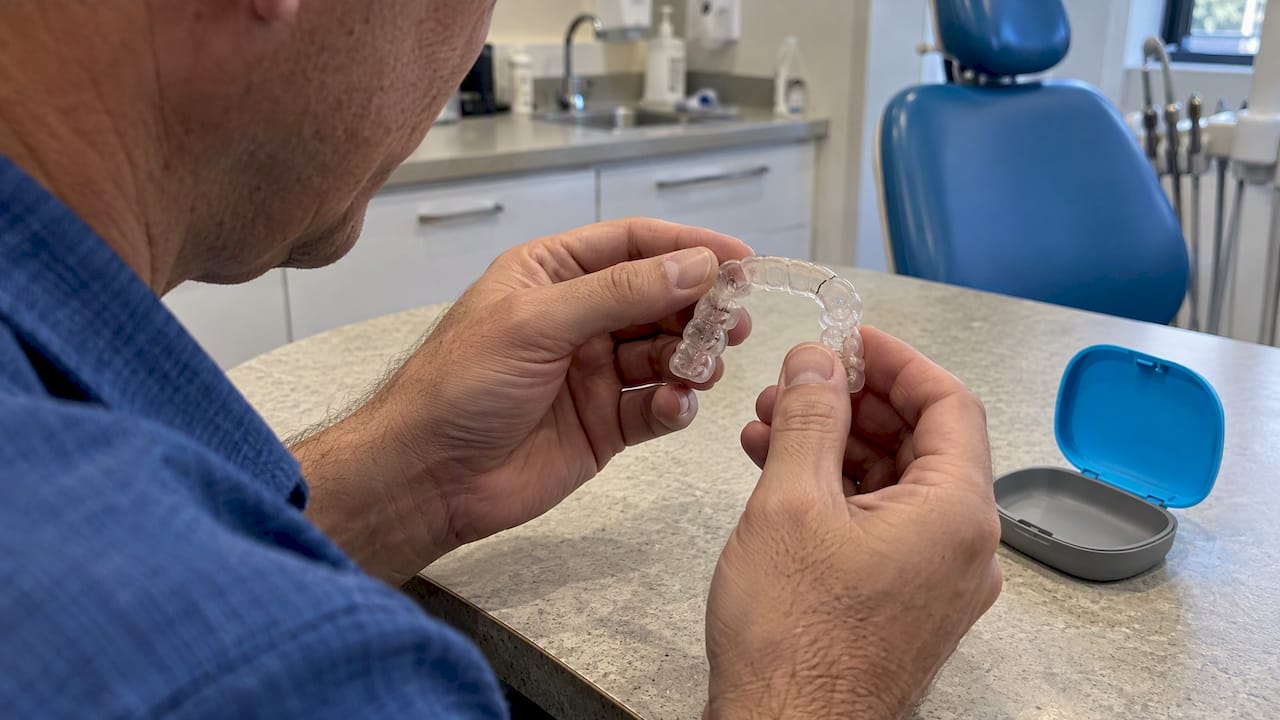
- Essix or Vivera retainers: clear, vacuum-formed trays that look similar to your last aligner. They are easy to replace and nearly invisible, but they only work if you actually wear them, and hot water or a dishwasher cycle will warp the plastic.
- Hawley retainers: an acrylic plate with a visible wire across the front teeth. They hold up well over years of use and can be adjusted by an orthodontist, though the metal wire is more noticeable when you talk or smile.
- Bonded (fixed) lingual retainers: a thin wire glued behind the lower front teeth, left in place permanently. This option removes the compliance problem entirely, which makes it a common choice for patients who struggled to wear removable trays consistently, but it does require extra effort to keep the area clean.
Many clinicians combine approaches, bonding a lower retainer while prescribing a removable upper retainer. A systematic review of orthodontic retention systems found no single protocol works best for everyone. Instead, the choice depends on the type of tooth movement during treatment, how reliably a patient wears removable appliances, and gum health. That same review points to compliance as the biggest predictor of whether a removable retainer actually succeeds, which is one reason bonded wires remain popular for the lower arch.
How long to wear retainers after Invisalign: a realistic schedule
Most retention plans follow a similar arc, even though the specifics vary by case.
- Months one through three to six: full-time wear, roughly all waking hours with breaks only to eat and brush, removing the retainer only to eat and brush.
- After the initial period: a shift to nights-only wear, often continuing indefinitely to protect against slow, late relapse.
- Ongoing: periodic check-ins where your clinician confirms the retainer still seats fully and comfortably.
Research gives some flexibility within that structure. A systematic review on vacuum-formed retainer protocols found that part-time wear of several hours a night was not significantly worse than full-time wear for several short-term alignment measures in randomized trials. That does not mean part-time wear is right from day one. It means your orthodontist may scale back your schedule sooner than you expect once your teeth have stabilized.
Pay attention to how the retainer feels. If it suddenly feels tight, pinches in a new spot, or seats with more resistance than before, your teeth may already be shifting. Call your provider rather than waiting for the next scheduled visit, since early intervention is far simpler than correcting a relapse months later.
Cleaning and caring for your retainer, and how long it lasts
A retainer only protects your smile if it stays clean and intact.
- Brush it daily with a soft toothbrush and mild soap, or a cleanser made for retainers, rather than regular toothpaste, which is abrasive enough to scratch the plastic.
- Skip hot water entirely. The American Association of Orthodontists warns that heat warps thermoplastic retainers and ruins the fit.
- Soak removable retainers a few times a week in a dedicated cleaning solution, never in bleach or other household chemicals.
- For bonded wires, use floss threaders or interproximal brushes daily, since food and plaque collect around the wire in ways a regular toothbrush cannot reach.
Pro Tip: Keep your retainer in its case every time it’s out of your mouth: a napkin on a restaurant table is the single most common way retainers get thrown away by accident.
Lifespan varies by material and habits. Clear removable retainers often need replacing every one to two years with regular wear, while sturdier Hawley and bonded wires can last several years with good care. Watch for cracks, cloudiness, a looseness that wasn’t there before, or a wire that has pulled away from a tooth. Any of those signs means it’s time for a replacement, not a repair attempt at home.
How clinicians decide which retainer is right for you
Your orthodontist weighs several factors before recommending a specific retainer, and understanding them helps explain why your plan might look different from a friend’s.
- Type of tooth movement during treatment: teeth that rotated significantly tend to relapse more easily and may call for fixed retention.
- Relapse risk and bite pattern: crowding history, tooth shape, and bruxism all affect how aggressively your clinician protects the result.
- Compliance history: if you struggled to wear aligners consistently, a bonded wire removes that variable.
- Periodontal health: gum sensitivity or a history of buildup may push a clinician toward a removable option that’s easier to clean around.
At your retention visits, it’s worth asking directly what happens if the retainer is lost or breaks, how often you’ll be seen to check fit, and what a replacement costs. Clear answers up front save confusion later.
Risks and common problems: gum health, breakage, and quick fixes
Fixed retainers hold mandibular front teeth more reliably over the long term but come with a tradeoff. A systematic review comparing periodontal outcomes found that bonded retainers are linked to higher plaque and calculus buildup than removable retainers, which means the hygiene routine matters as much as the wire itself.
If a bonded wire feels loose, call your clinician and avoid flossing around that section until it’s repaired, since tugging on a detached wire can pull the tooth it’s still attached to. If a removable retainer is lost or cracks, wear a spare if you have one and contact your provider promptly. The AAO notes that quick replacement meaningfully reduces the chance of relapse. Replacement costs vary by material and provider, so ask about any warranty or membership option that covers remakes before you need one.
What a retainer visit with us looks like
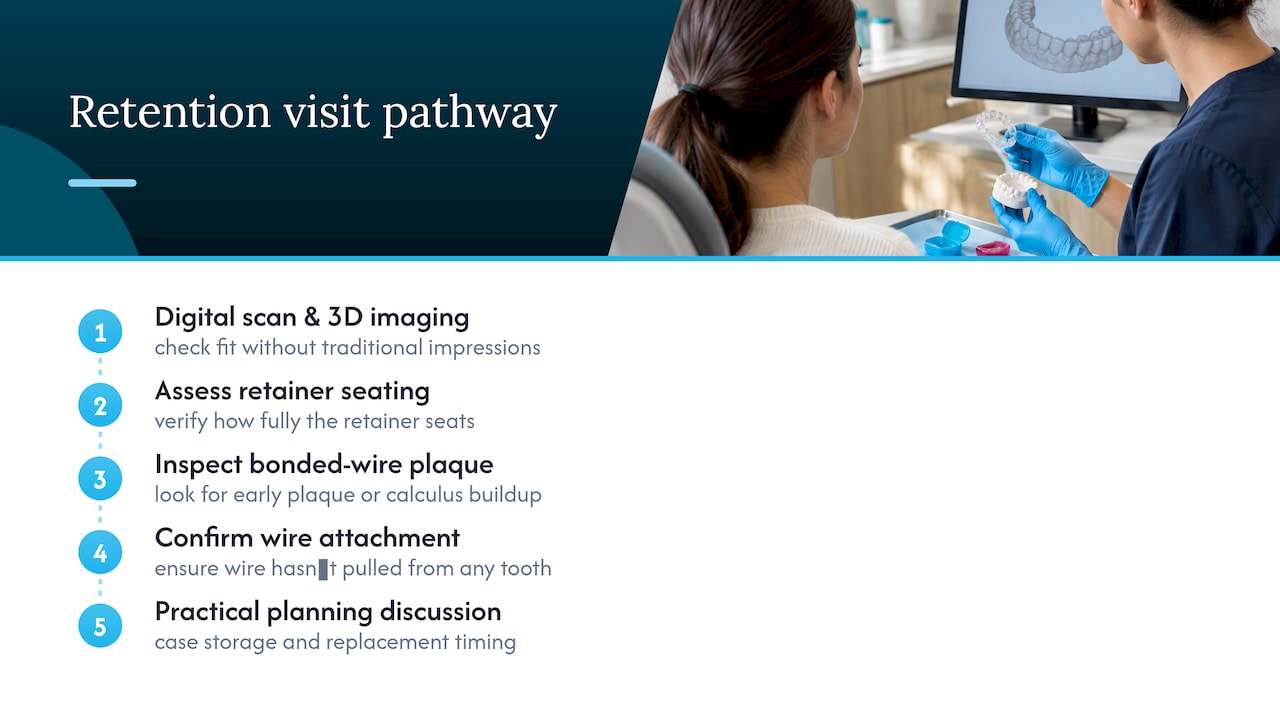
We use digital scanning and 3D imaging to check retainer fit without the mess of traditional impressions, which helps speed up diagnosis and remakes when necessary. At a retention visit, we check how fully the retainer seats, look for early plaque buildup around bonded wires, and confirm the wire hasn’t pulled away from any tooth. We also talk through practical habits, like where you’re storing your case and when your next replacement is likely due, so there are no surprises between visits.
Our take: retention is where most orthodontic results quietly fail
The uncomfortable truth about retainers is that the active treatment, whether it’s Invisalign or braces, is the easy part. Retention is where results are won or lost, and it’s also the phase patients take least seriously, because the urgency of visible misalignment is gone. The evidence backs a flexible approach rather than a rigid one: full-time wear at first, then a taper adjusted based on how your teeth respond, rather than a fixed calendar followed identically by everyone.
Where conventional advice falls short is in treating retainers as a one-time instruction rather than an ongoing relationship with your dental team. A cracked retainer or a loosened wire left unaddressed for even a few weeks can undo months of careful alignment work. If you take one thing from this, prioritize fast communication with your provider over trying to diagnose or fix a retainer problem yourself.
— Complete Dental Care
Book a retainer check or replacement with us
If your retainer feels off, has cracked, or you’re not sure which type you were given, we can check the fit, repair a loosened bonded wire, or create a new removable retainer using digital scanning. We also have options that may help with the cost of ongoing dental care. Visit our new patient page to schedule a visit and get a clear plan for your retention.
This article is general information, not a substitute for advice from a qualified doctor. Consult a qualified healthcare professional about your own circumstances before acting on anything here.
FAQ
How long are you supposed to wear retainers after Invisalign?
Most patients wear retainers full-time, roughly all waking hours with breaks only to eat and brush, for the first three to six months, then shift to nights-only wear. Your orthodontist may adjust that schedule based on how stable your teeth are at follow-up visits.
Can I ever stop wearing a retainer after Invisalign?
Teeth can continue to shift slowly for years, so most orthodontists recommend at least some nightly retainer wear indefinitely rather than stopping completely. Stopping too early is one of the most common causes of relapse after Invisalign.
How long does it take to get your retainer after Invisalign?
Many clinics fit your retainer the same day your aligner treatment finishes, especially when digital scans are used instead of traditional impressions. Any gap between finishing aligners and starting retention increases the chance that teeth begin to shift.
Do I have to pay for retainers after Invisalign?
Retainer costs vary by provider, material, and whether replacement is included in your original treatment plan, so there’s no single standard price. Ask your provider directly about included remakes, warranties, or financing options like our membership plan before treatment ends.
Sources
- Fixed and removable orthodontic retainers, effects on periodontal health compared: A systematic review – PMC
- Performance of clear vacuum-formed thermoplastic retainers depending on retention protocol: a systematic review – PubMed
- A systematic review of orthodontic retention systems: The verdict – PubMed
questions about this? we're happy to help.
Every patient's situation is a little different. If you want to talk through what this means for you, our Greenville team is one call away.
schedule a free consultation