Digital smile design is a software-driven planning process that turns photos, video, and 3D scans of your face and teeth into a preview of your finished smile before any drilling happens. The main payoff is predictability: you see a realistic mock-up, weigh in on shape and shade, and can even test-drive it in your mouth before committing to veneers, crowns, or a full smile rehab. The rest of this guide walks through how the workflow actually runs, what it costs, who it fits, and how a clinic like Complete Dental Care puts it to use.
TL;DR:
- Digital smile design costs range from about $250 to $1,500, depending on the technology used and case complexity, with the fee often credited toward final treatment.
- The workflow requires detailed facial photos, videos, intraoral scans, and possibly CBCT imaging for accurate planning, especially in complex cases.
- Digital design treats the mock-up as a preview, not a guarantee, since ceramic appearance and soft tissue healing cannot be precisely predicted.
- Interdisciplinary cases, involving orthodontics, implants, or gum recontouring, benefit most from the shared digital blueprint that aligns the efforts of all providers.
- Clinics should provide transparent data privacy policies and obtain explicit patient consent for storing and using facial scans and digital records.
Table of Contents
- How Digital Smile Design Works, Step by Step
- The Technology and Tools Behind Digital Smile Design
- Does the Evidence Support Digital Smile Design?
- What Digital Smile Design Costs and How Long It Takes
- Who Actually Benefits From Digital Smile Design
- Digital Smile Design at Complete Dental Care
- Digital Smile Design vs. Traditional Smile Design Methods
- Coordinating Digital Smile Design With Orthodontics and Prosthodontics
- Data Privacy and Consent for Digital Smile Records
- What Dentists Wish Patients Understood About Smile Previews
- Ready to See Your Own Smile Design?
- Sources
How Digital Smile Design Works, Step by Step
Every DSD case starts with records, not software. The dentist collects a specific set of photos, videos, and scans, then runs them through planning software that maps your face and teeth against proportion guides before anyone touches a 3D model.
The sequence tends to follow a consistent order, though clinics vary slightly on tools and sequencing.
- Facial and dental photography. The clinic captures a standardized series of close-up and full-face photos, usually with your lips at rest, in a full smile, and during speech.
- Short video capture. A few seconds of you talking and smiling naturally gets recorded, because static photos miss how your lip line and gum display move. A high-quality workflow leans on these dynamic recordings since they can change decisions on incisal length or gum display that a still photo alone would miss.
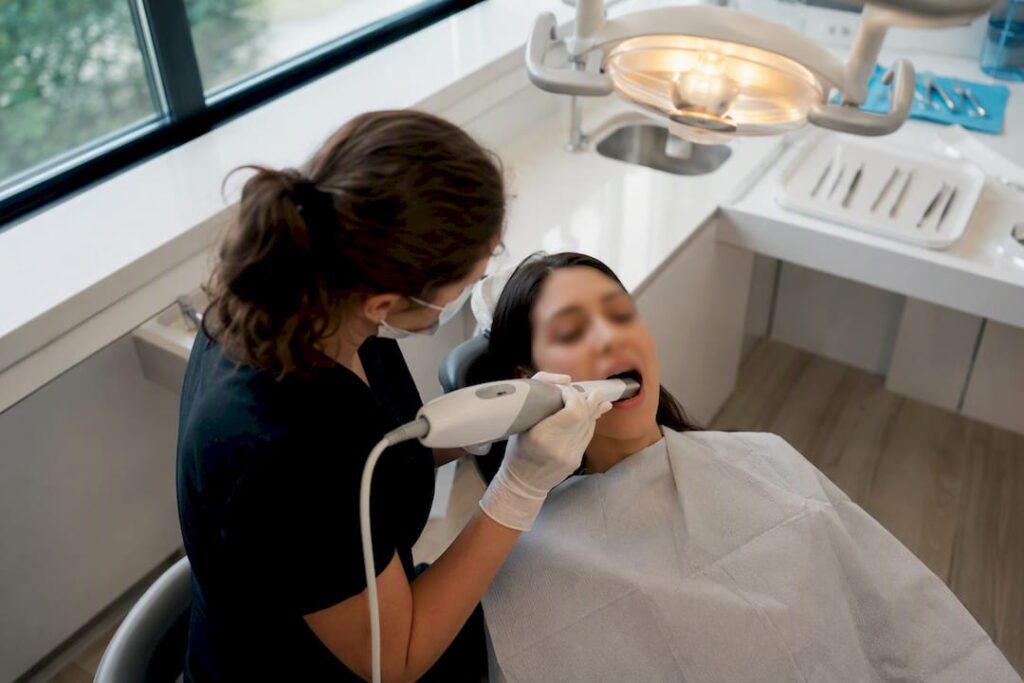
- Intraoral scanning. A digital scanner maps your teeth and bite in minutes, replacing the goopy impression trays older workflows relied on.
- Bite registration. The scanner or a separate bite record captures how your upper and lower teeth meet, which matters for anyone getting more than a couple of teeth restored.
- Optional CBCT imaging. For implant cases or anyone with bone or root concerns, a cone-beam CT scan adds a 3D view of the jaw beneath the gums.
- Building the digital smile frame. The software overlays facial reference lines, pupil line, midline, smile line, onto your photos to establish where teeth should sit relative to your face, not just your gums.
- 2D-to-3D transfer. The flat, face-based design gets mapped onto your 3D intraoral scan, producing a digital wax-up, essentially a computer model of your proposed new teeth.
- Mock-up fabrication. The digital wax-up becomes something you can actually wear, either 3D printed directly or converted into a chairside trial restoration.
- Interdisciplinary review. For complex cases, the digital wax-up gets shared with the lab, an orthodontist, a periodontist, or an implant surgeon so everyone plans toward the same final result.
That last step is where DSD earns its reputation beyond cosmetics. The digital wax-up frequently defines the final tooth positions that become the target for orthodontic movement or implant placement, not just an esthetic sketch. When a case involves gum recharacterization, orthodontic alignment, and veneers together, the digital design acts as the shared blueprint every specialist works from, instead of each provider planning in isolation and hoping the pieces fit at the end.
The origin of this approach traces back to prosthodontist Christian Coachman, who developed the concept around 2007 and 2008 around a simple idea: design the smile from the face inward, rather than starting from the teeth and hoping they look right on camera.
The Technology and Tools Behind Digital Smile Design
None of the DSD workflow happens without specific hardware, and the equipment choices affect both accuracy and cost.
Intraoral scanners versus traditional impressions. A digital scanner captures your bite and tooth surfaces as a 3D file in a few minutes, with no tray, no putty, and no gag reflex. Traditional alginate or PVS impressions can still work, but they introduce material shrinkage and distortion risk that a scan avoids entirely. Accuracy matters more than it sounds. A design based on a warped impression produces restorations that need chairside adjustment, which erodes the whole point of planning digitally in the first place.
Facial scanning and photography protocols. Some practices use dedicated facial scanners that capture a 3D mesh of your face; others rely on a strict photo and video protocol with a DSLR or a high-end phone camera on a fixed rig. Either approach works if the protocol is consistent, meaning the same lighting, the same head position, and the same reference markers every time.
Software categories. Three distinct types of software show up across a DSD case:
- Smile design and photo-analysis apps that overlay facial reference lines and proportion grids onto your photos.
- CAD/CAM design software that converts the 2D design into a 3D digital wax-up compatible with milling or printing equipment.
- Lab communication and STL file platforms that let the treating dentist, lab technician, and any specialists view and comment on the same 3D model.
Mock-up fabrication trade-offs. Once the digital wax-up is approved, it becomes a physical trial smile through one of two paths. Direct 3D-printed resin overlays are fast, often same-day, but they cost more per case because of the printer, resin, and post-processing time. Indirect fabrication uses a silicone index made from a printed model to shape a bis-acryl provisional chairside, which takes more clinical steps but relies on materials most labs already stock, keeping the added cost lower.
Pro Tip: Ask your clinic whether the mock-up you’ll wear is 3D printed or fabricated chairside from an index. Neither is objectively better, but the answer tells you how closely the trial smile in your mouth will match the final restoration material.
Generally speaking, the more capture technology involved (facial scanner plus intraoral scanner plus CBCT) the higher the planning fee, but also the more predictable the final result, especially for multi-discipline cases.
Does the Evidence Support Digital Smile Design?
The clinical literature backs DSD’s core claim: patients understand and approve their planned outcome better when they can see it first. A PMC-published review describes DSD as a workflow-based method that analyzes facial and dental proportions to produce a calibrated, predictable design before any tooth is prepared, a meaningful shift from older wax-up methods that skipped the face-first analysis entirely.
A separate PMC-indexed paper on DSD as an innovative aesthetic dentistry tool found that photorealistic previews and mock-ups let patients actively participate in their own treatment planning, and that this participation raises case acceptance. That is a meaningful distinction from older cosmetic consultations, where patients approved a plan based on verbal description and a few reference photos instead of seeing their own face mapped against the proposed result.
Separately, comparative analyses of DSD against conventional wax-up methods found the digital process tends to be faster and more reproducible, with improved accuracy on key dimensional measurements and higher reported patient satisfaction.
A systematic evidence summary reported broadly consistent gains in patient acceptance across multiple clinical studies when clinics adopted a structured DSD workflow, a pattern strong enough that it shows up as a recurring theme in interdisciplinary treatment planning reviews.
What DSD delivers for patients, concretely:
- Visual informed consent. You approve a specific design, not a verbal description, before committing to irreversible tooth preparation.
- Clearer communication. You can point at the screen and say “make the front two shorter” instead of trying to describe proportions in words.
- Coordinated planning. Every specialist on a complex case works from the same digital wax-up, reducing the odds of a mismatch between what the orthodontist finishes and what the restorative dentist expected.
- A physical trial run. The mock-up lets you wear the proposed shape and length for a day or two before final restorations are made.
None of that erases the limits. Software renders a design; it does not guarantee how a ceramic material will actually reflect light in your mouth, and it cannot fully predict soft tissue healing after gum recontouring. Execution quality, meaning the skill of the treating dentist and the lab fabricating the final restorations, still determines whether the mock-up and the finished case match. A good rule for evaluating any clinic’s claims: ask to see published or in-office before-and-after cases completed by the same clinician who would treat you, not stock photos from a manufacturer’s marketing material.
What Digital Smile Design Costs and How Long It Takes
Fees vary by how much of the workflow a clinic runs. A simple 2D photo-based mock-up, using photos and design software without a full intraoral scan, sits at the lower end of the range. A complete 3D workflow with intraoral scanning, facial photography, and a printed physical mock-up costs more because it involves more scanning time, more software modeling, and physical fabrication.
Published patient cost guides put the full planning fee range at roughly $250 to $1,500 depending on scope, and many practices apply that fee as a credit toward the final treatment cost if you proceed. That crediting practice is worth confirming directly, since it is common but not universal, and the difference between a credited and a standalone planning fee can matter if you are comparing quotes across clinics.
Typical timing looks something like this:
- Records appointment: roughly 30 to 60 minutes for photos, video, and scans.
- Design turnaround: a few days to two weeks depending on case complexity and whether specialists need to review the plan.
- Mock-up try-in appointment: a separate visit where you see and often wear the physical trial smile.
- Final restorative phase: anywhere from a single visit for a limited case to several months for a full-arch or interdisciplinary rehab involving orthodontics or implants.
For a single veneer or a minor whitening touch-up, the extra design step adds time without adding proportional value. For a full smile rehab spanning six or more teeth, the same planning phase typically shortens the overall timeline by reducing the number of chairside adjustment visits later, since the design was approved before any irreversible work started.
Who Actually Benefits From Digital Smile Design
DSD earns its cost and time when a case has enough moving parts that a shared visual plan prevents mistakes. It is less useful when the treatment is simple enough that no one needs a preview to know what the outcome will look like.
- Multi-tooth veneer cases. Anytime six or more front teeth are being reshaped, a digital wax-up keeps proportions consistent across the whole arch instead of tooth-by-tooth guesswork.
- Full-smile or full-arch rehabilitation. Cases combining crowns, veneers, and gum recontouring benefit from a single blueprint that every step follows.
- Implant esthetics. When missing teeth need to be replaced in the visible smile zone, DSD helps position implants so the final crown looks proportional to your face, not just anatomically correct.
- Complex interdisciplinary cases. Anything involving orthodontics, periodontics, and restorative work together needs a shared reference point, and the digital wax-up is that reference.
DSD is generally overkill for a single chipped tooth repair, a routine whitening treatment, or one crown replacement where the shade and shape are dictated by the teeth right next to it. A clinical prerequisite applies across the board regardless of case size: your gums need to be healthy and your bite needs to be stable before any esthetic planning starts, since a mock-up designed around an unstable foundation will not hold up once the final restorations go in. Patient-facing guidance from hospital systems makes the same point: DSD is a planning tool, not a substitute for treating active gum disease or bite problems first.
Watch for a specific red flag: any service offering an “instant smile preview” from a selfie alone, with no intraoral scan, no video, and no documented finished cases from the provider. On-screen AI filters can be fun to try, but they are not a substitute for a clinic-based DSD workflow built on actual clinical records and reviewed by a treating dentist.
Digital Smile Design at Complete Dental Care
Complete Dental Care builds its cosmetic planning around the same principle the research backs: patients make better decisions when they see the plan before committing to it, as explained in Smile Bright: The Winning Formula For Cosmetic Dentistry Marketing. The practice’s cosmetic dentistry workflow leans on 3D imaging and intraoral scanning rather than traditional impressions, which shortens the records appointment and gives a cleaner base file for the digital wax-up.
For patients considering full-arch restoration, DSD principles carry over directly into the practice’s Teeth in a Day implant workflow. The same face-first design logic used for veneer cases applies to full-arch planning: tooth position, lip support, and smile line get mapped before the surgical and prosthetic phases begin, so the final result is designed around your face rather than reverse-engineered from wherever the implants happen to land.
Communication is where the practice puts real weight. A few things patients can expect:
- Access to a video library showing real procedures and case examples, so you can see the kind of outcomes the practice has produced before your own consult.
- A mock-up phase where you can physically try on the proposed smile design rather than approving it from a screen alone.
- Clear conversation upfront about how any digital planning fee applies toward treatment if you move forward.
- Support for patients who feel anxious about the process, including comfort measures built into the visit itself.
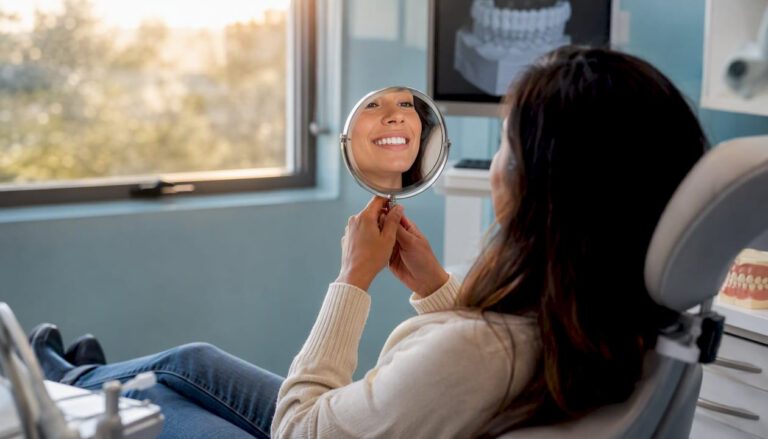
The value of a mock-up isn’t the software behind it. It’s the moment a patient looks in the mirror wearing a physical version of their new smile and can say “yes” or “not quite” before we touch a single natural tooth.
Every treatment plan starts from a first visit where the treating dentist reviews your records and goals directly, not a templated package applied to every patient the same way.
Digital Smile Design vs. Traditional Smile Design Methods
Traditional smile design relied on a dentist’s freehand wax-up, built by a lab technician working from photos, plaster models, and written notes. It worked, but it left a lot to interpretation. The technician never saw your face move, never watched you smile mid-sentence, and made judgment calls about proportion based on generic esthetic guidelines rather than your actual facial landmarks.
DSD replaces most of that guesswork with measurable references. The digital smile frame maps your pupil line, midline, and smile line directly onto your own photos, so the design is calibrated to your face specifically, not an average face. Comparative studies back this up with something traditional wax-ups could never offer: a mock-up you can review, request changes to, and approve digitally before a single gram of wax gets shaped by hand.
The trade-off is upfront time and cost. A traditional wax-up needed only photos and models; DSD needs scans, video, and specific software. For simple, single-tooth cases, that extra step rarely pays for itself. For multi-tooth or interdisciplinary work, the calibration and reproducibility gains generally outweigh the added planning time, which is why most complex cosmetic and full-arch cases have shifted toward digital planning over the freehand wax-up model.
Coordinating Digital Smile Design With Orthodontics and Prosthodontics
DSD’s biggest advantage shows up when more than one specialist touches the same case. Orthodontic tooth movement and prosthodontic restorations used to get planned somewhat independently, with the orthodontist finishing alignment and hoping the restorative dentist could work with wherever the teeth ended up.
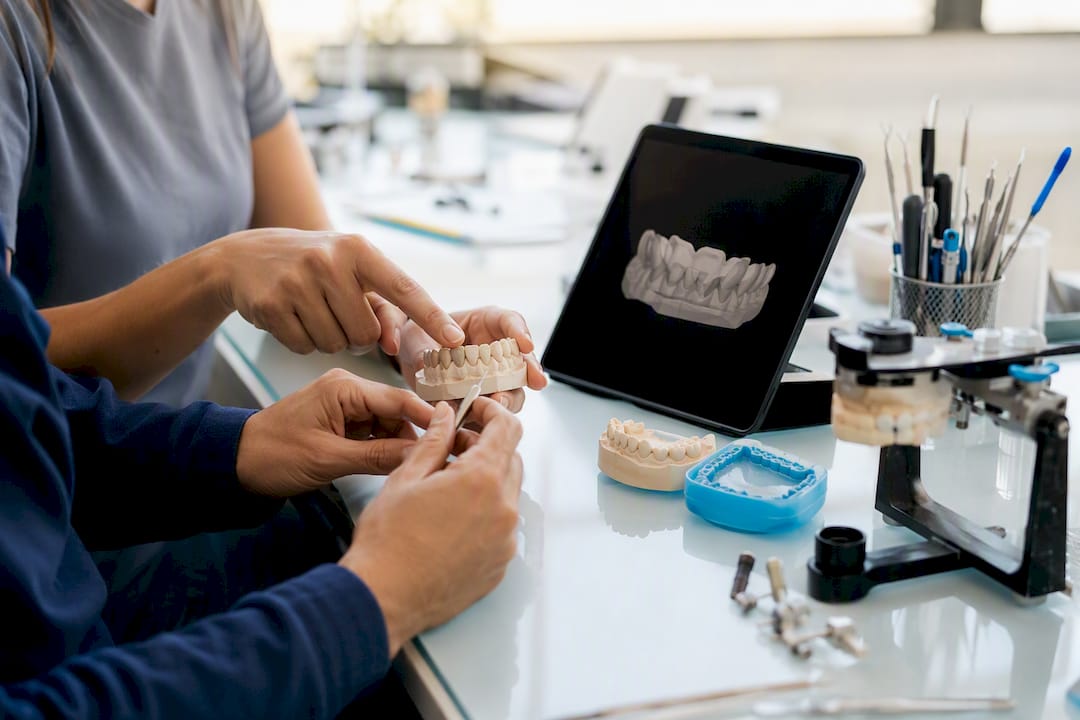
A shared digital wax-up changes that sequence. The restorative endpoint, meaning the final shape, length, and position of the teeth, gets designed first, then becomes the target the orthodontist moves teeth toward. That reverses the old order: instead of restoring around wherever orthodontics finished, the orthodontic phase finishes exactly where the esthetic design needs it to.
The same logic applies to implant cases involving a periodontist or oral surgeon. The digital wax-up commonly defines implant position and angulation targets before surgery, rather than the surgeon placing implants based on bone availability alone and the restorative dentist adapting the crown to fit afterward. That sequencing matters most in the esthetic zone, where a millimeter of implant angulation can be the difference between a crown that looks natural and one that never quite sits right against the gumline.
Coordination like this requires every provider to work from the same STL files and digital wax-up, reviewed on a shared platform rather than passed around as printed photos. Clinics that handle complex interdisciplinary cases regularly tend to have this file sharing built into their standard workflow rather than improvising it case by case.
Data Privacy and Consent for Digital Smile Records
DSD runs on your face. Photos, videos, and 3D scans of your facial structure and teeth count as personal health information once they enter your dental record, and that has real consent implications you should ask about directly.
Ask your clinic three things before your records appointment. First, where the images and scan files are stored, whether that is on a local server, in the practice’s patient records system, or on a third-party cloud platform tied to the design software. Second, whether any of your photos, videos, or before-and-after images could be used in marketing materials, and confirm that this requires separate written consent from your treatment consent. Third, how long the practice retains your digital scan files and 3D models, since retention policies vary and some software vendors store data differently than the treating practice does.
A practice with a mature digital workflow should have clear, written answers to all three questions, not vague reassurance. That transparency is itself a signal worth weighing when you’re evaluating a clinic. A provider that treats your facial scans as casually as a routine x-ray, without a clear consent conversation, is worth a second look before you commit records to their system.
What Dentists Wish Patients Understood About Smile Previews
The biggest misunderstanding patients bring into a DSD consult is treating the on-screen mock-up as a guarantee rather than a preview. Software renders proportion and shape accurately. It cannot fully predict how a specific ceramic shade will catch light in your mouth, or exactly how gum tissue will heal after recontouring. The design is the target, not the finished promise.
Come to your consult prepared. Bring photos of smiles you actually like, close-ups if you have them, and be specific about what bothers you now, whether that’s tooth length, gaps, or shade. That gives the design software real reference points instead of generic proportion defaults.
Ask pointed questions before agreeing to treatment: Who fabricates the final restorations, the same lab that made the mock-up or a different one? What material is being used, and does its appearance match the trial smile you wore? And does the planning fee apply toward treatment if you move forward? Those three answers tell you more about the likely outcome than the polish of the software demo ever will.
— Complete Dental Care
Ready to See Your Own Smile Design?
Complete Dental Care builds every cosmetic case around a plan you can see and approve first, not a guess based on stock photos of someone else’s teeth. Where a generic online preview tool gives you a filtered selfie, our in-office workflow pairs intraoral scanning and 3D imaging with a physical mock-up you actually try on, and we apply the planning work toward your treatment cost when you move forward.
If you want to see real cases before booking anything, browse the practice’s video library for procedure walkthroughs and patient examples. If you are ready to start, schedule a first visit where a treating dentist reviews your goals and records in person, or explore cosmetic dentistry options directly to see what a designed smile could look like for your specific case.
Sources
For readers who want to dig into the clinical basis behind this article, the PMC review of DSD methodology and the PMC paper on DSD as an aesthetic dentistry tool cover the peer-reviewed foundation. The comparative wax-up analysis and interdisciplinary workflow overview fill in cost and coordination detail, alongside practical cost guidance and patient preview guidance. See real examples in the practice’s own video library or on the Complete Dental Care homepage.
- Digital Smile Design – PMC – NIH
- Digital Smile Design: Integrating 3D Facial Scanning into Esthetic Treatment Planning and Interdisciplinary Care
- Digital Smile Design Cost in 2026: Is the Planning Fee Worth It? — ToothCostGuide